
Sony Patents a Camera That Keeps Stabilizing Images When Its Chip Falls Behind
When a camera's processor gets overloaded mid-shoot, image stabilization can fail and your footage turns shaky. Sony's new patent describes a fallback system that keeps stabilization running by borrowing motion data from the previous frame instead of giving up entirely.
What Sony's stabilization fallback actually does
Imagine you're recording a video and the camera's brain gets overwhelmed, maybe it's also running face detection, applying a filter, and tracking motion all at once. Normally, if stabilization data for the current frame isn't ready in time, the camera either stutters or outputs a shaky, uncorrected frame.
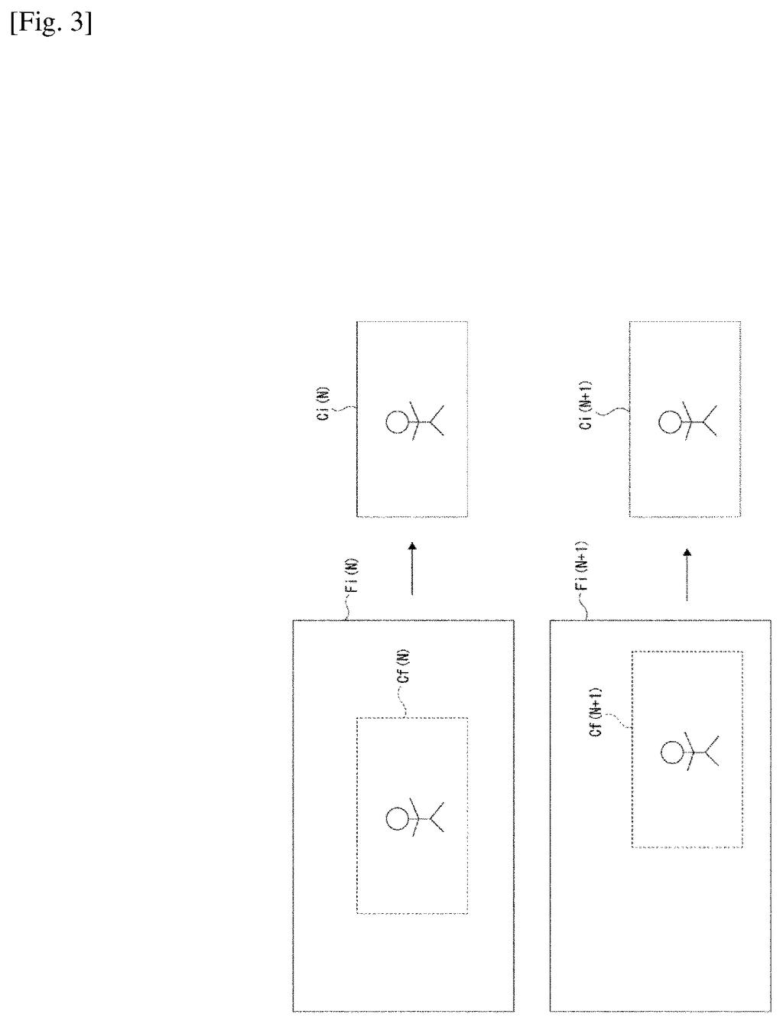
Sony's approach is to detect when that processing crunch happens and automatically switch to a backup plan: instead of using the current frame's motion data (which hasn't been calculated yet), the camera borrows the motion data from the previous frame to correct the current image. It's an approximation, but for smooth, continuous motion it's close enough to keep your video looking stable.
When the processor catches up and is no longer overloaded, the system switches back to using precise, real-time motion data. The whole handoff happens automatically, with no gap in stabilization output.
How the system swaps motion data when processing overruns
The system centers on a real-time check: after the camera generates a stabilized crop of the first frame (called a "clipped image"), the circuitry immediately checks whether that processing finished on schedule or ran over its deadline.
- No overrun: The system uses the motion data collected specifically while capturing the new frame to crop and stabilize it correctly.
- Overrun detected: The system falls back to using motion data from the previous frame to generate the stabilized crop of the new frame. The image is still corrected; it just uses slightly older stabilization vectors.
Processing overrun means the chip didn't finish its calculations within the time window allocated for one frame, a common problem when a camera is handling multiple tasks simultaneously.
The output in both cases is a stabilized "clipped image," a cropped version of the full sensor frame that is shifted and repositioned to cancel out camera shake. The patent focuses on the semiconductor-level circuitry that makes this decision, suggesting Sony is targeting the chip design itself rather than software running on a general-purpose processor.
What this means for video quality under heavy processing loads
For consumers, this is about maintaining video quality when a camera or smartphone is under heavy load. As cameras take on more real-time AI tasks like subject tracking and scene detection, the stabilization pipeline faces more competition for processor time. A fallback that degrades gracefully instead of failing completely is a practical reliability gain.
For Sony specifically, Sony Semiconductor Solutions supplies image sensor and chip packages to a wide range of device makers. A stabilization fallback baked into the chip's circuitry could appear in smartphones, action cameras, or drones made by any of Sony's chip customers, not just Sony's own products.
This is a solid, unglamorous piece of engineering: it solves a real and common failure mode in camera pipelines without requiring more powerful hardware. It won't make headlines on a spec sheet, but the kind of buyer who notices shaky frames in 4K video will care about it.
There are more where this came from
We read every patent application Big Tech publishes and send you the ones worth knowing. Plain English, free, every week.
The drawings
25 drawing sheets from US 2026/0222686 A1 · click any drawing to enlarge


Want this weekly breakdown for a company we don't cover? Patentlyze Pro →
Be the first to weigh in