
Samsung Patents a Sharing Sheet That Edits Your Content Before Sending It
Every time you tap 'Share' on your phone, your content goes to the next app exactly as-is. Samsung's new patent describes a step in between, where you can reshape that content before it ever arrives.
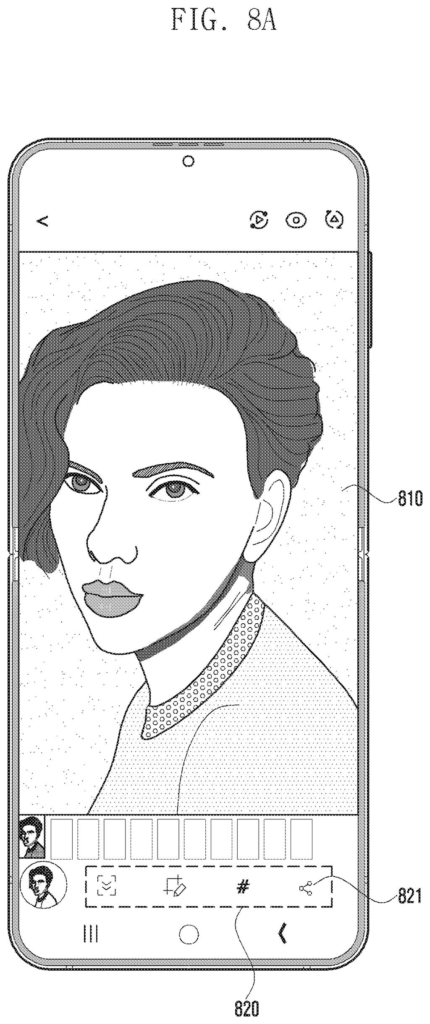
What Samsung's in-between sharing step actually does
Imagine you're looking at a photo in your gallery and you want to share it to a notes app. Right now, your phone just drops the photo in as-is. Samsung's patent describes a smarter stop along the way: a small interface that pops up during the share process and asks what you want to do with that content before it lands anywhere.
You interact with that interface, and your content gets transformed based on what you chose. Maybe a photo becomes a cropped version, or a piece of text gets reformatted. The result is a new version of your content, specifically shaped to work well in the destination app.
The key idea is that the sharing step itself becomes an editing moment, not just a routing action. Instead of sharing first and fixing things in the destination app, you do it all in one flow.
How the UI intercepts and transforms content mid-share
The patent describes a device with a touch screen, a processor, and memory holding at least two apps. When you trigger a share from the first app, the device displays a UI layer between the source and destination. That layer is specifically described as supporting "interaction with a user in connection with regeneration" of the content, meaning it's designed to let you tell the system how to rebuild or reprocess the original.
You provide a second input through that UI, and the device runs the original content through a processing step to produce second content: a transformed version. The system then configures that new version to be compatible with and usable by the second (destination) app.
The claim is intentionally broad. It doesn't lock in a specific type of transformation or a specific type of content, which means the underlying structure could apply to:
- Images (resizing, cropping, format conversion)
- Text (summarizing, reformatting, translating)
- Files (converting to a compatible type for the target app)
What the patent is really staking out is the architecture of a share-time editing layer, not any one specific feature built on top of it.
What this means for Samsung's cross-app experience
The current Android sharing model, which Samsung's Galaxy phones use, is largely a pass-through. You pick a destination and your content moves there unchanged. A native editing step baked into the share flow would reduce the friction of copying something, opening a second app, editing it, then finally sending it where you wanted it to go.
For Samsung specifically, this fits a broader push to differentiate Galaxy software from stock Android. If Samsung can make the share sheet feel like a first-class editing surface, especially one that could eventually tie into its on-device AI features, that's a tangible reason to stay in Samsung's app ecosystem rather than defaulting to Google's tools.
This is a genuinely useful UX idea, and the patent is broad enough that Samsung could ship a lot of different features under its umbrella. The concept of a transform-on-share layer is simple to explain and easy to see in real use, which is a better starting point than most UI patents. Whether it ships as something polished or gets buried in a settings menu is the real question.
There are more where this came from
We read every patent application Big Tech publishes and send you the ones worth knowing. Plain English, free, every week.
The drawings
41 drawing sheets from US 2026/0219769 A1 · click any drawing to enlarge


Want this weekly breakdown for a company we don't cover? Patentlyze Pro →
Be the first to weigh in