
Meta Patent Reveals Organic Crystal Lenses Designed to Slim Down AR Headsets
The lenses in modern VR headsets are thick and heavy partly because of the optical materials used to make them. Meta is exploring an unusual alternative: lenses grown from aligned organic molecular crystals that bend light more efficiently than conventional glass or plastic.
What Meta's organic crystal lens actually does for headsets
Imagine putting on a pair of VR goggles that feel more like sunglasses than a ski helmet. Right now, one of the biggest obstacles to that experience is the lens itself. Traditional lenses need to be a certain thickness to bend light the way the headset requires, and that thickness adds bulk and weight.
Meta's patent describes a lens made from a special class of material: organic molecular crystals that are carefully lined up in a consistent direction. Because of the way these crystals interact with light, they can bend it more sharply than ordinary plastic, which means the lens can be thinner while doing the same optical job.
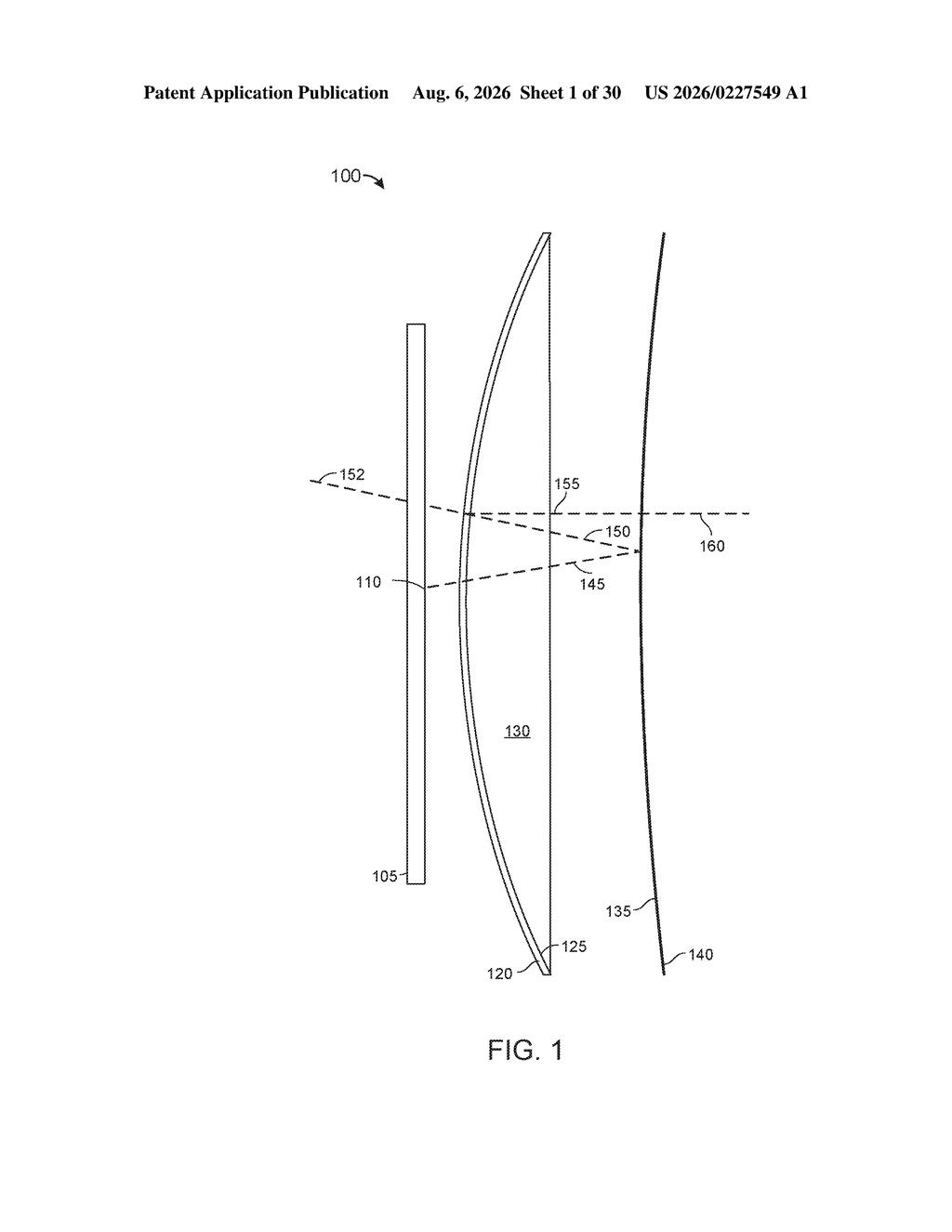
The lens sits inside a display system that takes the image from a screen and redirects it toward your eyes. The whole point is that swapping in this crystal-based material could let Meta shrink the optical stack, potentially making future headsets smaller and more wearable without sacrificing image quality.
the optical configuration comprises a lens; the lens comprises an optically anisotropic organic solid; and the organic solid comprises aligned organic molecular crystals.
Translation: The lenses inside are built from specially aligned organic crystals.
How aligned molecular crystals bend light differently
The patent describes an optical system where a display sends light through a lens before it reaches the viewer's eyes. The key ingredient is the lens material itself: an optically anisotropic organic solid made of aligned organic molecular crystals.
Optically anisotropic means the material bends light differently depending on which direction the light travels through it (think of how a crystal can split a beam into two). This is different from ordinary glass or plastic, which bends light the same way regardless of direction. Materials with this property are described as either uniaxial (one special axis) or biaxial (two special axes), which is where the patent title comes from.
High refractive index is the other key concept. The refractive index is basically a measure of how sharply a material can redirect light. A higher index means you need less material to achieve the same bend, so lenses can be physically thinner. Organic molecular crystals can achieve high refractive indices in specific directions, which is why aligning them matters so much.
By controlling the orientation of those crystals during manufacturing, Meta's design tries to exploit the strongest light-bending direction consistently across the whole lens surface.
A device includes a display and an optical configuration configured to receive display light from the display and direct the display light to a remote viewing location …
Translation: The system takes light from a screen and sends it directly to your eyes.
What this means for the future of AR glasses weight and size
Lens thickness is one of the core engineering constraints holding back truly compact AR and VR headsets. If you can achieve a high refractive index with a thinner slab of material, the entire optical assembly gets smaller and lighter, which is the difference between something you wear for two hours and something you wear all day.
Organic molecular crystals are an unusual choice here. Most high-index lens work focuses on inorganic materials or engineered polymers. Meta exploring organic crystal structures suggests the company is casting a wide net for materials that could give its headsets a physical advantage. Whether this specific approach makes it into a shipping product depends on whether the crystals can be manufactured at scale without defects, but the direction of research is clear: Meta wants thinner optics.
This is genuinely interesting materials science, not just an incremental optics tweak. Organic molecular crystals are an unconventional bet for consumer optics, and the fact that Meta is filing patents in this space signals that its lens engineers are exploring well beyond off-the-shelf solutions. Whether it translates into a product is a manufacturing question, not a physics question.
There are more where this came from
We read every patent application Big Tech publishes and send you the ones worth knowing. Plain English, free, every week.
The drawings
30 drawing sheets from US 2026/0227549 A1 · click any drawing to enlarge


Want this weekly breakdown for a company we don't cover? Patentlyze Pro →
Be the first to weigh in