
Qualcomm Patents a Hardware Instruction That Normalizes AI Data in One Step
When an AI model processes numbers, it constantly has to bring wildly different values into the same range before doing any math. Qualcomm wants to bake that work directly into the chip's instruction set so it happens in a single hardware step instead of many software ones.
What Qualcomm's scale instruction actually does
Imagine you're a chef trying to follow five different recipes, but each one uses different units: one says grams, another says ounces, another says cups. Before you can cook anything, you have to convert everything to the same unit. AI processors face the same problem constantly, rescaling batches of numbers before every calculation.
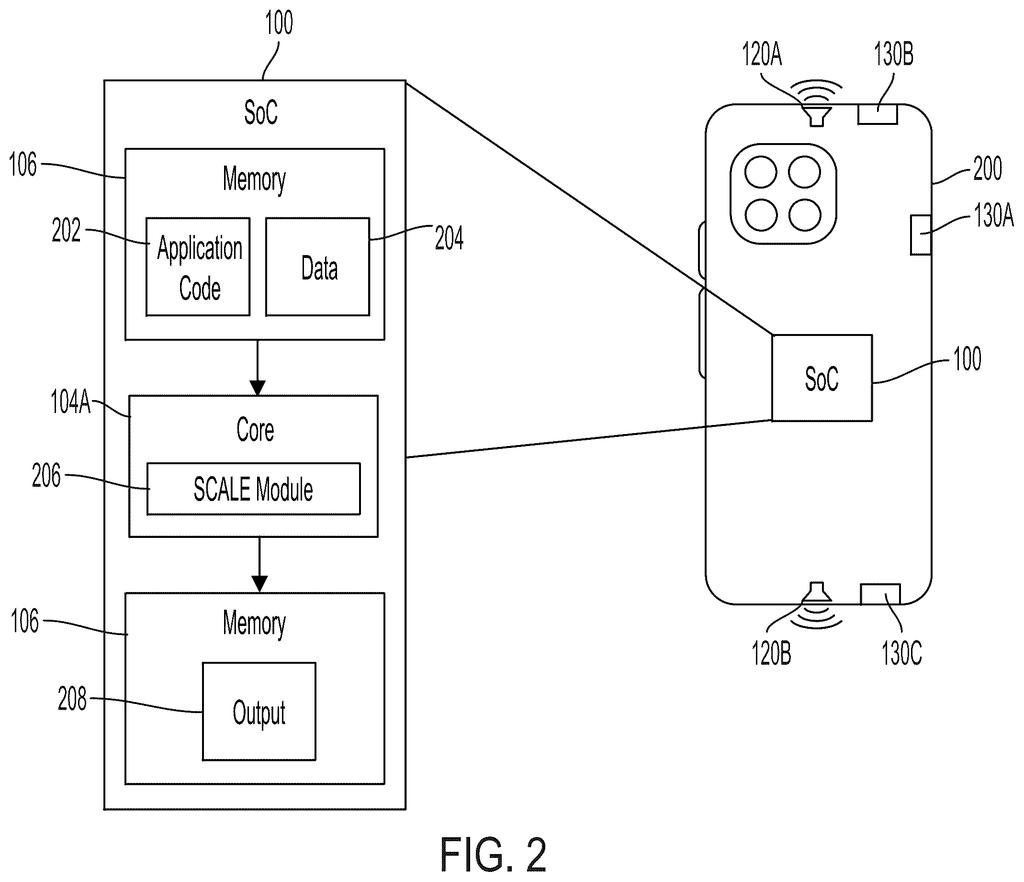
Qualcomm's patent describes a new hardware instruction called a scale instruction that does this rescaling job automatically. Instead of your software writing a bunch of code to find the biggest number in a batch and divide everything else by it, the chip detects this special instruction and handles the whole job itself in one go.
The result is that the processor can hand back the rescaled numbers, the scaling factor it used, or both, depending on what the program needs. It's a small change, but on a chip running billions of these operations per second, doing fewer steps per calculation adds up fast.
detect, among the instructions, a scale instruction that identifies a plurality of input values to be scaled; execute the scale instruction to determine a scaling factor based on the plurality of input values; and output at least one of the scaling factor, one or more scaled output values determined based on the plurality of input values, or a combination thereof.
Translation: The chip spots a single command to normalize multiple numbers at once and calculates the math automatically.
How the processor detects and executes the scale instruction
The patent describes a scale instruction, a new entry in the processor's vocabulary of operations, that handles data normalization (bringing a set of numbers into a consistent range) at the hardware level.
When the processor fetches this instruction, it:
- Identifies a group of input values to be scaled together
- Determines a scaling factor by finding the maximum absolute value in the group, or the largest power of two that fits within it (a fast approximation suited to binary hardware)
- Outputs the scaled values, the scaling factor itself, or both, depending on what the calling program requests
Normalization is a routine but expensive step in neural-network inference and training. Floating-point and quantized arithmetic (where numbers are stored in compact, lower-precision formats to save memory and power) both require constant rescaling to avoid overflow or underflow errors. By offloading this to a dedicated instruction, Qualcomm's circuitry can skip the multi-step software routine that would otherwise compute the same result.
The patent is primarily a processor instruction-set architecture (ISA) filing, meaning it defines the interface between software and silicon, not a specific microarchitecture implementation.
… such as by selecting the maximum absolute value or the largest power of two less than or equal to it.
Translation: It finds the biggest number in the set to use as the baseline for scaling.
What this means for AI inference on Qualcomm chips
Qualcomm's chips power smartphones, laptops, and increasingly on-device AI workloads through its Snapdragon line. Normalization is one of the most repeated operations in any AI model, so shaving cycles off that step directly improves how fast and how efficiently a model can run on device, without touching the cloud.
This kind of low-level instruction design is also how chip companies compete on AI benchmarks. Adding a single instruction that collapses what used to be several software steps into one hardware operation is exactly the kind of incremental work that separates the top AI chip makers from the rest. For you as a user, the downstream effect is faster responses from on-device AI features and lower battery drain.
This is unglamorous plumbing work, but it's the kind of plumbing that actually matters. Normalization is a genuine bottleneck in quantized AI inference, and building a dedicated hardware instruction for it is a sensible engineering move. Don't expect a press release about it, but do expect it to show up inside future Snapdragon silicon.
There are more where this came from
We read every patent application Big Tech publishes and send you the ones worth knowing. Plain English, free, every week.
The drawings
4 drawing sheets from US 2026/0228002 A1 · click any drawing to enlarge


Want this weekly breakdown for a company we don't cover? Patentlyze Pro →
Be the first to weigh in