
Qualcomm Patents an AI System That Auto-Tunes Chips Across Manufacturing Differences
No two chips come off a production line behaving exactly the same, and tuning thousands of them by hand is basically impossible. Qualcomm's new patent describes a system that does that tuning automatically, using AI to figure out one set of settings that works reliably across all of them.
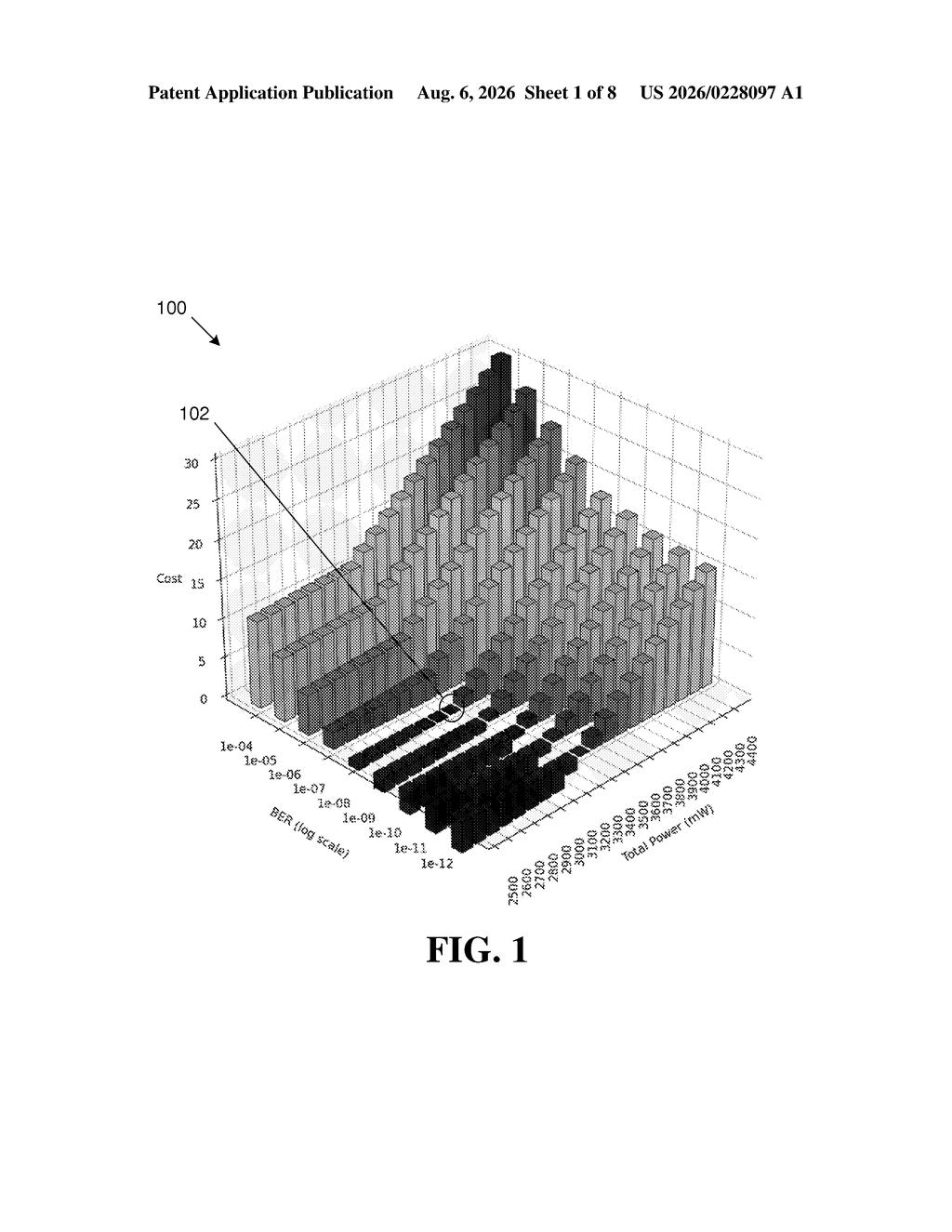
What Qualcomm's chip auto-tuning system actually does
Imagine ordering 10,000 identical phones, but each one's internal chip behaves slightly differently because of tiny imperfections in the manufacturing process. Too hot, too cold, high voltage, low voltage: each condition pushes performance in different directions. Getting every chip to hit the same performance targets despite those differences is a huge engineering headache.
Qualcomm's patent describes a two-step AI process to solve that. First, a search algorithm (modeled loosely on how evolution finds good solutions by testing and combining candidates) runs experiments across many different chip conditions to collect data. A neural network then learns from those experiments and stands in as a fast, cheap simulator so the system can test millions more combinations without running real hardware tests.
The result is one global set of chip settings that works well enough for every device in the batch, regardless of which chip variation landed inside a particular product. That means fewer chips get binned (thrown out) for failing to meet spec, and more products ship consistently.
… applying a first genetic adaptation algorithm to each of the plurality of test cases to determine, for each test case, a candidate set of device settings that satisfies the performance characteristics target and to produce test results …
Translation: Using evolutionary software algorithms to find ideal chip configurations for various test scenarios.
How the neural network and genetic search work together
The patent describes a two-phase optimization pipeline for tuning configurable settings on chips that all share the same design but behave differently due to process variation (microscopic manufacturing differences) and changing operating conditions (temperature, voltage, workload).
Phase 1: Data collection via genetic search. A genetic adaptation algorithm (an optimization technique that works like natural selection, generating candidate solutions, scoring them, keeping the best, and mutating them to find better ones) is run across a large set of test cases. Each test case pairs a specific physical chip with a specific process variation and operating condition. The algorithm finds per-case settings that meet the performance target and records everything it tried.
Phase 2: Neural network surrogate model. A neural network is trained on the data from Phase 1. Instead of running expensive real-hardware tests, the system can now ask the neural network: "If I apply these settings, what performance will I get?" This trained model acts as a fast stand-in (a surrogate) for actual measurements.
Phase 3: Global optimization. A second genetic search runs, but this time it uses the neural network as its scoring function. It searches for one global set of device settings that, when applied to all chips across all variations and conditions, collectively meets the performance target. The key word is collective: no individual chip needs to be perfect; the settings just need to work well enough across the whole population.
… determining, by using the trained neural network as a surrogate model and applying a second genetic adaptation algorithm, a global set of device settings that collectively achieves the performance characteristics target across the plurality of devices.
Translation: Using AI to figure out one master set of settings that makes all chips perform well despite physical flaws.
What this means for chip consistency and power efficiency
Chip tuning at scale is one of the costliest and most time-consuming parts of semiconductor production. Doing it manually, or even with simpler automated methods, often means conservative settings that leave performance and power efficiency on the table. A system that finds a single optimized configuration for a whole product run could meaningfully improve how much performance Qualcomm squeezes out of each chip generation.
For consumers, that could translate to devices that run faster, cooler, or longer on a charge because the chip is tuned closer to its actual capability rather than a worst-case safety margin. For Qualcomm's customers (phone makers, PC manufacturers), it could reduce the number of chips that get rejected during quality testing, which directly affects cost.
This is deep-infrastructure work, the kind of patent that never shows up in a product announcement but shapes how efficient every Qualcomm-powered device ends up being. The combination of genetic search and a neural network surrogate to solve a population-level optimization problem is genuinely clever engineering. It's worth paying attention to if you care about where chip efficiency gains actually come from.
There are more where this came from
We read every patent application Big Tech publishes and send you the ones worth knowing. Plain English, free, every week.
The drawings
8 drawing sheets from US 2026/0228097 A1 · click any drawing to enlarge


Want this weekly breakdown for a company we don't cover? Patentlyze Pro →
Be the first to weigh in