
Disney Patent Uses Visual AI to Spot Ride Malfunctions Before They Occur
Disney has patented a maintenance system that converts raw equipment sensor data into pictures, then uses a machine learning model to spot problems the same way a human eye spots something out of place.
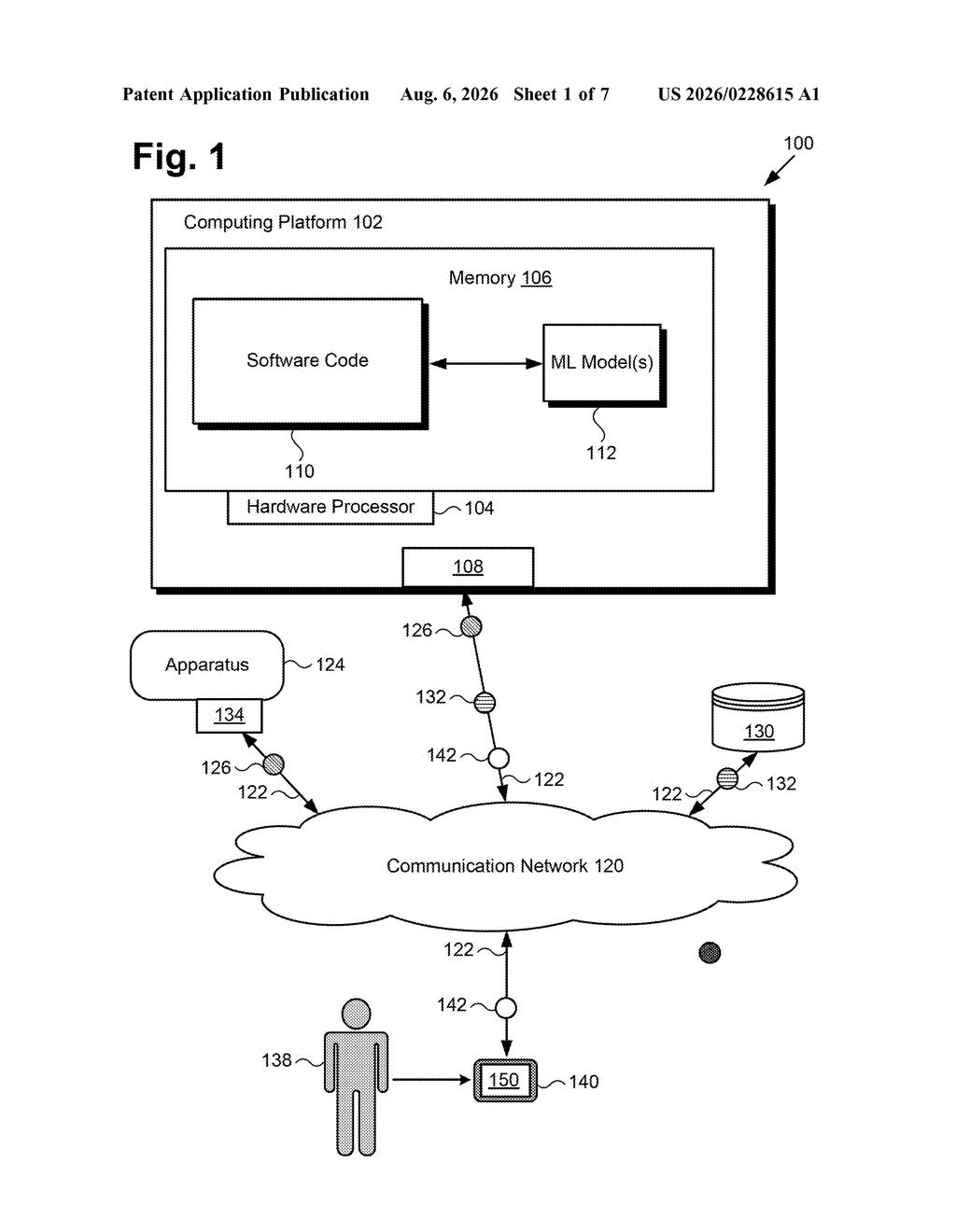
How Disney's image-based fault detection works
Imagine if your mechanic, instead of reading a spreadsheet of engine readings, could look at a painting of how your car is running and immediately say, "that shape looks wrong." Disney is building something similar for its equipment.
The system takes data from a running machine, like vibration readings or motor signals, and converts it into a visual image that represents how the machine is operating. A trained AI then looks at that image and decides whether anything looks off compared to what a healthy machine's image should look like.
If the AI flags a problem, it pulls up a reference image of what normal operation looks like and sends an alert that includes a side-by-side comparison. A maintenance technician can then see exactly what has changed, rather than wading through rows of raw numbers.
… predict, using the trained ML and the first visual representation of the operation, whether an operating state of the apparatus during the operation is anomalous; …
Translation: Artificial intelligence analyzes the visual data to determine if the ride is malfunctioning.
How the ML model compares normal vs. Anomalous visuals
The system has three main stages:
- Data-to-image conversion: Sensor readings from a piece of equipment are transformed into a visual representation. Think of it like a spectrogram (the colorful frequency maps used in audio analysis) but applied to any kind of operational data. Turning numbers into images is a well-established technique that lets image-trained AI models work on non-visual data.
- Anomaly prediction: A pre-trained machine learning model examines the generated image and classifies the machine's current state as normal or anomalous. Because the model was trained on visual data, it can pick up on subtle pattern differences that might be hard to express as simple numeric thresholds.
- Comparison and alerting: When the model detects something wrong, the system retrieves a stored reference image of what the same machine looks like during normal operation. It compares the two images and packages that comparison into an alert, giving maintenance staff a visual diff rather than a raw data dump.
The patent describes a general-purpose architecture, meaning it is not locked to one type of sensor or machine. The "apparatus" in question could be a roller coaster, a conveyor, a pump, or almost any mechanical system.
… obtain a second visual representation of an expected operation by the apparatus during a normal operating state of the apparatus, perform a comparison of the first visual representation with the second visual representation, and output an alert including a result of the comparison …
Translation: The system compares the faulty ride behavior against ideal footage and sends out a warning based on the differences.
What this means for theme park maintenance crews
Theme parks run complex, safety-critical equipment around the clock, and catching a mechanical fault early is the difference between a scheduled repair and an unplanned shutdown. By framing maintenance data as an image-comparison problem, Disney's approach could let non-specialist staff quickly understand what is wrong without needing to interpret raw sensor logs.
Beyond theme parks, the same architecture applies to any industrial setting where equipment runs continuously and downtime is expensive. For Disney specifically, though, the real payoff is reliability: a roller coaster that goes down mid-day costs ticket revenue and guest goodwill. If this system ships in some form, it fits squarely into Disney's ongoing effort to keep its parks running with minimal visible disruption.
This is a practical, well-scoped patent rather than a moonshot. Converting sensor data to images before feeding it to an ML model is a legitimate and increasingly popular technique in industrial AI, and Disney wrapping it in a clean alerting system makes genuine operational sense. The side-by-side visual comparison for maintenance staff is the genuinely clever part, turning an abstract model output into something a human can act on immediately.
There are more where this came from
We read every patent application Big Tech publishes and send you the ones worth knowing. Plain English, free, every week.
The drawings
7 drawing sheets from US 2026/0228615 A1 · click any drawing to enlarge


Want this weekly breakdown for a company we don't cover? Patentlyze Pro →
Be the first to weigh in