
Disney Patent Groups User Behaviors Into Categories to Sharpen Ad Targeting
Disney is patenting a system that automatically figures out how many distinct types of viewing sessions exist, then uses that knowledge to build predictive models. Think of it as teaching an algorithm to recognize the difference between a quick lunch-break scroll and a full family movie night.
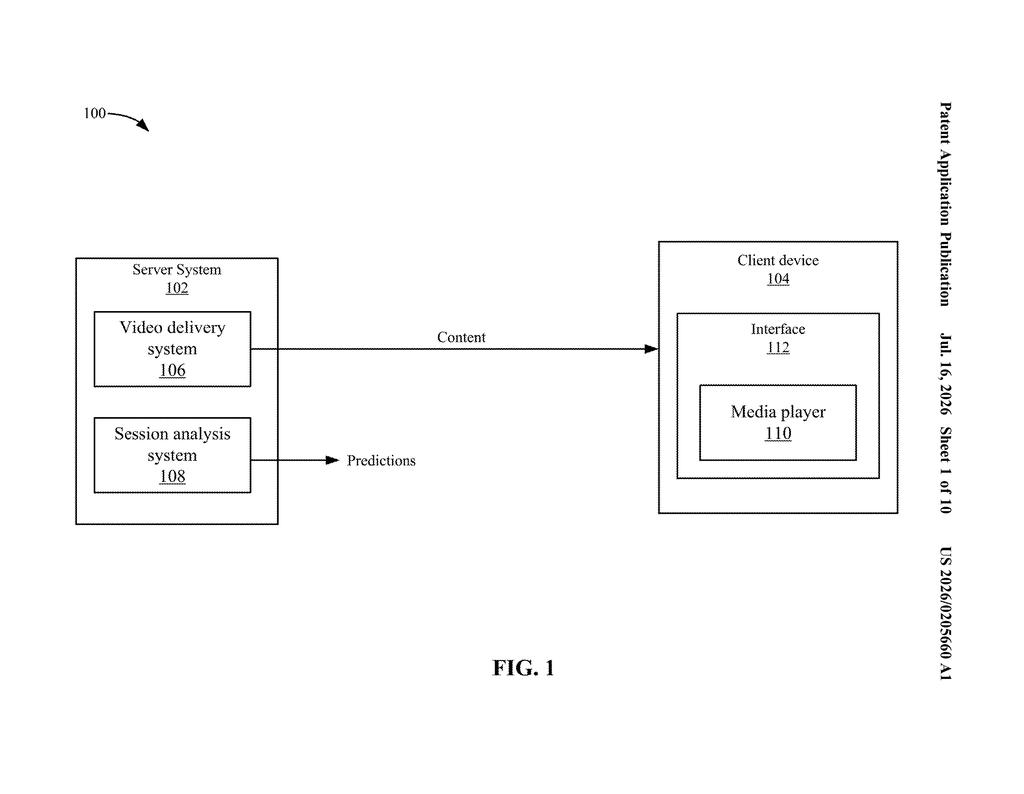
What Disney's session-clustering patent actually does
Imagine Disney wants to understand how people watch its streaming content. Not just what they watch, but how they watch it: are they binging for hours, dipping in for ten minutes, or browsing without committing? Disney calls these different patterns "session types," and this patent is about teaching a computer to find them automatically.
The system looks at past viewing data, groups sessions into clusters based on shared behavior, and then trains a predictive model on those groups. It then checks whether its output matches what actually happened and adjusts the number of session types until the model gets it right. The key insight is that the machine decides how many categories to use, not a human picking an arbitrary number upfront.
This kind of audience modeling is standard practice in streaming, but automating the category-finding step could make Disney's viewer analytics more accurate without requiring constant manual tuning.
How the model tests and adjusts its session groupings
The patent describes a feedback loop for building and refining audience-behavior models. Here's how it works step by step:
- Pick a starting number of session types (how many behavioral clusters to look for in the data).
- Cluster historical session data into that many groups, based on feature values (measurable characteristics like session length, content type, or time of day).
- Train a predictive model using those clusters as a structure, feeding in the feature values to generate a predicted output.
- Compare that output to a known reference (a benchmark or ground-truth result).
- Adjust the number of session types based on how far off the prediction was, then repeat.
The loop continues until the model's predictions align closely enough with real-world data. The self-correcting part, where the system changes how many clusters it uses based on prediction error, is the core of what Disney is claiming here.
Feature values are just measurable data points about a session, things like how long it lasted, what device was used, or what content was played. Clustering means grouping sessions that look similar together, the same way you might sort your closet by season rather than by individual item.
What this means for Disney's streaming and ad strategy
For Disney, better audience segmentation means more accurate ad targeting on Hulu, smarter content recommendations on Disney+, and tighter measurement of what drives engagement. If the system can automatically discover that there are, say, five meaningfully different ways people use a streaming platform on a given night, every downstream decision from ad pricing to programming can be built on a stronger foundation.
For you as a viewer, this kind of modeling is largely invisible, but it shapes what shows get recommended, what ads you see, and how Disney reports engagement numbers to investors. It's less about a feature you'll ever tap and more about the data infrastructure that runs in the background of modern streaming.
This is a methodical, infrastructure-level patent, not a flashy consumer feature. The interesting part is the self-tuning loop: letting the algorithm decide how many audience segments actually exist, rather than having a data scientist pick a number by gut feel. That's a real efficiency gain for a company running multiple streaming platforms. Whether it's novel enough to survive a rigorous patent examination is another question entirely.
There are more where this came from
We read every patent application Big Tech publishes and send you the ones worth knowing. Plain English, free, every week.
Want this weekly breakdown for a company we don't cover? Patentlyze Pro →