
Sony Patents AI That Spots Objects in Warped Wide-Angle Images Without Fixing Them
Wide-angle cameras see more of the world, but they also bend and warp it. Sony's new patent describes an AI that knows about that warping and uses it as an input when trying to identify objects in the frame.
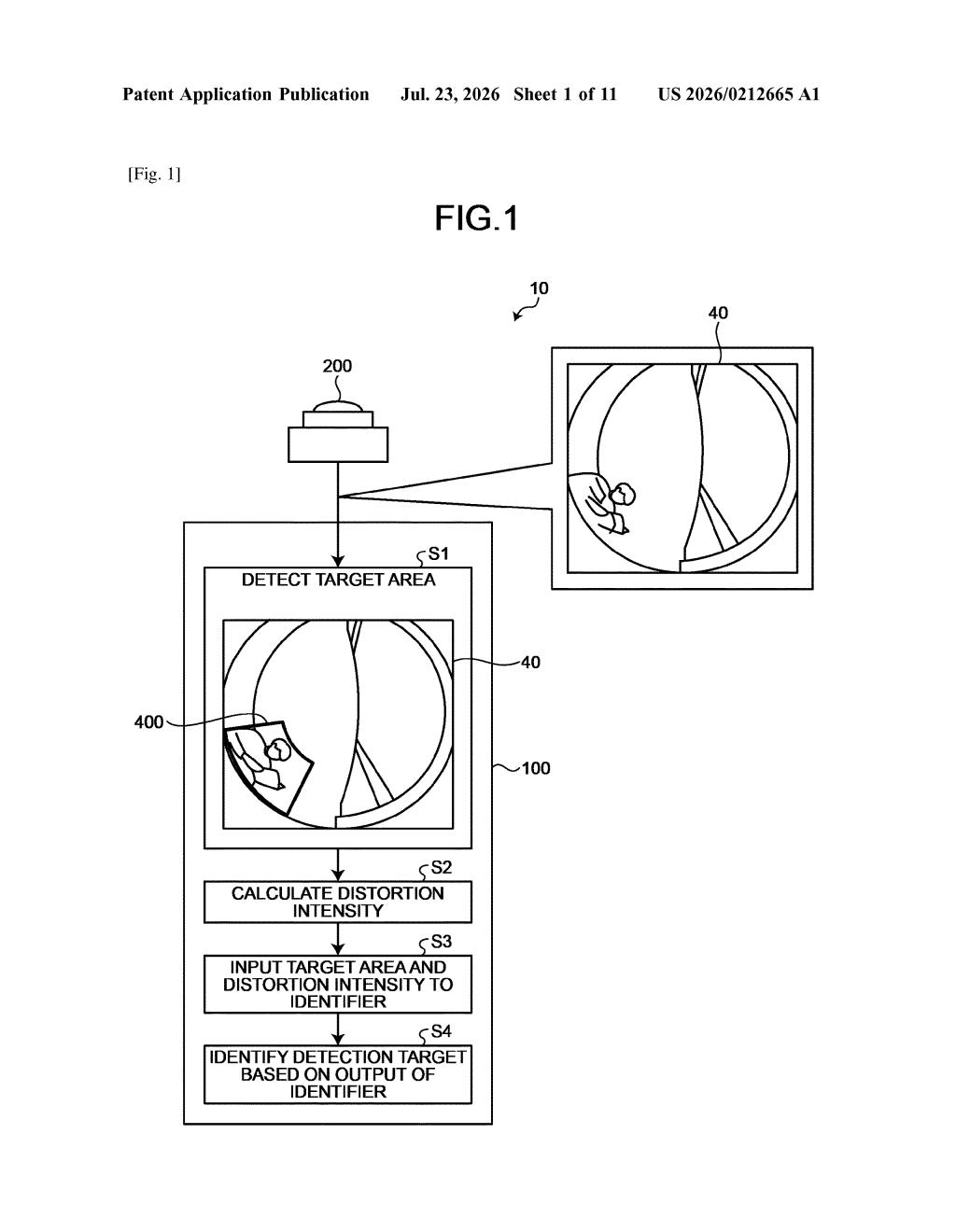
How Sony's wide-angle object detection actually works
Imagine taking a photo with a very wide-angle lens, the kind that lets you capture an entire room in a single shot. The catch is that objects near the edges of the frame look stretched and distorted, like a reflection in a curved mirror. That's a real problem when software is trying to identify what's in the picture.
Sony's patent describes a system where an AI model doesn't just see the image, it also receives information about how much distortion is present in a given part of that image. Think of it as giving the AI a correction map alongside the picture itself.
The goal is more accurate object detection even in the tricky, warped regions that wide-angle lenses produce. Instead of pre-processing the image to try to flatten the distortion first, the model handles everything together, which could mean faster and more consistent results.
How the model uses distortion intensity as an input
The patent describes an information processing apparatus built around a trained neural network model. The system takes two things as input: a target area (a region of a wide-angle image, or the whole image) and a distortion intensity value for that area.
- Target area: A crop or region from a wide-angle image that the system wants to analyze.
- Distortion intensity: A numeric measure of how much lens distortion affects that specific region. Areas near the edges of a wide-angle frame warp more than the center, so this value changes depending on where in the frame you're looking.
- Trained model: A neural network that has learned to map both the visual content and the distortion level to a detection output, identifying what objects are present.
By feeding distortion intensity directly into the model rather than trying to geometrically correct the image first, the system lets the neural network learn its own internal compensation. The output is a detection result: what objects or targets are present in that region of the wide-angle frame.
What this means for wide-angle cameras and computer vision
Wide-angle and fisheye cameras are increasingly common in surveillance systems, automotive cameras, robotics, and augmented reality headsets. All of these rely on computer vision to identify objects, and all of them suffer from the same lens-distortion problem at the edges of the frame.
If Sony's approach works as described, it could make object detection more reliable in any wide-angle vision system without requiring a separate, time-consuming image-correction step. For applications like driver assistance systems or security cameras, where edge-of-frame accuracy genuinely matters, that kind of improvement is worth paying attention to.
This is a practical, focused patent that addresses a real and well-known limitation in computer vision. It's not spectacular, but the approach of passing distortion metadata directly into a detection model rather than pre-correcting the image is a clean idea. Sony Semiconductor Solutions builds image sensors for cameras across the industry, so a technique like this could show up in a wide range of products.
There are more where this came from
We read every patent application Big Tech publishes and send you the ones worth knowing. Plain English, free, every week.
The drawings
11 drawing sheets from US 2026/0212665 A1 · click any drawing to enlarge


Want this weekly breakdown for a company we don't cover? Patentlyze Pro →
Be the first to weigh in