
Amazon Patent Teaches Self-Driving Cars to Weigh Risk Before Every Move
When a pedestrian might step into the road, how much should a self-driving car slow down? Zoox's latest patent proposes a mathematical answer: the car should react in proportion to how likely that scenario actually is.
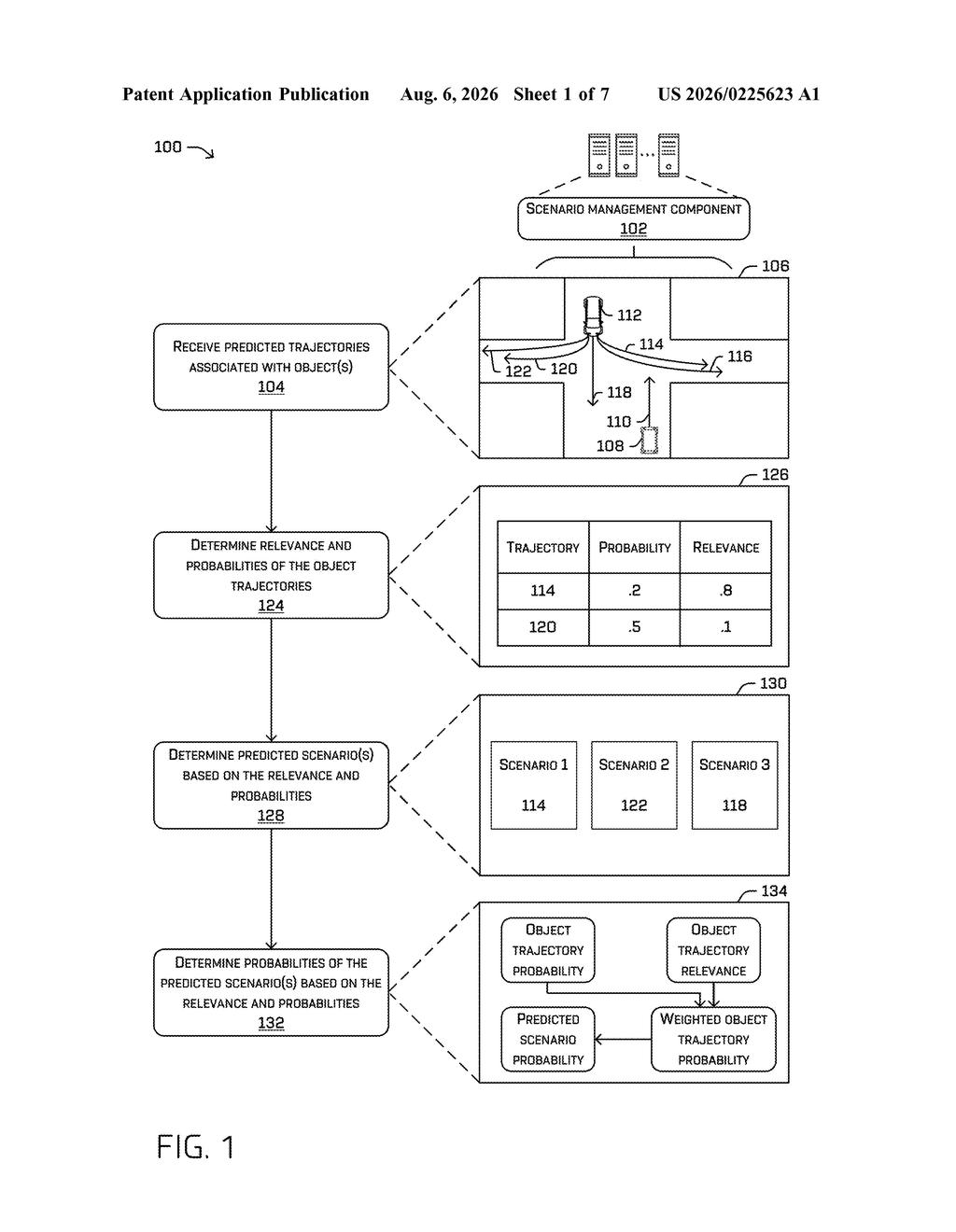
How Zoox's probability-weighted driving decisions work
Imagine you're driving and a car up ahead starts drifting toward your lane. You probably don't slam the brakes immediately, because there's a good chance it'll correct itself. You make a judgment call based on how likely the worst outcome actually is.
Zoox, Amazon's self-driving car division, is patenting a system that brings that same kind of reasoning to autonomous vehicles. The car generates a list of possible actions it could take, then checks how probable each predicted traffic scenario is before deciding how seriously to treat the costs of those actions. If a risky situation is very unlikely, the car dials down how heavily it weighs the cost of not reacting to it.
The practical result is a vehicle that doesn't overreact to every improbable danger, while still staying appropriately cautious when something sketchy is genuinely likely. It's a balancing act between being paralyzed by every possible worst case and being recklessly optimistic.
… determining a subset of costs of the plurality of costs, the subset of costs being less than all of the plurality of costs; determining, for a cost value of the subset of costs and based at least in part on the probability of the predicted object trajectory and the probability of the predicted driving scenario, a modified cost value; …
Translation: The car filters down its calculations and adjusts the risk scores using probability estimates.
Inside Zoox's two-probability cost-scaling system
The system works by combining two separate probability estimates when evaluating any candidate action.
- Object trajectory probability: How likely is it that a nearby car, cyclist, or pedestrian follows a specific predicted path?
- Scenario probability: How likely is the broader traffic situation (a pedestrian crossing, a car merging, etc.) to be happening at all?
For each candidate action, the system calculates a set of costs (think: how bad would it be to take this action, given what might happen next). Then, for a selected subset of those cost values, it computes a modified cost by scaling the value using the ratio of those two probabilities. If the object is very likely to take a specific path but the overall scenario is unlikely, the math adjusts the cost accordingly.
This means the car doesn't treat a low-probability danger the same way it treats a high-probability one. The final decision about which action to take is based on these adjusted, probability-weighted costs rather than raw worst-case estimates. The goal is more proportionate, realistic decision-making rather than a car that constantly over-brakes or under-reacts.
The vehicle may scale some or all of the cost values by a ratio of the object trajectory probability and the predicted scenario probability. Based on the weighted cost values, the vehicle can determine one or more of the candidate actions to follow.
Translation: By weighing the probabilities of what might happen, the car decides which move is safest to make.
What this means for self-driving car behavior in traffic
Self-driving cars have a well-known tendency to be either too timid (stopping unnecessarily and frustrating everyone behind them) or, in rare failures, not cautious enough. A big part of that problem comes from how the car weighs unlikely-but-bad scenarios against likely-but-fine ones. This patent addresses that directly.
For riders in a Zoox vehicle, the change would ideally feel like a car that drives more the way a calm, experienced human driver does: reading the actual situation rather than flinching at every theoretical hazard. For the broader self-driving industry, probability-weighted cost functions are a meaningful step toward vehicles that can handle the full, messy complexity of real city traffic without freezing up or behaving erratically.
This is serious, substantive autonomy work. The math behind cost-weighted scenario probabilities is not glamorous, but it targets one of the genuinely hard problems in self-driving: making decisions that are calibrated to reality rather than to the worst imaginable case. Zoox is a small player with a distinct robotaxi design, and filings like this show they're doing real technical work, not just chasing headlines.
There are more where this came from
We read every patent application Big Tech publishes and send you the ones worth knowing. Plain English, free, every week.
The drawings
7 drawing sheets from US 2026/0225623 A1 · click any drawing to enlarge


Want this weekly breakdown for a company we don't cover? Patentlyze Pro →
Be the first to weigh in