
Samsung Patents Technology That Tells You Exactly Which Video Cable You Plugged In
You plug in an HDMI cable and have no idea if it's the cheap old one or the new high-bandwidth version. Samsung wants to make devices smart enough to figure that out on their own.
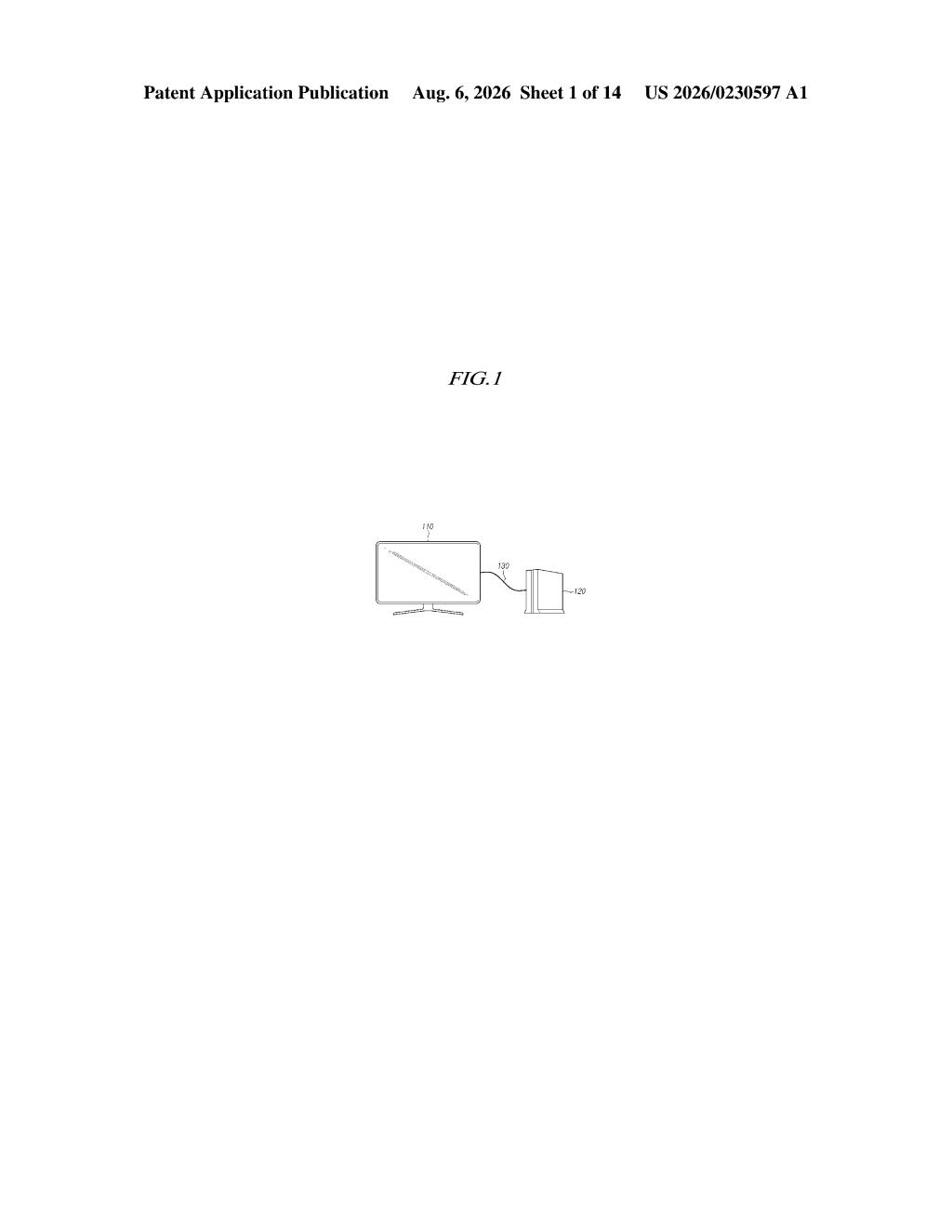
What Samsung's HDMI cable-detection system actually does
Imagine you're setting up a new TV or monitor and you grab an HDMI cable from a drawer. You don't know if it's the old version that tops out at 1080p or a newer one that can handle 4K or 8K. Right now, your TV can't really tell either, and you might end up with a picture that looks worse than it should without knowing why.
Samsung's patent describes a device with two HDMI ports: one that sends a test image and one that receives it back. By comparing what went out to what came back, and checking the resolution, speed, and frame rate of the returned signal, the device can figure out exactly which version of HDMI cable is connected.
That identification could then let the device automatically adjust its output settings to match what the cable can actually handle, so you're not guessing and you're not accidentally leaving quality on the table.
… determine whether the first image data and the second image data match; and in response to the first image data and the second image data matching, identify a version of the HDMI cable based on information associated with the second image data …
Translation: The device compares the sent video to the returned video to figure out what kind of cable it is.
How the device tests and reads the cable's signal
The patent describes an electronic device with both a transmission port (output) and a reception port (input) that work together to test a connected HDMI cable.
Here's the basic process:
- The device sends a known test image out through the transmission port.
- That image travels through the connected HDMI cable and loops back into the reception port.
- The device compares what it sent to what it received to confirm the cable is properly connected and carrying the signal.
- If the two images match, it then reads the signal properties, specifically the resolution, bandwidth, and frame rate of the received image, to determine the cable's version.
Different HDMI versions (1.4, 2.0, 2.1, and so on) have different maximum bandwidths, which means they cap out at different resolution and frame-rate combinations. By checking what the cable could actually deliver, the device can pin down which version it is without relying on a label or a chip embedded in the cable.
The information associated with the second image data comprises at least one of resolution information, bandwidth information, or frame rate information associated with the second image data.
Translation: It checks the video quality, data speed, and frame rate to determine the cable capabilities.
What this means for your next TV or monitor setup
HDMI cables are notoriously confusing for consumers. Cables are rarely clearly labeled, and even when they are, those labels are easy to lose track of. Plugging in the wrong cable means your 4K TV might display a lower-quality image without telling you anything is wrong. A device that auto-identifies the cable version could surface that problem and fix it automatically, saving you from a bad picture you didn't know you had.
For Samsung specifically, this kind of feature fits neatly into its TV and monitor business, where it could distinguish high-end displays by making setup genuinely foolproof. It also matters for developers of home theater equipment, where cable compatibility errors are a common and annoying support headache.
This is a practical, unsexy fix for a real consumer annoyance. HDMI cable confusion has caused quiet quality problems for years, and auto-detection is an obvious solution nobody has pushed hard enough. It's not a headline-grabbing patent, but it's exactly the kind of thoughtful quality-of-life engineering that could make a product line stand out.
There are more where this came from
We read every patent application Big Tech publishes and send you the ones worth knowing. Plain English, free, every week.
The drawings
14 drawing sheets from US 2026/0230597 A1 · click any drawing to enlarge


Want this weekly breakdown for a company we don't cover? Patentlyze Pro →
Be the first to weigh in