
Google Patent Reveals Voice Assistants Predicting User Words Before They're Spoken
Google's voice assistant could soon be stacking the deck in its own favor, predicting the words you're likely to say before you open your mouth, and tuning its microphone software to catch them accurately.
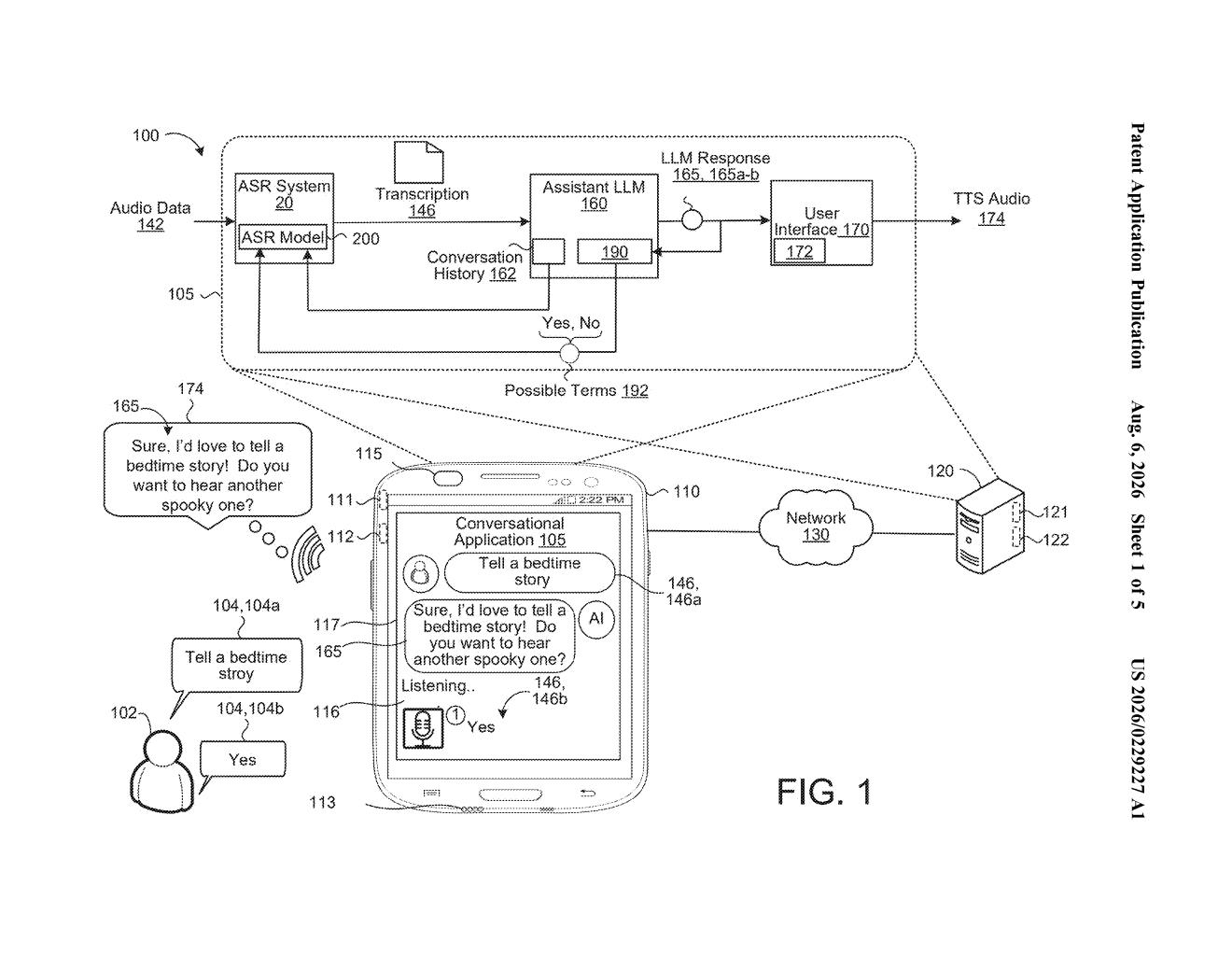
How Google's voice assistant pre-tunes itself to hear you
Imagine asking your Google Assistant something complicated, like the name of a medication or a foreign city, and it mishears you because those words are unusual. That's one of the most frustrating things about voice assistants today: they're trying to recognize speech without any context about what you're probably about to say.
This patent describes a fix. After the assistant finishes its response to your question, the AI takes a moment to predict what you might say next, based on what it just told you. If it mentioned three hotel options in Kyoto, it expects you might say "Kyoto," "the second one," or "how much?" It then adjusts its voice-recognition software to listen for exactly those words.
The result is that when you do speak, the system already has a head start on understanding you correctly, even if your pronunciation is unclear or the word is obscure. It's the difference between a friend who's been paying attention to the whole conversation and a stranger you just tapped on the shoulder.
… predicting, by the assistant LLM, one or more possible terms the user may speak in a follow-up query to the response generated by the assistant LLM during a user turn subsequent to the assistant turn in the voice-based conversation …
Translation: The AI anticipates what you might say next based on what it just told you.
How the LLM biases the speech recognition model in real time
The patent describes a system where a large language model (LLM), the same AI generating the assistant's spoken responses, also predicts a list of words or phrases the user is likely to say in their next turn of the conversation.
Those predicted terms are fed into an automated speech recognition (ASR) model (the software that converts your spoken words into text). The ASR model is then "biased" toward those terms, meaning it assigns them a higher probability during decoding, so even if the audio is slightly unclear, the system is more likely to land on the right word.
The key detail is timing: this bias is applied between the assistant's turn and your response, using the gap that naturally exists in conversation. The LLM is already running, so predicting likely follow-up terms adds relatively little overhead.
- The assistant LLM generates a response for the user
- The same LLM predicts probable words or phrases the user may say next
- Those predictions update the ASR model's recognition weights
- When the user speaks, the biased ASR model transcribes their audio with higher accuracy
… biasing an automated speech recognition (ASR) model toward recognizing the one or more possible terms predicted by the assistant LLM …
Translation: It primes the speech recognition system to listen specifically for those expected words.
What this means for Google Assistant and voice AI accuracy
Voice assistant errors are often worst precisely when the conversation gets specific, after the assistant has already said something complex and you're reacting to it. This approach targets that exact weak spot by using the conversation's own momentum to improve recognition accuracy on the fly. For users asking about medical terms, proper nouns, or product names the assistant just mentioned, this could mean meaningfully fewer "I didn't catch that" moments.
For Google, this is also a way to extract more value from the LLM that's already running. Rather than treating the speech recognition layer as a separate, static component, this patent ties understanding and listening together into a single feedback loop, which is a direction the whole voice AI industry is moving toward.
This is a genuinely useful idea, not a flashy one. The core insight, that an AI which just spoke to you has a strong statistical advantage in predicting what you'll say back, is simple and correct. Whether this makes it into a shipping Google product or stays buried in infrastructure is an open question, but the underlying logic is sound enough that it probably should.
There are more where this came from
We read every patent application Big Tech publishes and send you the ones worth knowing. Plain English, free, every week.
The drawings
5 drawing sheets from US 2026/0229227 A1 · click any drawing to enlarge


Want this weekly breakdown for a company we don't cover? Patentlyze Pro →
Be the first to weigh in