
Google Patents a Universal Microphone Button That Drops Into Any App
Instead of asking every app developer to build voice support from scratch, Google is patenting a ready-made microphone button that any app can borrow, one that already knows what's on your screen when you tap it.
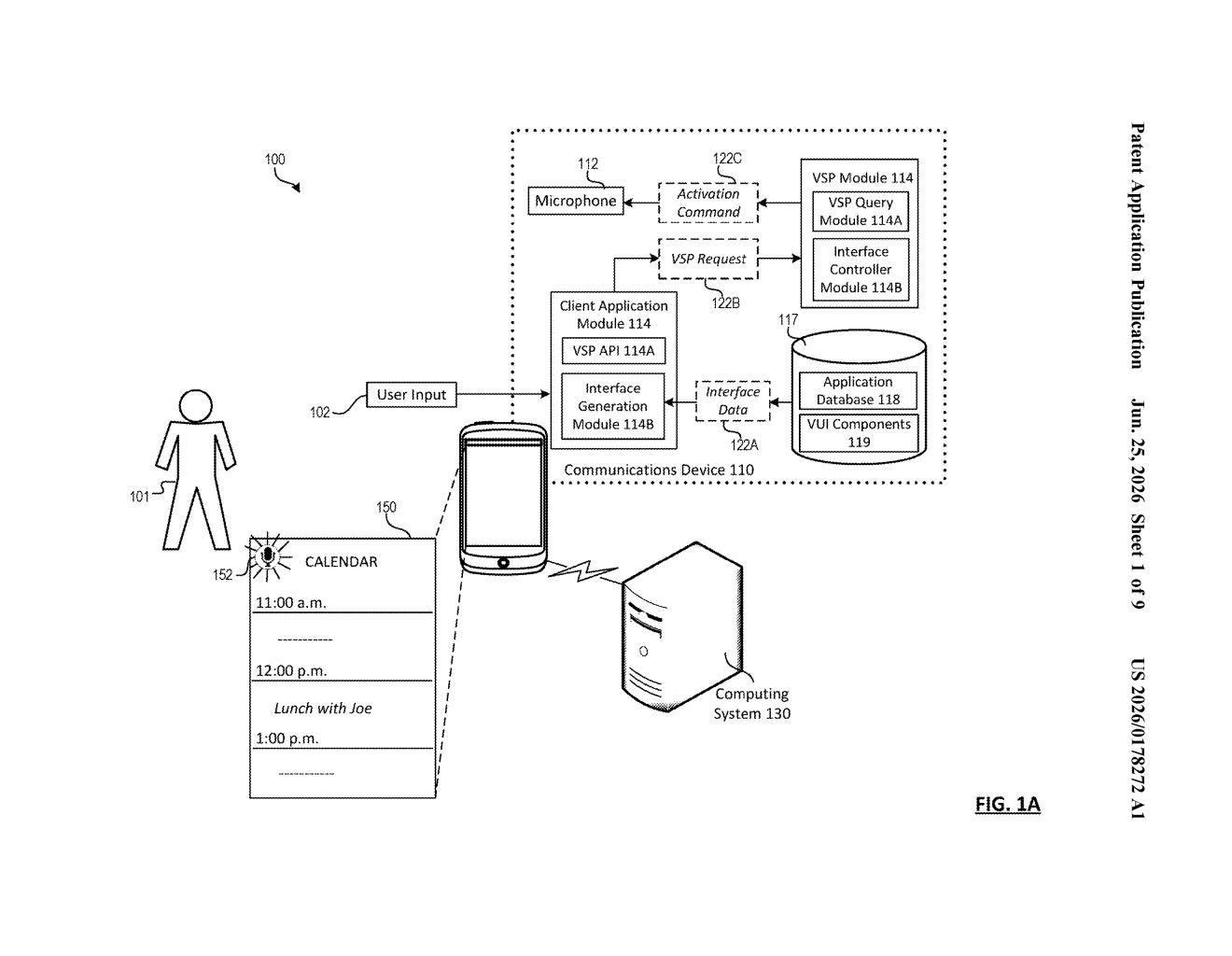
What Google's plug-in voice button actually does
Imagine you're using a shopping app and you want to find a specific product. Right now, most apps either have no voice search at all, or they've built their own clunky version that only half-works. Google's patent describes a different approach: a single, pre-built microphone button that any app can include without doing the hard work themselves.
When you tap that button, two things happen at once. Your phone records what you say, and it also captures a snapshot of what's currently on your screen, so the system understands the context of your request. The answer comes back and appears as a pop-up overlay on top of the app you're already using, without kicking you out to a separate Google screen.
The key detail is that the microphone button is provided by Google's own library or API, not by the app itself. That means the app developer doesn't have to build any of this. They just drop in Google's component, and their users get voice control.
How the overlay reads the screen and sends your voice
The patent describes a software component, distributed as a library or API (a ready-made code package that app developers plug into their own apps), that handles voice interaction entirely on Google's side.
When a user opens a third-party app that has included this component, they see a microphone interface element, basically a mic button, inside the app's own screen. That button wasn't built by the app developer; it was injected by Google's library. When tapped, the button visually changes state to show it's active, then the phone:
- Records the user's spoken request
- Captures screen context data (a description of what's currently visible in the app, so the system knows what you're looking at)
- Sends both the audio and the screen snapshot to Google's servers
- Receives a response payload (a structured answer or action) back from Google
The result is displayed as an overlay that floats on top of the app's native interface. Crucially, the microphone button itself stays visible beneath the overlay, so the user can ask follow-up questions without dismissing anything. The entire voice interaction layer is rendered by Google's library, not by the app, which means the app developer's code never has to touch any of the voice logic.
What this means for Android apps and Google Assistant
For Android users, this could mean voice control shows up consistently across apps rather than being a feature each developer has to reinvent. The screen-context detail is particularly important: instead of a voice assistant that only hears words, this system also sees what you're looking at, making responses far more relevant to what you're actually doing in the moment.
For Google, this is a way to extend its voice and AI infrastructure into the fabric of third-party apps without waiting for those developers to build integrations themselves. It also positions Google as the layer that processes your voice requests across the whole phone, not just inside Google's own apps. That's a significant strategic position in the broader competition over on-device AI assistants.
This is a quiet but important infrastructure patent. The real move here isn't the microphone button itself, it's the screen context data being sent alongside your voice. That combination is what makes a voice assistant actually useful inside an app, and Google is filing to own the architecture for how that works across Android. Worth paying attention to.
There are more where this came from
We read every patent application Big Tech publishes and send you the ones worth knowing. Plain English, free, every week.
Want this weekly breakdown for a company we don't cover? Patentlyze Pro →