
Nvidia Patents a More Accurate Way to Light Hair and Fur in 3D Scenes
Getting hair, fur, and fabric to look real in a 3D scene is one of the oldest headaches in computer graphics. Nvidia has filed a patent for a calculation method that breaks down exactly how light bounces around inside a single strand, then approximates the result fast enough to use in a renderer.
How Nvidia's fiber lighting math works in plain English
Imagine shining a flashlight at someone's hair. Light doesn't just bounce off the surface. It enters each strand, scatters around inside, and exits at different angles with a slightly different color. Recreating that in a computer is genuinely hard, and cutting corners makes hair look plastic or flat.
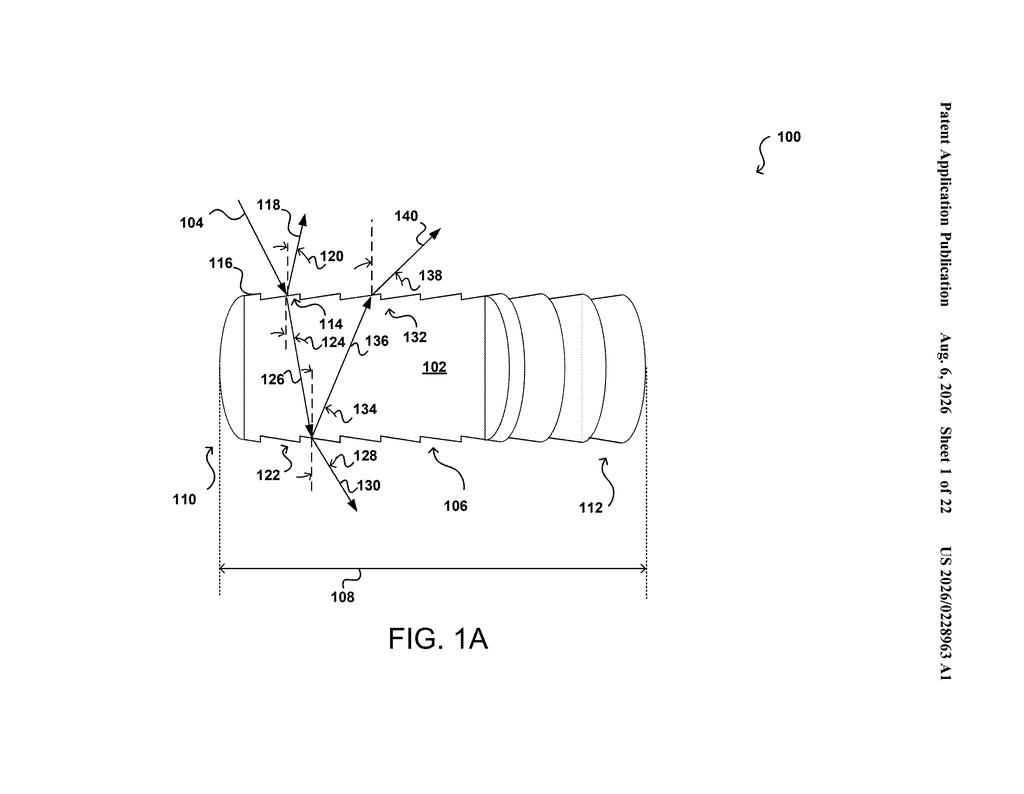
Nvidia's patent describes a system that splits the light interaction into distinct categories, things like light that bounces straight off the outside of a strand versus light that passes through and exits the other side. For each category, it uses a mathematical shortcut (called a Gaussian, essentially a bell-curve approximation) to get close to the correct answer without doing the full, expensive calculation.
The result is a more physically accurate picture of how fiber-based materials look under different lighting conditions, built in a way that a graphics processor can run efficiently. Think better hair in games, more convincing fur on animated characters, or more realistic fabric in product visualizations.
determine, for a graphical representation of a three-dimensional (3D) environment, coordinates for an interaction between a light and a representation of an object in the environment …
Translation: The system calculates the exact meeting point between light rays and hair or fur strands in a 3D scene.
How the scattering functions approximate light on fibers
The patent describes a processor-level system for computing total reflectance (the full accounting of light leaving a surface) for thin fibers like hair or fur strands. It breaks that total reflectance into separate components based on how the light physically interacts with the strand.
Each interaction mode is handled separately:
- Surface reflection: light that bounces off the outer cuticle of the strand
- Transmission-reflection: light that enters the strand, reflects off the inner wall, and exits back toward the viewer
- Forward transmission: light that passes through the strand entirely
For each mode, the system computes a set of components and approximates at least one of them using Gaussians (bell-shaped mathematical curves that are cheap to evaluate on a GPU). A Gaussian can closely mimic the shape of a real scattering lobe without requiring the exact integral, saving significant compute time.
All the mode-specific components are then combined into a single reflectance value that the rendering pipeline uses to color the pixel. The claim specifies that the computation happens at a precise coordinate of the light-fiber interaction, meaning it can vary correctly along the length and width of each strand.
One or more sets of scattering functions may approximate different interactions between the one or more fibers and the light source to generate components of the total reflectance based on the individual interactions.
Translation: Math formulas approximate how light bounces off individual strands to calculate their overall brightness and color.
What this means for real-time graphics and visual effects
Hair and fur have been notoriously expensive to render realistically for decades. Most real-time engines use simplified shading models that look acceptable but don't hold up under close scrutiny or dynamic lighting. A method that produces physically accurate results using GPU-friendly math could raise the quality ceiling for game engines, virtual production tools, and real-time simulations without requiring a proportional jump in hardware cost.
For you as a player or viewer, the downstream effect would be characters whose hair actually responds to light the way it does in the real world, different in sunlight versus shade, wet versus dry, and viewed from different angles. Given that Nvidia's GPU business sits at the center of both PC gaming and professional rendering, a patented improvement here could find its way into its graphics APIs or future GPU architectures.
This is a focused, technically specific patent in a problem space that genuinely matters for high-fidelity graphics. It's not a flashy AI story, but physically based fiber shading is exactly the kind of foundational rendering work that separates convincing digital humans from the uncanny valley. The use of Gaussian approximations is a well-understood technique, so the real value here is in how Nvidia has structured the decomposition of interaction modes.
There are more where this came from
We read every patent application Big Tech publishes and send you the ones worth knowing. Plain English, free, every week.
The drawings
22 drawing sheets from US 2026/0228963 A1 · click any drawing to enlarge


Want this weekly breakdown for a company we don't cover? Patentlyze Pro →
Be the first to weigh in