
Nvidia Patents Technology to Pre-Sort Virtual Objects for Faster Game Visuals
Every 3D scene is made of millions of tiny triangles, and the order in which your GPU processes them matters enormously. Nvidia is patenting a smarter way to sort those triangles into groups before the rendering work even begins.
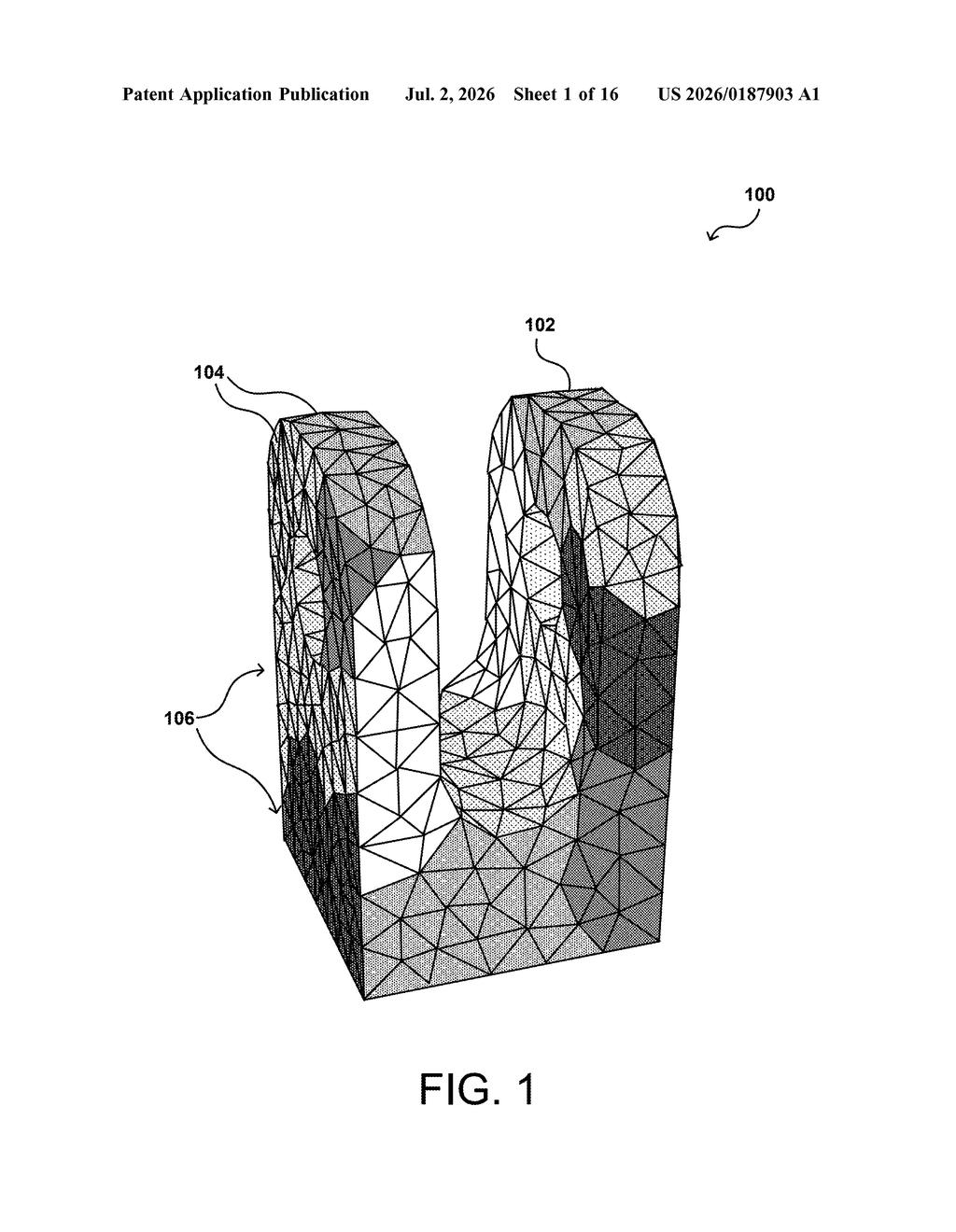
What Nvidia's triangle-grouping system actually does
Imagine a jigsaw puzzle factory that pre-sorts pieces into small bags by where they fit on the board, so assemblers never have to dig through the whole pile. That's roughly what this patent does for 3D graphics. When your computer renders a game scene or a movie effect, the GPU works through enormous meshes made of tiny triangles. How those triangles are organized in memory affects how fast the GPU can chew through them.
Nvidia's system groups triangles into clusters based on two things: how close they are to each other in space, and how connected they are to neighboring triangles. A cost function (a scoring formula) balances those two goals, and the system runs multiple passes to find the arrangement with the lowest score.
The result is a set of tightly packed, well-connected clusters that downstream hardware, like Nvidia's own ray-tracing or mesh-shader units, can process more efficiently. You probably wouldn't see this as a feature in a settings menu, but it could show up as faster frame rates or shorter scene-load times.
How the cost function balances space and connectivity
The patent describes a processor-level system that takes a 3D mesh (a shape made of many geometric primitives, typically triangles) and groups those triangles into clusters before the main rendering pipeline runs.
The clustering uses two types of cost calculations per iteration:
- Spatial cost: calculated using a surface area heuristic (a standard graphics technique that estimates how much screen area a bounding box covers, so smaller, tighter boxes score better).
- Cut cost: counts how many triangle-to-triangle connections cross the border between groups, or stay unnecessarily inside a group. Fewer cross-border connections means a cleaner, more self-contained cluster.
The system runs these calculations across multiple iterations, adjusting the groupings each time, and then outputs whichever arrangement had the lowest combined score.
The weighting between spatial and connectivity costs can be tuned depending on what kind of rendering work comes next, whether that's ray tracing (which benefits from tight spatial bounds) or mesh shading (which prefers well-connected triangle strips). That tunability is what makes this more flexible than a one-size-fits-all clustering scheme.
What this means for real-time graphics on Nvidia hardware
For Nvidia, this kind of pre-processing optimization feeds directly into the performance of its proprietary rendering features, particularly mesh shaders and hardware ray tracing, both of which depend on triangles being organized predictably in memory. Better clustering means the GPU wastes fewer cycles fetching distant or disconnected geometry.
For you as a gamer or a 3D artist, the patent lives several layers below anything you'd configure yourself. But the work it describes is exactly the kind of low-level tuning that adds up across a frame. It also suggests Nvidia is thinking about hardware-aware geometry preparation, meaning the clustering strategy could be tailored to specific GPU architectures rather than being a generic algorithm baked into a content-creation tool.
This is deep pipeline infrastructure work, the kind of patent that matters to Nvidia's GPU architects far more than to end users. It's not flashy, but improving triangle clustering is a legitimate performance lever for ray tracing and mesh shading workloads, and the fact that the cost function is tunable per downstream task shows real engineering thoughtfulness. Worth a look if you follow GPU architecture; easy to skip if you don't.
Get our take in your Top Stories
Liked this breakdown? Add Patentlyze as a preferred source on Google, and our plain-English take shows up more often in your Top Stories the next time Nvidia patent news breaks.
There are more where this came from
We read every patent application Big Tech publishes and send you the ones worth knowing. Plain English, free, every week.
Want this weekly breakdown for a company we don't cover? Patentlyze Pro →