
Nvidia Patents an AI Coach That Tells Signers How to Fix Their Hand Positions in Real Time
Learning sign language is hard precisely because small differences in hand shape change meaning entirely, and there's no always-available human teacher to catch your mistakes. Nvidia's new patent describes an AI that watches you sign on camera and tells you, in the moment, exactly how to move your hands to match the correct form.
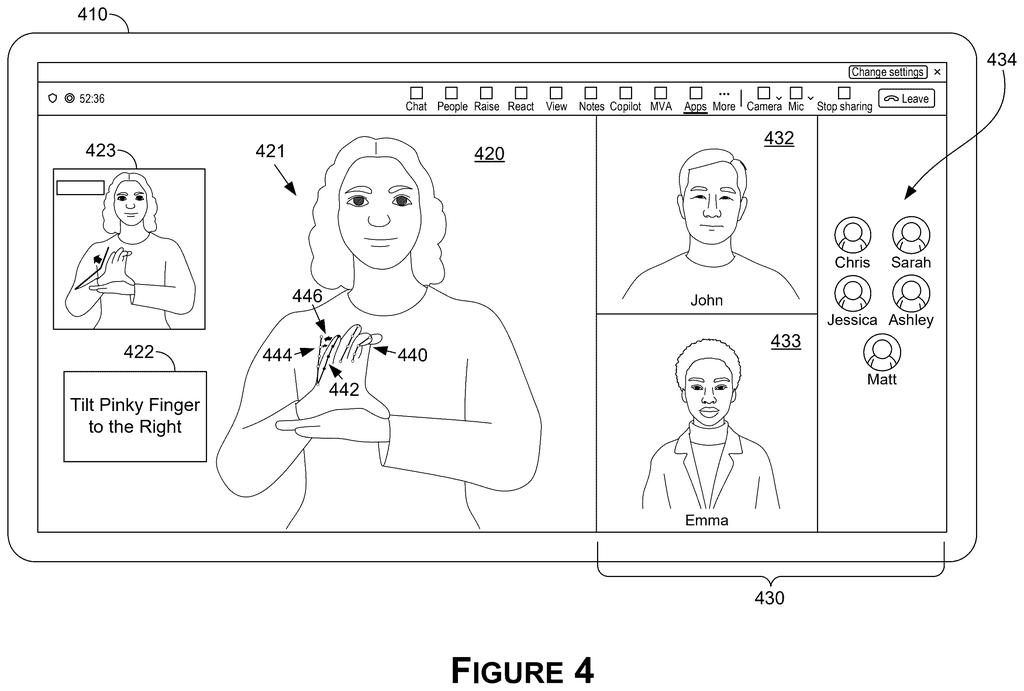
What Nvidia's sign language feedback system actually does
Imagine you're learning American Sign Language and you're practicing alone in front of your laptop. You make a sign, but your fingers are slightly off. Normally you'd need a teacher watching to catch that. Nvidia's system is designed to be that teacher.
The AI watches your hands through a camera, figures out what sign you were trying to make, and then compares your hand position to the correct version from a sign language dictionary. If your index finger should be two inches higher, it tells you that, right now, while you're practicing.
The goal is to give anyone learning sign language a tool that gives them honest, specific corrections without needing a live instructor in the room. That could matter a lot for people in areas where certified sign language teachers are hard to find, or for deaf and hard-of-hearing people who want to refine their signing on their own schedule.
… compute one or more kinematic keypoint location deviations between a first set of kinematic keypoints of the standardized kinematic keypoint pattern and a second set of kinematic keypoints of the extracted one or more sign language body pose kinematic keypoint symbols …
Translation: The system measures the exact distance between where your hands are and where they are supposed to be.
How the system maps your hands and finds the gap
The system takes in video of a person signing and runs it through a machine learning model to extract kinematic keypoints (think of these as digital dots placed on your joints, knuckles, wrists, and shoulders that together describe the exact shape and position of your hands and arms).
Those keypoints are then compared against a sign language dictionary, which stores the correct keypoint patterns for every recognized sign. The system finds the sign you were most likely trying to make, then calculates the precise differences between your actual hand shape and the standard one.
Based on those differences, it generates corrective feedback displayed in a user interface. That feedback describes specific adjustments: not just "your hand is wrong" but something closer to "rotate your wrist outward" or "extend your index finger further."
The process is designed to run in real time, so feedback arrives while you're still in the middle of a practice session rather than after the fact. The system uses a tolerance threshold, so minor natural variation doesn't trigger false corrections, only meaningful deviations from the standard form.
… generate real-time kinematic feedback to a sign language speaker that guides them to adjust their hand pose to correctly align with established sign language standard symbols …
Translation: It watches you sign and immediately tells you how to fix your hand positions to match proper standards.
What this means for sign language learners and accessibility tech
Sign language instruction has historically depended on in-person access to fluent signers or certified teachers, which is not always possible. A real-time AI correction tool could make practice more accessible and self-directed, whether for hearing people learning to sign or for deaf and hard-of-hearing users refining their accuracy.
For Nvidia, this sits at the intersection of computer vision and accessibility, two areas where the company's GPU and AI infrastructure is already deeply embedded. If this technology makes it into a consumer app or a platform SDK, it could turn any camera-equipped device into a signing practice tool, which is a meaningful expansion of what AI-powered body-tracking can do beyond gaming and fitness.
This is a genuinely useful application of Nvidia's existing pose-estimation technology, pointed at a problem that actually affects real people in concrete ways. Sign language learners have had very few tech tools that give honest, specific feedback, and this patent describes a system that could fill that gap. Whether Nvidia ships it as a product or licenses the approach is the real question.
There are more where this came from
We read every patent application Big Tech publishes and send you the ones worth knowing. Plain English, free, every week.
The drawings
8 drawing sheets from US 2026/0229144 A1 · click any drawing to enlarge


Want this weekly breakdown for a company we don't cover? Patentlyze Pro →
Be the first to weigh in