
New Patent Syncs Live Game Content to a Second Screen Based on Its Display Capabilities
Imagine your phone showing a live map, item inventory, or cutscene while your TV handles the main game action, and it all just works without you setting anything up. That's the core idea behind this Sony patent.
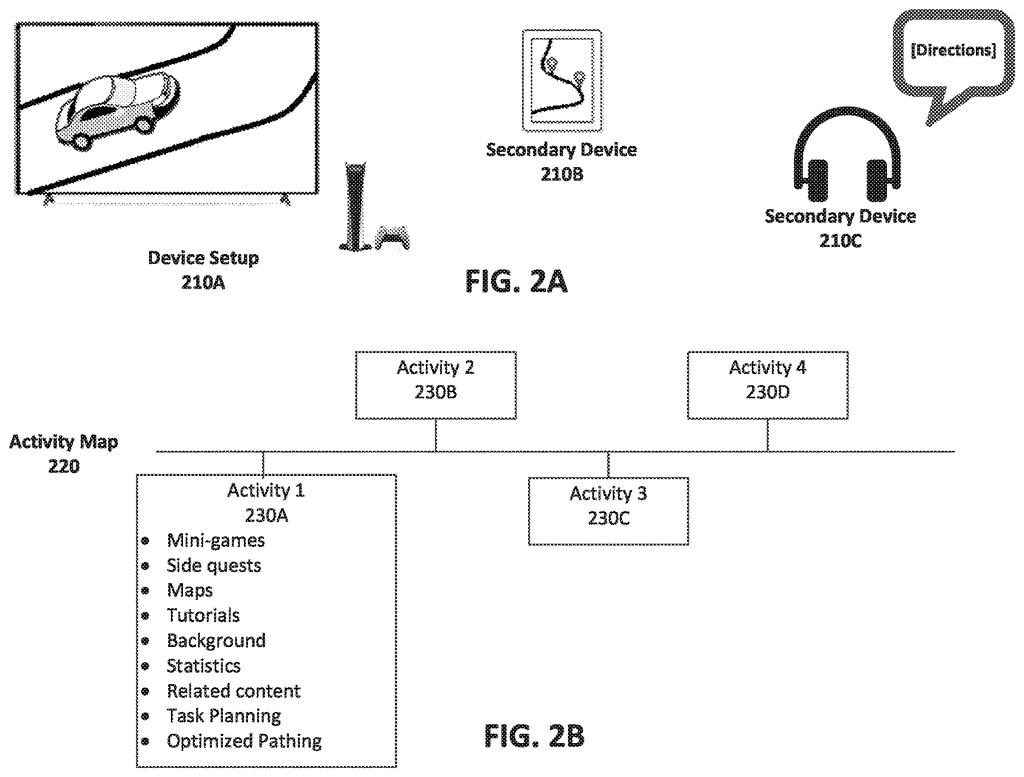
What Sony's second-screen game sync actually does
Picture this: you're playing a game on your PlayStation, and without touching any settings, your phone or tablet lights up with a companion view, maybe a zoomed-in map, a character stats screen, or a cinematic that's too cramped to read on a TV. That's what Sony is patenting here.
The system watches what's happening in your game session and automatically builds a content package tailored to whatever second screen you have nearby. If your tablet supports high dynamic range or a wide aspect ratio, the package accounts for that. If your phone is a more basic display, it sends something that fits.
It's the kind of "it just works" experience Sony has been aiming at for years, where your other devices feel like genuine extensions of your console rather than disconnected apps you had to manually configure.
monitoring an interactive session associated with a first device, wherein the interactive session includes a presentation of a virtual environment associated with an interactive content title that is generated by the first device; …
Translation: The system watches the main video game while it runs on your primary screen.
How Sony packages and delivers content per device capability
The patent describes a server-side (or console-side) method that continuously monitors an active game session on a primary device, such as a PlayStation console. While the game is running, the system generates what the filing calls a content package, a bundle that contains a content file (supplemental media, UI elements, or interactive overlays tied to the game) along with metadata about the second screen's audiovisual capabilities.
Those capabilities might include things like screen resolution, color depth, HDR support, aspect ratio, or audio output quality. The system reads what the second device can handle and shapes the package accordingly, so a high-end tablet gets a richer presentation than a basic smartphone.
The content package is then pushed to the second device during the active session, not as a separate app download but as a live delivery. When the second device receives and runs the package, it generates a supplemental presentation: a companion view that's synchronized with whatever is happening in the game at that moment.
The claim also covers a "handoff" scenario, where the session or content can shift from the primary device to the second screen entirely, not just supplement it. This suggests the system could support mid-session transfers, for example moving gameplay from a TV to a handheld.
The content package, when executed by the second device, generates a supplemental presentation associated with the interactive content title and is based on the one or more audiovisual capabilities of the second device.
Translation: Your phone or tablet builds a custom companion display tailored to what your specific screen can handle.
What this means for PlayStation's multi-screen future
Sony's PlayStation ecosystem already has pieces of this, Remote Play lets you stream games to a phone, and some titles have offered companion apps. But those solutions require manual setup and rarely adapt to what your specific device can show. This patent describes something more automatic and capability-aware, which is a meaningful upgrade if it ships. For players, it means your second screen stops being a mirror or a clunky side app and starts acting like a genuine part of the game interface.
The "handoff" angle is also worth watching. If Sony is building infrastructure to transfer an active session between devices mid-play, that's foundational work for a future where you pick up where you left off on any screen without thinking about it. That matters a lot if Sony ever releases a new dedicated handheld alongside the PlayStation 6.
This is a patent with real teeth. Sony has the hardware ecosystem (PS5, PlayStation Portal, phones, TVs) to actually ship this, and the capability-aware packaging approach solves a genuine problem that companion apps have always fumbled. Watch for this to surface as a PlayStation 6 launch feature or a Portal software update.
There are more where this came from
We read every patent application Big Tech publishes and send you the ones worth knowing. Plain English, free, every week.
The drawings
5 drawing sheets from US 2026/0224984 A1 · click any drawing to enlarge


Want this weekly breakdown for a company we don't cover? Patentlyze Pro →
Be the first to weigh in