
Sony Patents an AI System That Rewrites Enemy Behavior Based on How You Play
Most video game enemies follow a fixed script. Sony is filing to change that with an AI that watches how you play and rewrites enemy behavior around you.
What Sony's self-adjusting game character AI actually does
Imagine you've beaten the same mid-boss a dozen times because you found a reliable trick. It keeps falling for the same bait. The game never gets harder because the enemy never learns. That's a problem Sony seems determined to fix.
This patent describes a system where a machine learning model watches your encounters with non-player characters (the enemies, allies, or neutral figures that the game controls) and then changes how those characters behave or look going forward. It collects data about what you did and what the NPC did during an encounter, feeds that into an AI, and uses the output to update the character's content inside the game.
The result is a game that could, in theory, stop feeling like a puzzle with a permanent solution. The AI adapts the NPC to your playstyle, keeping the experience fresh whether you're a cautious defender or an aggressive rusher.
collecting player data and video game data from at least one of a video game console and a video game device, wherein the player data and the video game data represents at least one encounter between a non-player character (NPC) and a video game player during execution of a video game; …
Translation: The system records how you play during fights against computer characters.
How the model reads your play and rebuilds NPC content
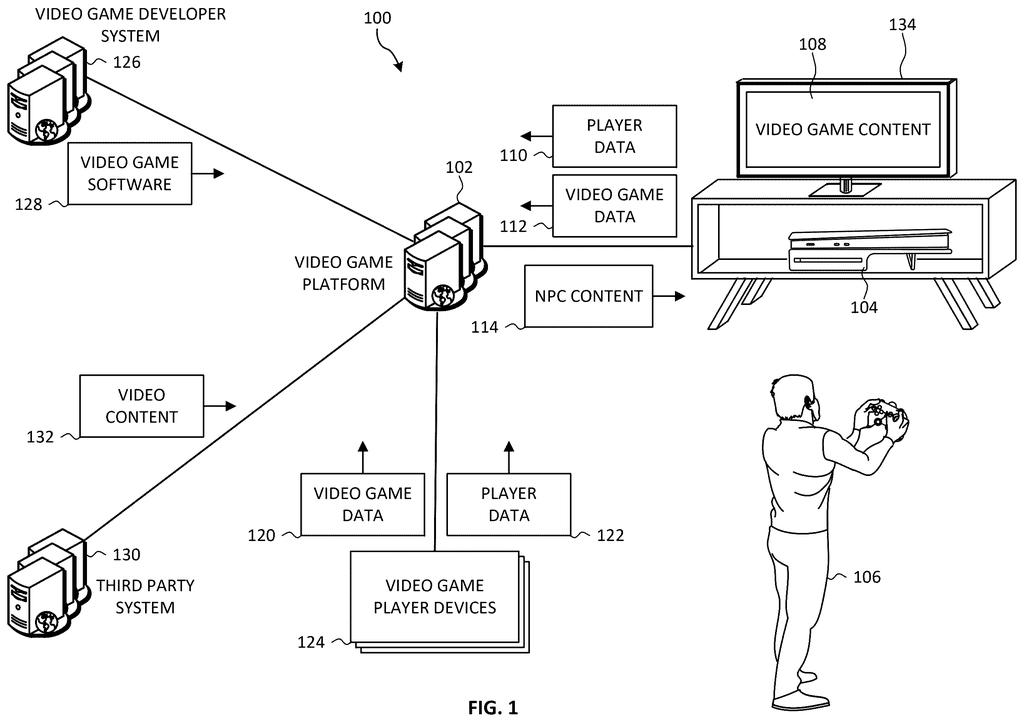
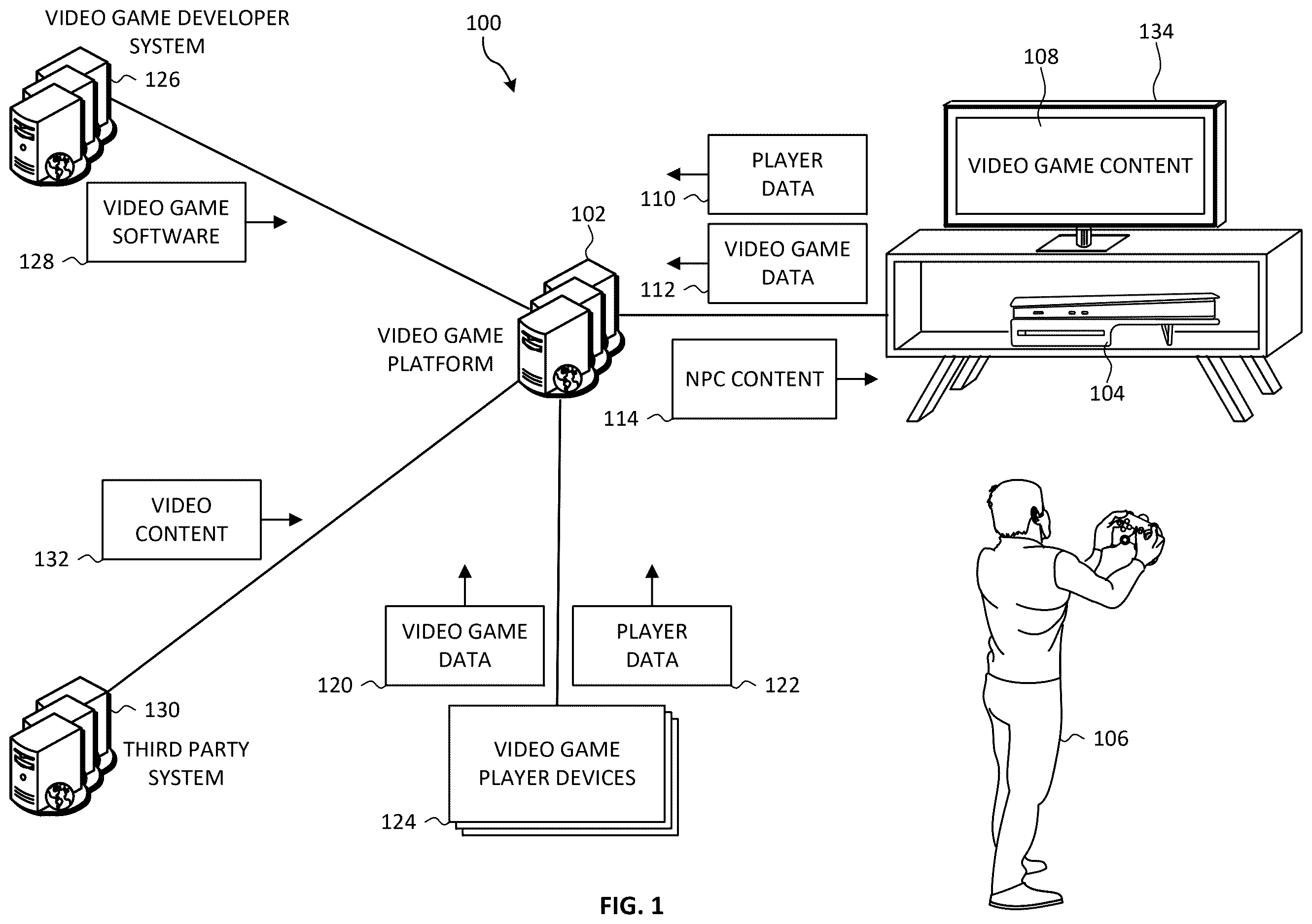
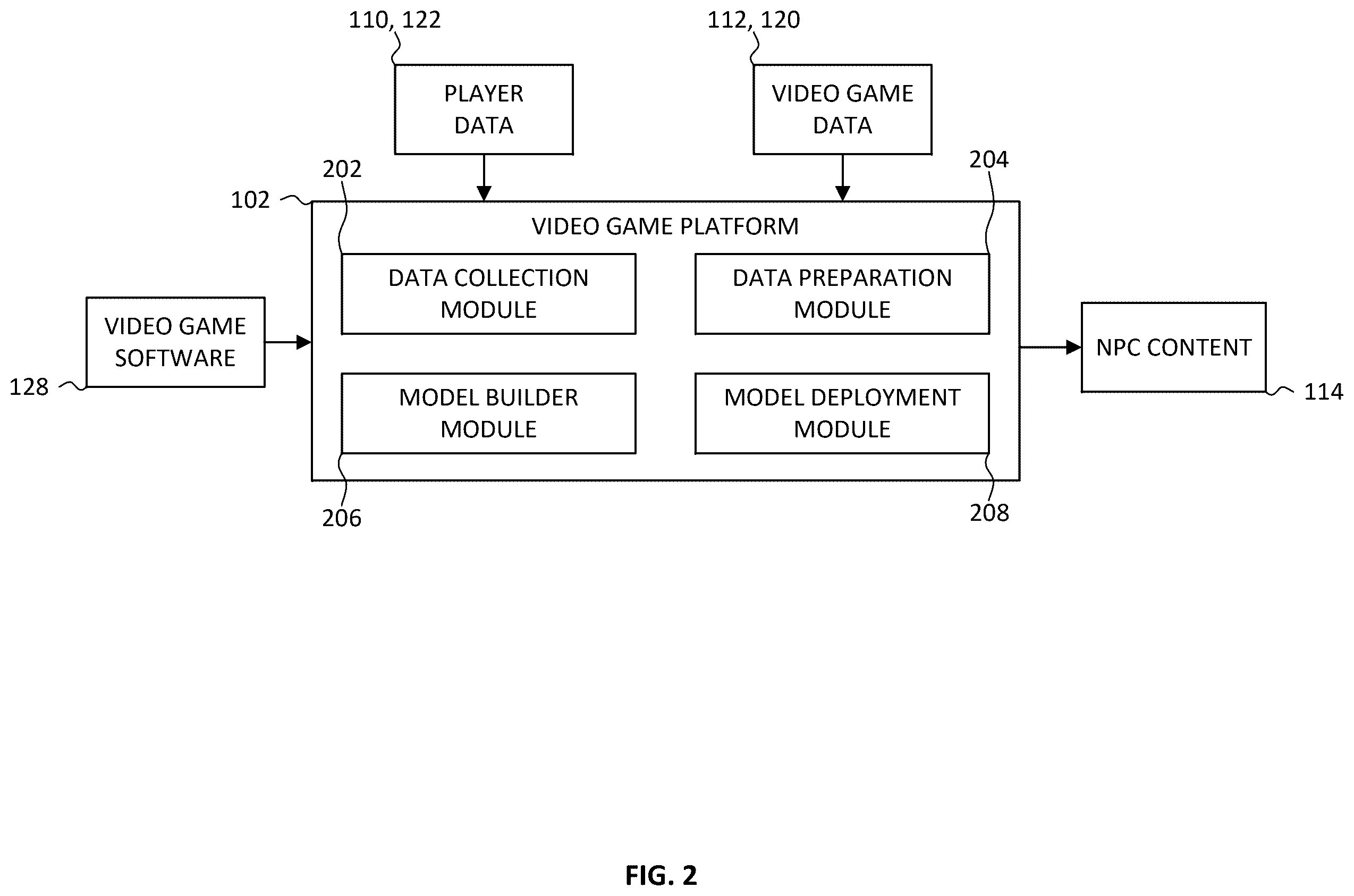
The system has four main steps. First, it collects two kinds of data: player data (what you did during an encounter, such as which attacks you used, how you moved, how long the fight lasted) and video game data (what the NPC did in response).
Second, that combined data is packaged into input for a machine learning model (a type of AI trained to recognize patterns and produce outputs based on what it has learned). The model generates NPC content, which the patent describes broadly enough to cover behavior changes, dialogue, appearance tweaks, or other character attributes.
Third, the game uses that NPC content to modify the video game content itself. So the NPC you face in your next encounter may act differently, respond to different tactics, or present itself differently than it did before.
- Data is gathered from a console or a dedicated game device.
- It covers at least one encounter between a player and an NPC.
- The ML model is configured specifically to generate NPC content.
- The resulting content is applied back to the active game.
The patent does not commit to a specific model architecture, which means the approach is meant to be broadly applicable across different AI systems Sony might use.
Input data for a machine learning model is generated from the player data and the video game data, and the input data is used to obtain non-player character content from the machine learning model.
Translation: An artificial intelligence uses those gameplay details to design new behaviors for the enemies.
What this means for game difficulty and replay value
If this system makes it into real games, it chips away at one of the oldest frustrations in gaming: the moment you crack the code on an enemy and stop fearing it. A self-adjusting NPC doesn't have a fixed code to crack. Your tactics today become the training data that shapes tomorrow's encounter.
For Sony, this also has a business logic. A game that stays challenging and unpredictable for longer keeps players engaged for longer, which matters enormously in an era where a single title is expected to hold attention for months or years. Sony's interest in AI-driven game experience is visible across several recent filings, and this one fits that pattern squarely.
Sony's 18th filing in AI simulation work we've tracked since May builds on earlier applications like one shrinking assets for cloud play and one mapping full 3D game worlds.
The idea doesn't need new hardware, just a game console, a connection to an AI model running somewhere on Sony's servers, and a game designed to accept character updates while it's running. That third requirement is where things get complicated.
Most games today have their characters locked into fixed scripts written before launch. Building a new game from the ground up to accept live AI-driven character changes is realistic. Patching that capability into games people already own is a much heavier lift.
The patent also leaves open what "non-player character content" actually means in practice. Small behind-the-scenes difficulty adjustments would be a modest upgrade on tools game designers already use. Rewritten dialogue or characters who visibly change based on how you play would be something players could actually feel, but would cost far more to build and maintain. The document covers both possibilities without committing to either.
There are more where this came from
We read every patent application Big Tech publishes and send you the ones worth knowing. Plain English, free, every week.
The drawings
6 drawing sheets from US 2026/0295429 A1 · click any drawing to enlarge


Want this weekly breakdown for a company we don't cover? Patentlyze Pro →
Be the first to weigh in