
Intel Patent Explores EVs Charging and Discharging Based on Grid Energy Demand
Intel has filed a patent for a system that tells electric vehicles when to charge, when to push power back to the grid, and even where to drive based on what the electrical grid needs at any given moment.
What Intel's grid-responsive EV system actually does
Every time a heat wave hits and millions of air conditioners switch on at once, grid operators scramble to keep the lights on. Electric vehicles sitting in garages and parking lots hold enormous amounts of stored energy, but today that energy mostly just sits there.
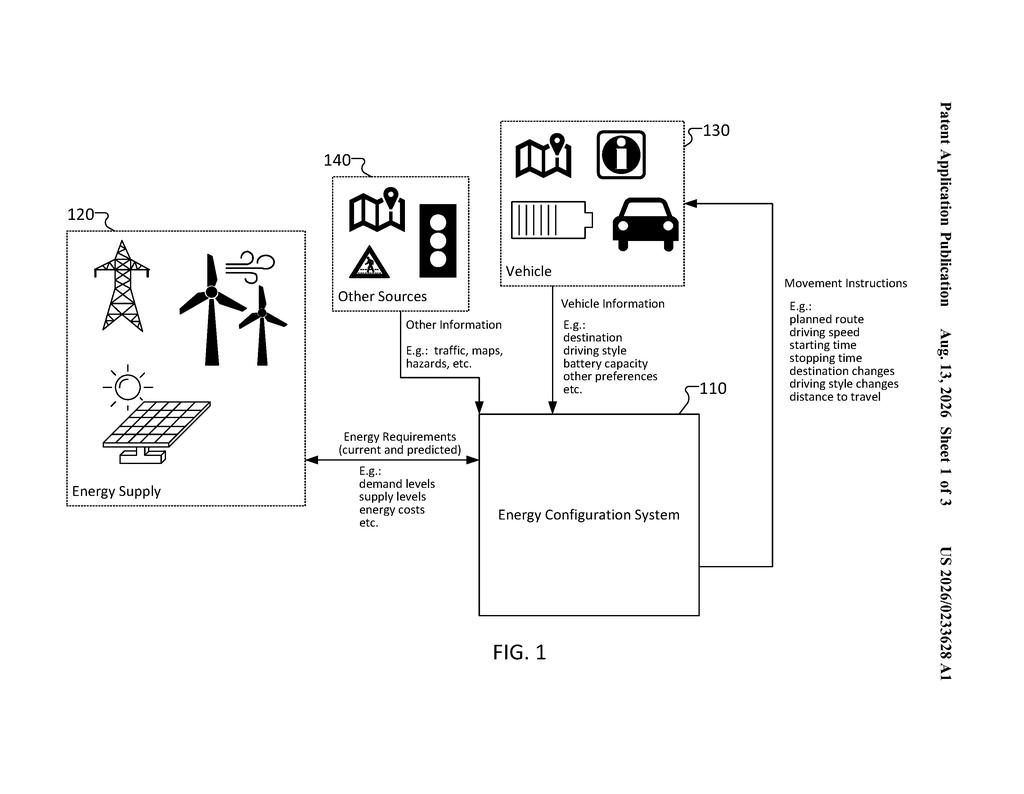
Intel's patent describes a system that would change that. Instead of your EV charging only when you plug it in, an "energy configuration system" would look at what the grid needs right now and build a plan: charge the car during off-peak hours when electricity is cheap and plentiful, or push stored power back to the grid when demand spikes. The system could even generate movement instructions, meaning it could tell an autonomous vehicle to drive itself to a specific location where its battery is needed most.
The idea treats your car's battery less like a personal fuel tank and more like a mobile power station that participates in keeping the broader electricity network stable.
An energy configuration system may determine an energy plan for a vehicle based on energy requirements about a supply of electricity to which the vehicle is capable of dispensing electrical charge, wherein the energy plan includes plans for dispensing electrical charge from the vehicle to the supply and/or for withdrawing electrical charge from the supply.
Translation: The system decides whether your car should charge from the grid or send its stored power back to the grid based on demand.
How the energy plan generates vehicle movement instructions
The patent describes an energy configuration system that sits between an electric vehicle and the electricity grid, coordinating the flow of power in both directions.
At its core, the system does three things:
- Monitors grid energy requirements in real time, pulling data about supply and demand on the electrical network the vehicle is connected to.
- Generates an energy plan that specifies whether the vehicle should draw power from the grid (charging) or send power back to it (a process called vehicle-to-grid, or V2G discharge), and on what schedule.
- Produces movement instructions for the vehicle based on that plan, potentially directing an autonomous EV to relocate to wherever its stored energy is most useful.
The claim of generating actual movement instructions is the most notable piece. Most V2G research focuses on stationary vehicles plugged in at home or in parking lots. Intel's approach extends the concept to mobile assets, treating an autonomous EV as a dispatchable energy resource that can physically reposition itself to serve grid needs. This would require tight integration between the vehicle's driving system and the energy management layer, which is the kind of chip-and-software stack Intel is positioned to supply.
What this means for EV owners and grid operators
For EV owners, a system like this could translate to lower charging costs if the car charges automatically during cheap overnight hours, and potentially to payments or credits for sending power back to the grid during peak demand. For grid operators, a large fleet of EVs behaving as coordinated mobile batteries could reduce the need to fire up expensive and polluting peaker plants during demand spikes.
The harder question is whether the problem is big enough to make autonomous vehicle repositioning practical rather than theoretical. Grid balancing is a genuine and growing challenge as renewable energy (which is intermittent) makes up more of the mix, and the cost of mismatched supply and demand runs into billions of dollars annually in the U.S. alone. Intel filing in this space sits alongside a wave of new Big Tech patents targeting EV infrastructure and energy management, an area where chipmakers are trying to stake out a role beyond the vehicle's powertrain.
The problem Intel is attacking here is real and expensive: power grids are increasingly stressed, and idle EV batteries represent a significant untapped buffer. The bidirectional charging piece of this patent is well-trodden ground, but adding movement instructions, directing vehicles to physically relocate based on grid conditions, is a meaningful step up in ambition. Whether that ambition matches what's actually deployable depends on autonomous driving infrastructure that doesn't yet exist at scale, which puts the practical ceiling of this filing several years out at minimum.
There are more where this came from
We read every patent application Big Tech publishes and send you the ones worth knowing. Plain English, free, every week.
The drawings
3 drawing sheets from US 2026/0233628 A1 · click any drawing to enlarge


Want this weekly breakdown for a company we don't cover? Patentlyze Pro →
Be the first to weigh in