
Google Patents a System That Calls Businesses Back So You Don't Have To
Google has filed a patent for a system that spots a missed call or voicemail, figures out what you probably need to do, and then has an AI voice assistant make the return call and handle the whole conversation for you.
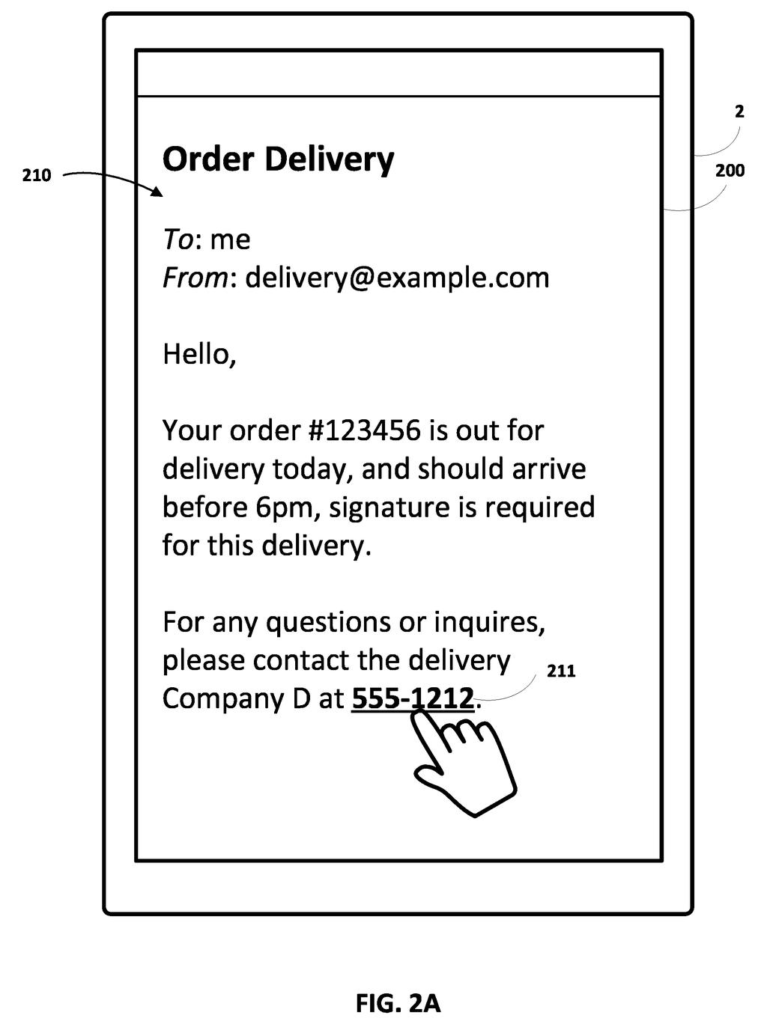
How Google's AI phone-call feature would actually work
Every time you miss a call from your dentist's office, you face the same small but real annoyance: you have to listen to the voicemail, look up the number, call back, sit on hold, and eventually explain what you need. Google's new patent describes a system designed to handle that entire loop automatically.
When your phone receives a voicemail after a missed call, the system checks whether a voice assistant is capable of handling a return call to that contact. If it can, a button appears on your screen offering to let the AI call back for you. You tap it, the assistant places the call, talks to whoever picks up (or navigates a phone menu), and completes the task without you ever saying a word.
The key detail is that the assistant figures out what task to perform before it dials. So if the voicemail is about rescheduling an appointment, the assistant goes into that call with a goal already in mind, not just an open line.
… causing the voice assistant to initiate and conduct the return telephone call to perform the task on behalf of the user.
Translation: Your AI calls the business back and handles the conversation for you.
How the assistant detects, decides, and dials for you
The patent describes a two-stage process. First, the system receives a voicemail following a missed call and runs a check: does the voice assistant have enough knowledge about this entity (a business, a service provider) to conduct a return call on the user's behalf? That determination could rely on prior call history, business-type data, or a database of known automated call flows.
If the answer is yes, the client device renders an automated telephone call suggestion element, essentially a UI button or card that the user can tap to hand the call off to the AI. The user doesn't have to set anything up in advance.
Once the user taps that button, the system does two things in sequence:
- It determines a task to complete during the call, inferred from the voicemail content or the context of the original missed call.
- It causes the voice assistant to initiate and conduct the full call, navigating menus, responding to prompts, and carrying out the task end-to-end.
The patent's first independent claim is specifically anchored to the missed-call-plus-voicemail scenario, which is narrower than the abstract suggests. The broader abstract covers any outbound call the user wants to initiate, but the legal claim focuses on the return-call case triggered by an incoming voicemail.
… cause an automated telephone call suggestion element to be rendered via the client device.
Translation: Your phone shows a button suggesting the assistant make the return call.
What this means for Google Assistant's future
For most people, calling a business back is a low-stakes but reliably frustrating task: hold music, phone trees, and repeating your name to three different people. A system that handles this invisibly in the background would save real time, especially for users who deal with high call volumes (caregivers, small business owners, anyone managing medical appointments).
Google has been developing AI call automation since it demonstrated Google Duplex in 2018, and this patent fits squarely in that lineage. The voicemail-triggered return-call mechanic is a concrete new wrinkle that makes the feature feel less like a novelty and more like a practical inbox tool. AI-driven voice automation is one of the more active areas among new Big Tech patents, and this filing shows Google is still working to make Duplex-style calling feel like a default part of the phone experience rather than a buried setting.
The problem this addresses is real and widely felt: phone tag with businesses wastes a measurable chunk of people's time, and most of that time is spent on hold or navigating automated systems that an AI could handle far more efficiently. Google's approach matches the scale of the problem well. The missed-call-plus-voicemail trigger is a smart, low-friction entry point because it catches users at the exact moment they're already deciding whether to call back. The open question is trust: people are still wary of an AI speaking on their behalf without supervision, and Google will need clear disclosures built into the product for this to land well.
There are more where this came from
We read every patent application Big Tech publishes and send you the ones worth knowing. Plain English, free, every week.
The drawings
16 drawing sheets from US 2026/0238723 A1 · click any drawing to enlarge


Want this weekly breakdown for a company we don't cover? Patentlyze Pro →
Be the first to weigh in