
Samsung Patents a Galaxy Ring Feature That Shows Battery Life via PPG Sensor Blinks
Smart rings have no screens, which raises a genuinely awkward question: how do you check the battery? Samsung's answer is to steal the light already inside the ring.
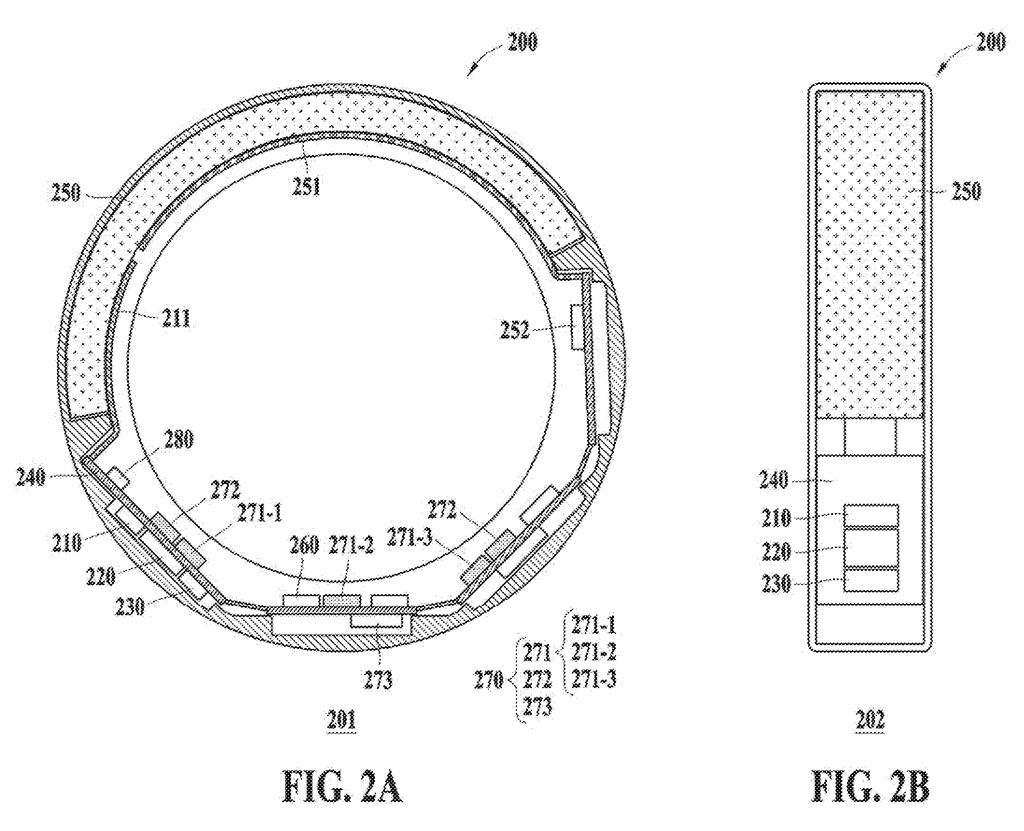
How Samsung's ring blinks its battery status at you
A person slides off their Samsung ring after a long day and has no idea if it needs charging. There is no screen, no display, no obvious way to check. That is the exact moment this patent is designed for.
When the ring detects that it has been taken off your finger, it checks its battery level and then blinks its built-in light in a pattern that tells you how much charge is left. That light is the same one the ring uses to read your heart rate when you are wearing it. Samsung is repurposing a sensor that is already there rather than adding new hardware.
The number of blinks, or how the blinking pattern changes, indicates whether the battery is full, half-dead, or nearly empty. No app, no phone, no screen required.
… displaying the remaining battery level by adaptively blinking a light emitter included in a photoplethysmography (PPG) sensor of the ring electronic device.
Translation: The ring shows how much power is left by flashing the same light used to track your heart rate.
How the PPG light blinks a battery reading
The patent covers a method that ties together three events in sequence: detecting a change in wearing state (the moment you take the ring off or put it back on), reading the current battery level, and then expressing that level through the ring's built-in light.
The light in question sits inside a photoplethysmography (PPG) sensor, the component that shines green or infrared light through your skin to measure blood flow and calculate heart rate. Because the ring already contains this emitter for health tracking, the patent proposes reusing it as a makeshift status indicator when the ring is not on your finger.
The word adaptively in the claim is doing real work here. It signals that the blinking pattern is not fixed. The ring adjusts the blink behavior based on how much charge remains, so a nearly full battery might look different from a nearly empty one, giving the wearer a rough read rather than a single on/off signal.
- Wearing-state change triggers the check (on-to-off or off-to-on)
- Battery level is sampled at that moment
- PPG emitter blinks in a pattern proportional to remaining charge
monitoring a wearing state of the ring electronic device; based on a change in the wearing state, checking a remaining battery level of the ring electronic device …
Translation: The device detects when you put it on or take it off and automatically checks the battery status.
What this means for screenless wearable design
For any wearable with no screen, discoverability of basic status information is a real friction point. Users of devices like the Samsung Galaxy Ring currently rely on a companion app to see battery level, which means reaching for a phone just to answer a simple question. A ring that signals its own charge at the moment you take it off is genuinely more self-contained.
The design choice is a small but telling one: Samsung is betting that hardware already inside the ring for health purposes can pull double duty rather than adding a dedicated LED or haptic motor. Wearable battery patents like this one sit alongside a wider wave of screenless-device interface filings covered among the latest Big Tech patents, as companies figure out how to communicate with users when there is no display in sight.
The trade-off here is legibility. Blink codes are a classic low-cost trick, but they put the learning burden on the user. Four quick blinks means what, exactly? Anyone who has tried to decode a router's LED status light knows how fast that convention breaks down without a printed legend. Samsung is giving up clarity to avoid adding hardware, and whether that reads as worth it depends entirely on how intuitive the blink pattern turns out to be in practice. If the pattern is simple enough to internalize after one use, the trade earns its keep. If it requires checking a manual, it is a feature that most owners will ignore after week one.
There are more where this came from
We read every patent application Big Tech publishes and send you the ones worth knowing. Plain English, free, every week.
The drawings
5 drawing sheets from US 2026/0238976 A1 · click any drawing to enlarge


Want this weekly breakdown for a company we don't cover? Patentlyze Pro →
Be the first to weigh in