
Samsung Patents a Voice Assistant That Learns Your Personal Shorthand
Samsung is working on a voice assistant that can remember the personal phrases you use to give commands, so you never have to repeat yourself in exactly the right words again.
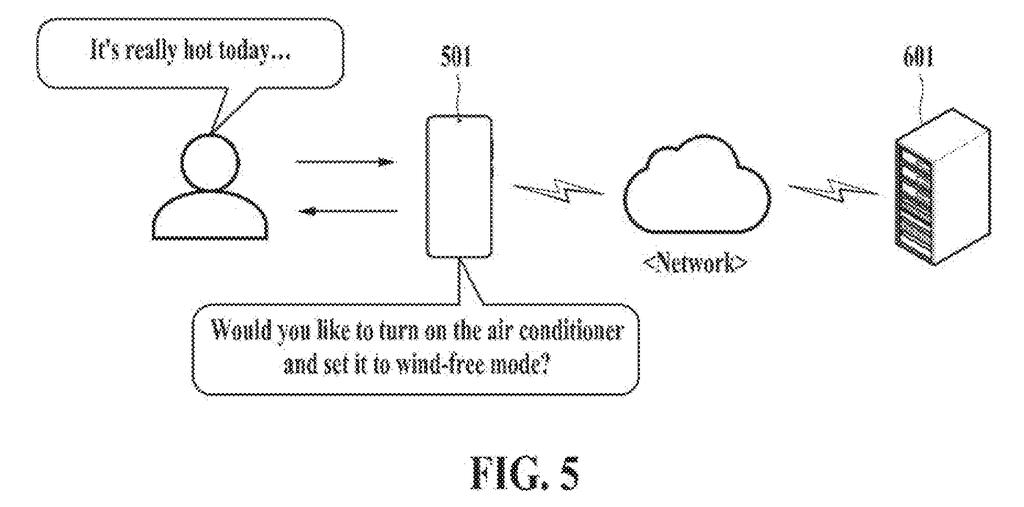
How Samsung's shorthand-memory voice system works
Today's voice assistants are picky about wording. Say "turn off the living room light" and it works. Say "kill the living room" the next time and it probably won't, because the assistant has no memory of what you meant before.
Samsung's patent describes a system that fixes this by splitting what you say into two buckets: the part that maps to a real command ("turn off the light") and the part that doesn't quite fit standard phrasing ("the living room," used in an unusual way). It then pairs those two pieces together and saves the connection.
The next time you use that same personal phrase, the assistant recognizes it and runs the same command automatically. It's a way of letting your speech habits train the assistant, rather than forcing you to memorize the assistant's preferred vocabulary.
… classifying the first text segment as a first type that is mapped to intent information used to perform a task; classifying the second text segment as a second type that is not mapped to intent information used to perform a task; …
Translation: The system separates a command into a known action and an unrecognized personal shorthand phrase.
How the intent-pairing engine stores and retrieves commands
The system starts by transcribing what you say into text, then segments that text into chunks. Each chunk is classified as either a "first type" (a phrase the assistant can already map to a known intent, like turning a device on or off) or a "second type" (a phrase it doesn't recognize as a standard command trigger).
When both types appear in the same sentence, the assistant still executes the actionable part immediately. At the same time, it creates pairing information, essentially a lookup record that links your non-standard phrase to the intent that was just performed.
On a later interaction, if the same non-standard phrase appears in new speech, the system finds the stored pairing and re-triggers the original command. The key mechanism is intent identification followed by cross-utterance memory, meaning the assistant remembers context across separate voice sessions rather than treating every sentence from scratch.
- Utterance converted to text, then segmented
- Each segment classified as command-mappable or not
- Command executes; non-standard phrase is stored alongside the intent
- Future utterances containing that phrase replay the stored command
… generating pairing information by pairing the first intent information with the second text segment; converting a second utterance of the user into second text; and based on identifying the second text segment in the second text, performing the first task using the pairing information.
Translation: It links your unique nickname to the correct device action so it understands you next time.
What this means for everyday voice assistant use
For everyday users, the frustrating part of voice assistants isn't that they can't understand speech; it's that they require near-exact phrasing to work consistently. A system that builds a personal dictionary of your shortcuts over time would reduce that friction considerably, especially for controlling smart home devices where commands tend to repeat.
Samsung's Galaxy AI push across its phone and appliance lines makes this a plausible near-term target for Bixby or a successor. The filing sits alongside other interesting tech patents in the voice-AI space where companies are competing to make assistants feel adaptive rather than scripted.
This patent describes a pure software approach, which is its biggest advantage on the ship-path front. There's no new microphone array, no dedicated chip, no sensor dependency. The logic could theoretically land as a Bixby update or be embedded in Samsung's on-device AI stack without waiting for new hardware. The shortest route to a product is a firmware or app update, and the core idea, storing phrase-to-intent pairings across sessions, is well within what current large language model pipelines already do in segmented form. The real question is whether Samsung's ecosystem, spanning phones, TVs, and appliances, gives this enough surface area to be noticeably useful.
There are more where this came from
We read every patent application Big Tech publishes and send you the ones worth knowing. Plain English, free, every week.
The drawings
15 drawing sheets from US 2026/0236705 A1 · click any drawing to enlarge


Want this weekly breakdown for a company we don't cover? Patentlyze Pro →
Be the first to weigh in