
Google's New Patent Teaches Its Voice Assistant to Remember What You Just Said
Most voice assistants treat every sentence you speak as if it's the first thing you've ever said. Google is patenting a system that actually keeps track of earlier parts of a conversation to better understand what you're saying right now.
How Google's speech system uses conversation history
Imagine you're talking to a voice assistant and you say, "What about the one in Chicago?" Out of context, that sentence means nothing. But if you'd just asked about hotels in New York, a smart system would know you're comparing cities. That's the problem Google's patent is trying to solve.
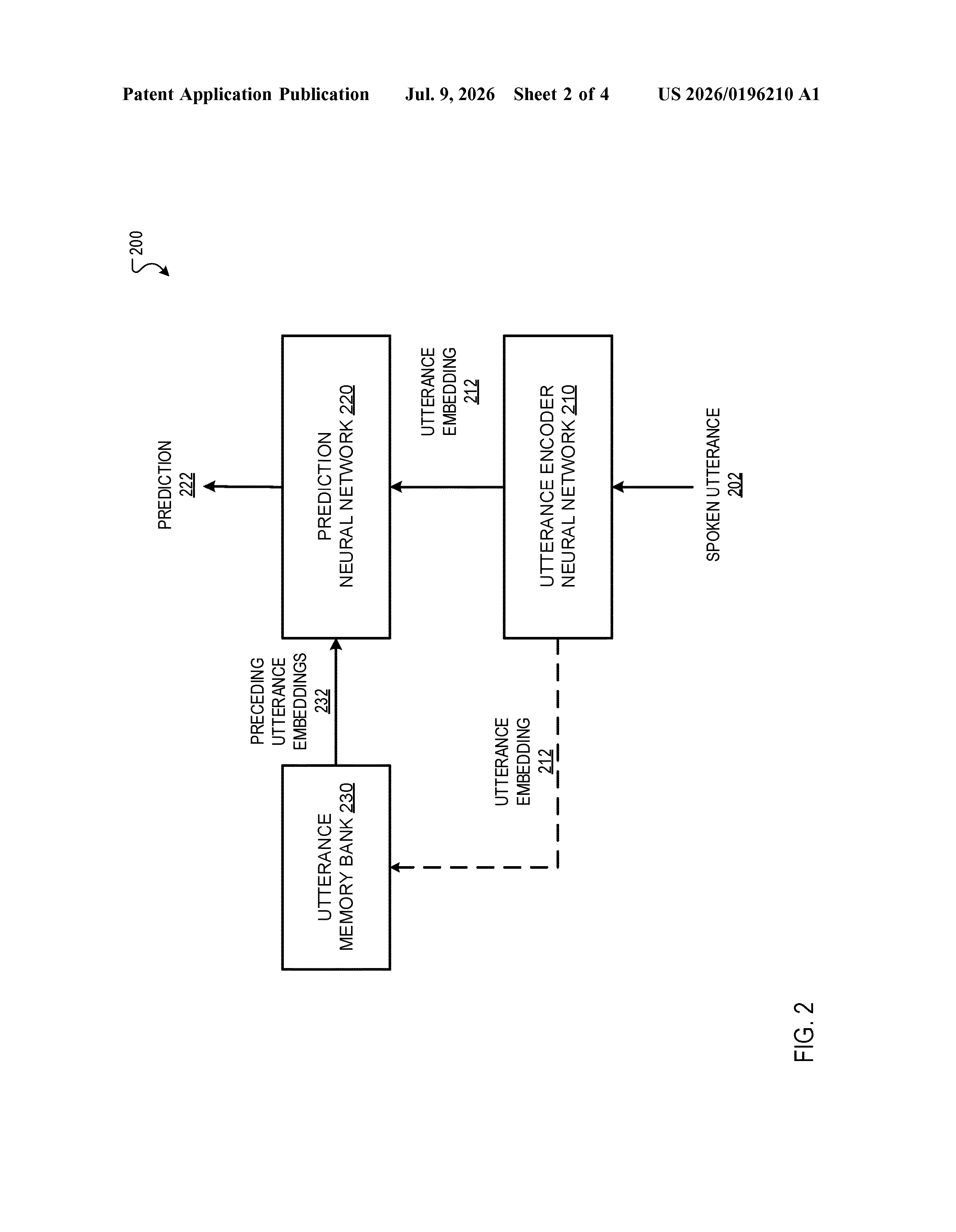
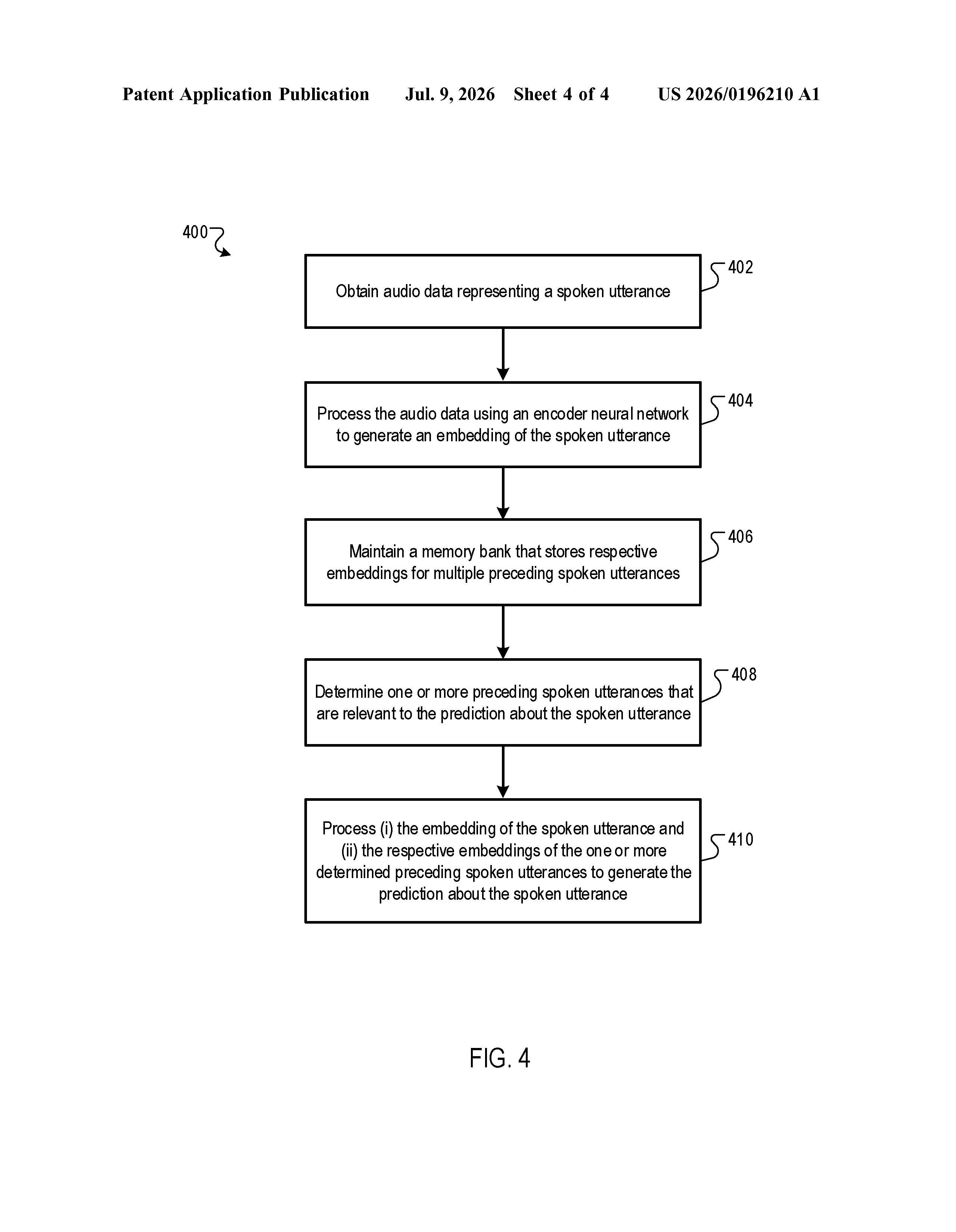
The system works by storing a kind of compressed "memory" of everything you've said earlier in a conversation. When you say something new, it searches through that memory bank to find the earlier sentences most likely to help it understand you better, then factors those in when figuring out what you mean.
The key word is selectively. Rather than always dragging in everything you've said, the system picks only the most relevant past phrases. That keeps things efficient without losing the context that matters.
How the memory bank selects relevant past utterances
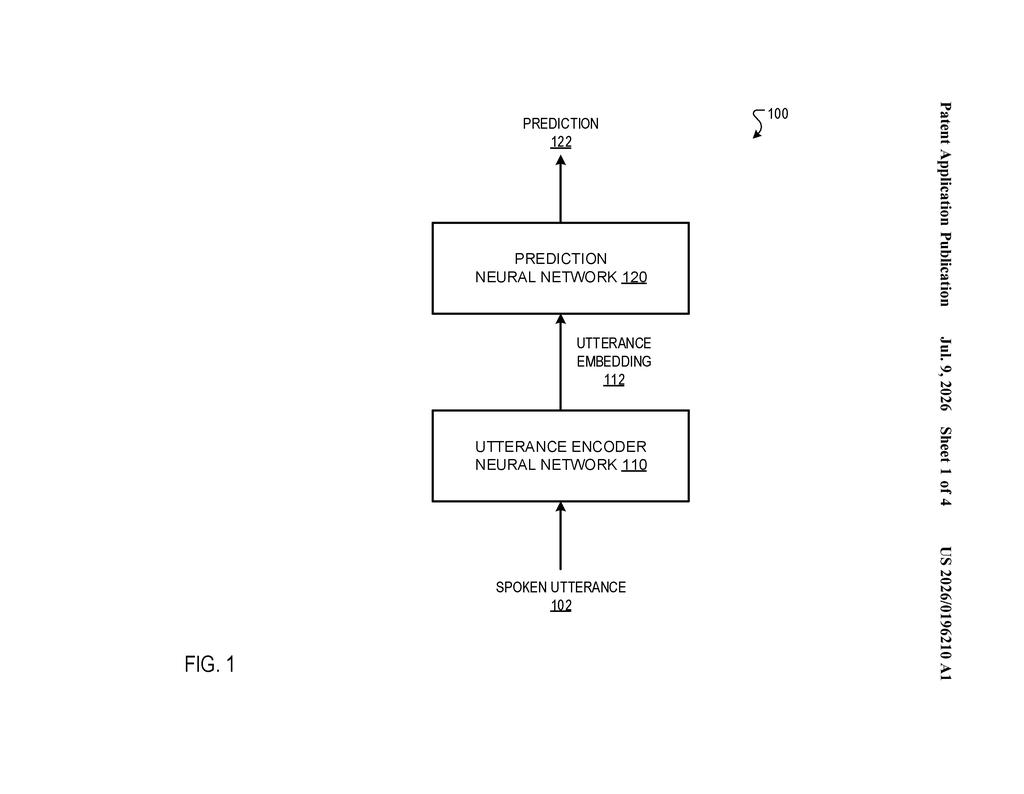
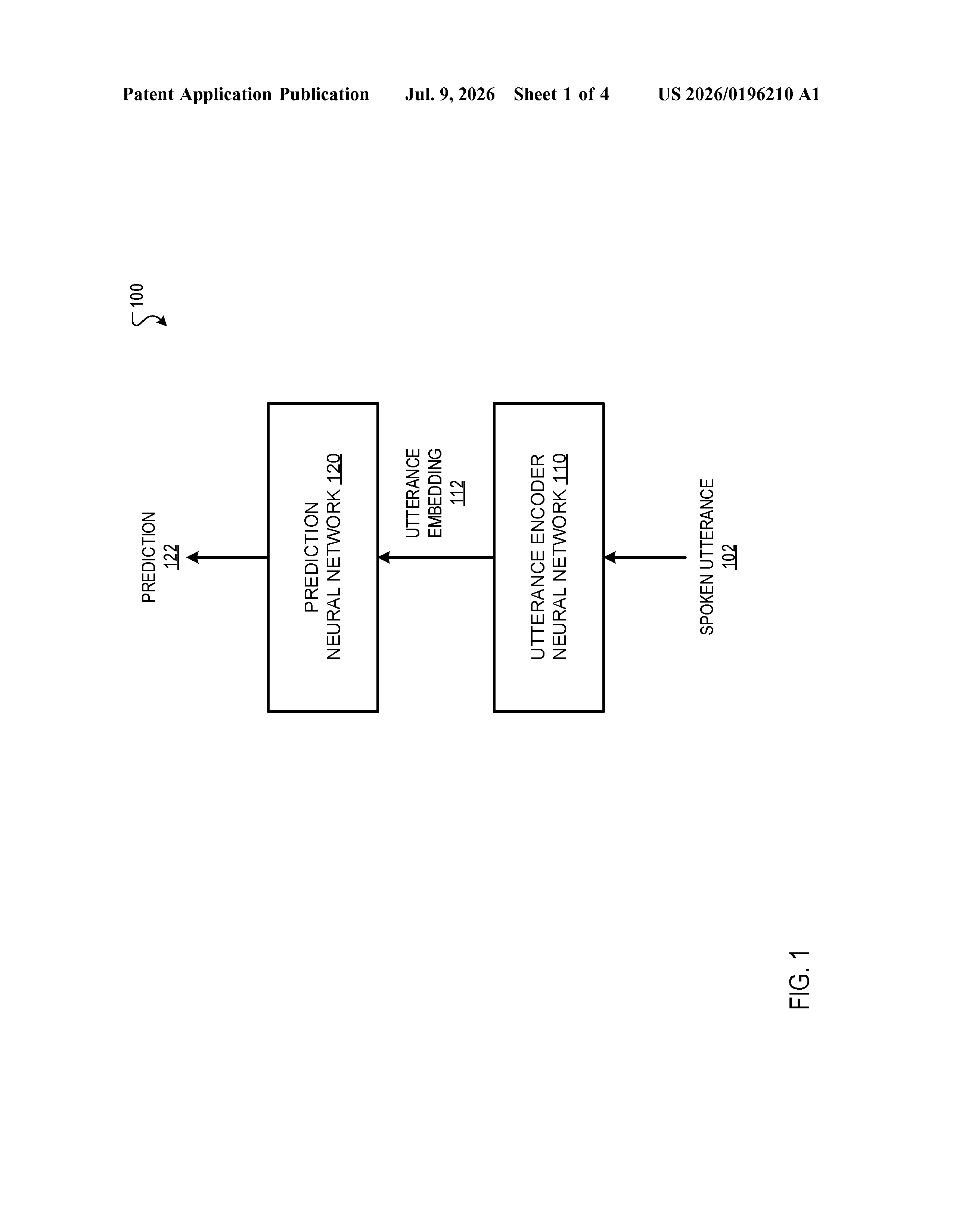
The patent describes a two-part neural network pipeline for processing speech.
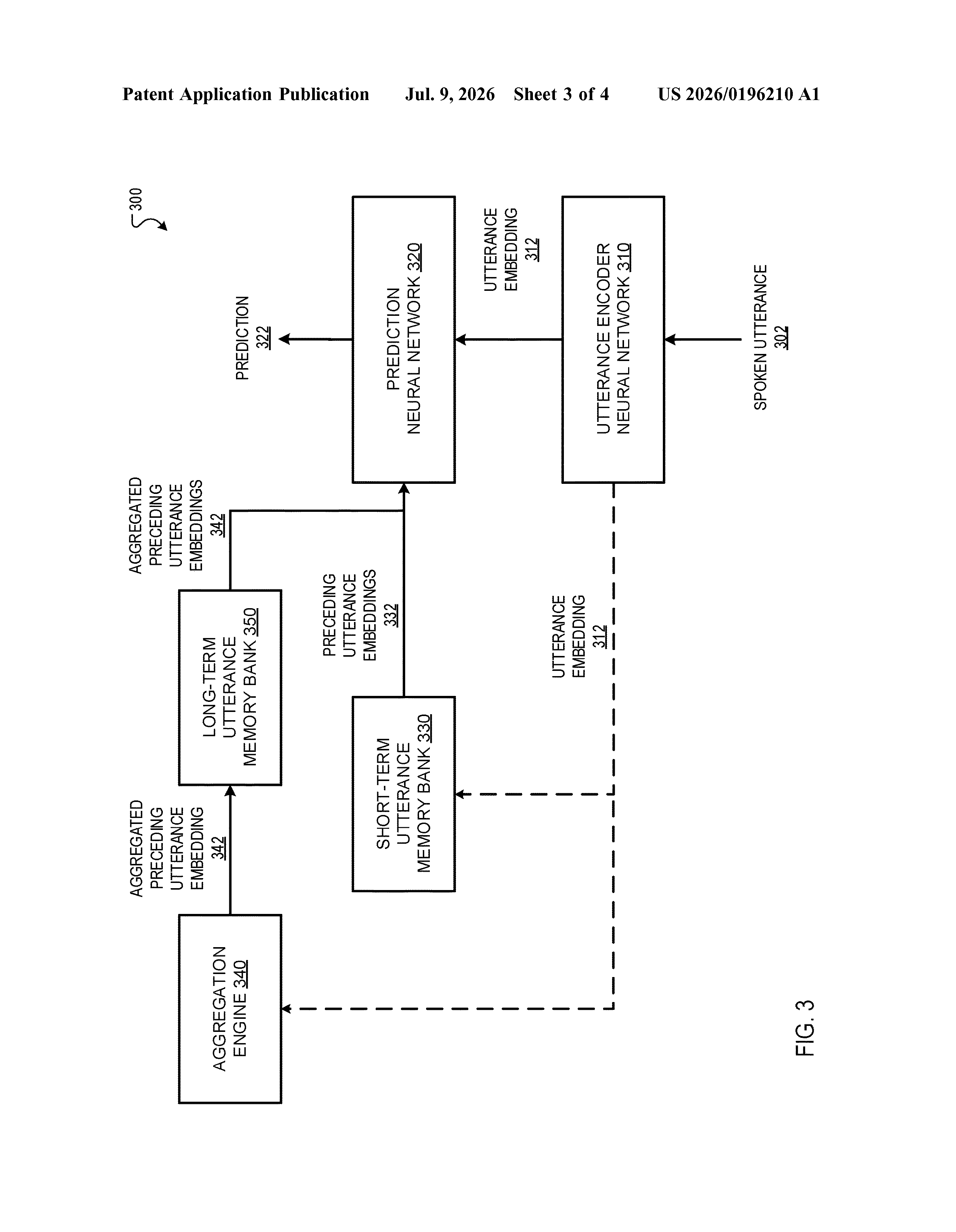
First, an encoder network converts each spoken phrase into an "embedding" (a compact numerical representation that captures what was said, roughly like a fingerprint of the audio's meaning). These embeddings are stored in a memory bank as the conversation progresses.
Second, a prediction network takes the embedding of your most recent phrase and compares it against the stored embeddings of earlier phrases. It selects a subset of those earlier embeddings that are most relevant to the current moment, then combines them with the new phrase's embedding to generate a final prediction about what you said or meant.
The critical technical detail is that the relevant past embeddings must be a proper subset of everything in the memory bank. In plain terms, the system doesn't always look at everything you've said; it intelligently narrows down which past moments in the conversation are actually useful context. This is similar to how an "attention" mechanism works in large language models, applied here specifically to audio-encoded spoken phrases.
What this means for Google Assistant and voice search
Voice assistants have long struggled with multi-turn conversations where the meaning of a sentence depends on what came before it. A system that can selectively recall earlier context, rather than treating each phrase in isolation or always processing the entire conversation history, could make interactions feel much more natural without a big increase in computing cost.
For Google, this is directly relevant to products like Google Assistant, search-by-voice, and any transcription or call-analysis service. If this approach works at scale, you'd spend less time re-explaining yourself and more time getting useful answers on the first try.
This is solid, incremental progress in a real problem space. Context-aware speech understanding has been an open challenge for years, and the memory-bank-with-selective-retrieval approach is a sensible engineering path. It's not a dramatic leap, but it's the kind of patient infrastructure work that eventually makes voice interfaces less frustrating to use.
Get our take in your Top Stories
Liked this breakdown? Add Patentlyze as a preferred source on Google, and our plain-English take shows up more often in your Top Stories the next time Google patent news breaks.
There are more where this came from
We read every patent application Big Tech publishes and send you the ones worth knowing. Plain English, free, every week.
The drawings
4 drawing sheets from US 2026/0196210 A1 · click any drawing to enlarge
Want this weekly breakdown for a company we don't cover? Patentlyze Pro →