
IBM Patents a System That Stress-Tests 4D-Printed Objects Before They're Built
IBM wants to catch a 4D-printed part's future failure before the printer even starts, by running a virtual stress test on the design file and rewriting any problem sections automatically.
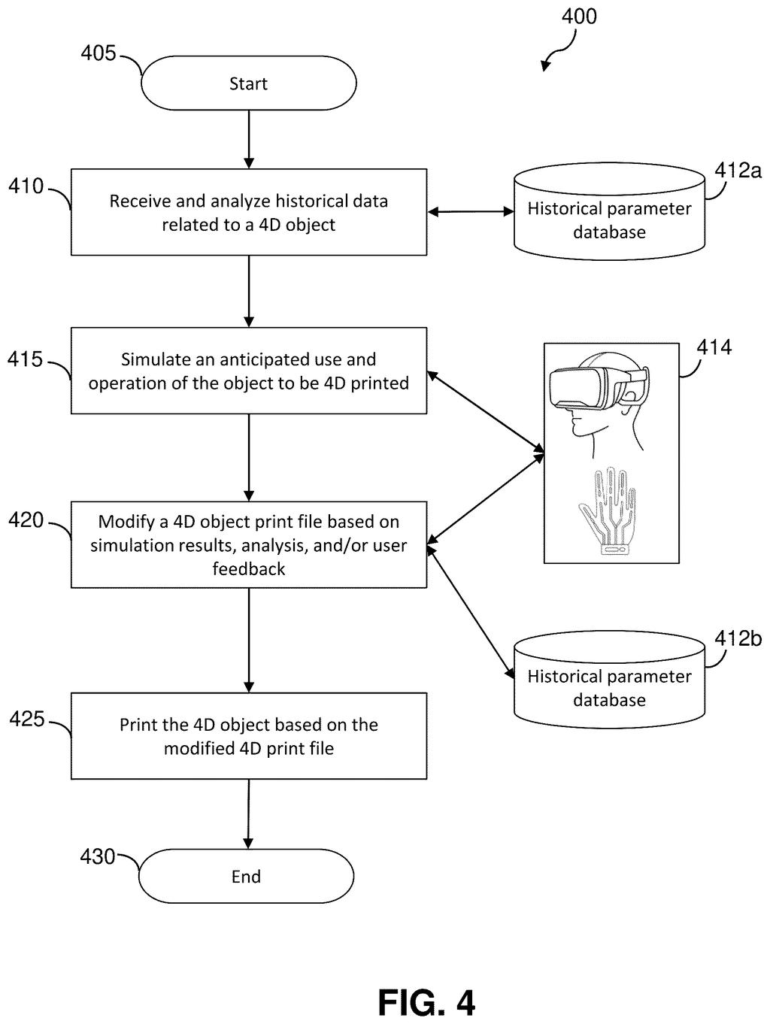
How IBM's pre-print simulation catches shape-shifting failures
A car door hinge made from a shape-memory material slowly warps after two summers of heat cycles, then cracks. The flaw was baked into the design from the start, and nobody caught it until the part was already in the field. That's the exact problem IBM's new patent is trying to prevent.
The idea behind 4D printing is that an object can be printed from materials that change shape over time in response to heat, moisture, or pressure. IBM's system looks at how an object is expected to be used, what environment it will live in, and then runs a simulation of that future life before printing begins. If the simulation spots a weak point, the system automatically corrects the design file.
The result is a print job that has already been stress-tested in software. You get a part that's been tuned for its real-world conditions, not just checked for basic geometry errors.
… simulating the anticipated usage parameters and the anticipated environmental parameters related to the object to be 4D printed to identify a potential issue in at least one portion of the object to be 4D printed; …
Translation: The system tests how wear and tear and surroundings will affect the object before making it.
How the system reads history, simulates failure, and rewrites the file
The system takes in a 4D print file, which is a design document that specifies not just the shape of an object but the physical properties of the materials, including how they're expected to change over time.
From there, the patent describes three main steps:
- Historical data lookup: The system gathers records about how similar objects have performed under comparable conditions, things like temperature ranges, humidity cycles, mechanical load patterns, and typical use frequency.
- Simulation: Using those parameters, the system runs a virtual test of the object's entire expected lifespan. This is similar to how aerospace engineers run finite-element analysis (a computerized stress test that breaks an object into thousands of tiny zones and checks each one) before building a physical prototype.
- Auto-correction: If the simulation flags a section that's likely to fail or deform outside acceptable limits, the system modifies the print file directly, adjusting material distribution, layer composition, or structural geometry before sending the job to the printer.
The physical output is produced on a standard 3D printer with 4D capabilities, meaning the printing hardware itself doesn't need to be exotic. The intelligence lives in the software layer that prepares the file.
… determining a correction to the 4D print file based on the identified potential issue; modifying the 4D print file based on the correction; …
Translation: It automatically fixes flaws in the design blueprint before any material is used.
What this means for 4D printing moving into real products
4D printing is still largely a research-lab technology, with most real-world applications in medical devices, aerospace components, and experimental soft robotics. The challenge has always been that predicting how a shape-memory material behaves over years of real use is genuinely hard, and getting it wrong means expensive field failures. A software layer that catches those failures before manufacturing is a practical step toward making the technology reliable enough for production use.
The shortest path to a shippable product here is actually fairly clear: IBM's approach is software-only on the prediction side, meaning it could theoretically be dropped into an existing 4D printing workflow without new hardware. The harder dependency is the quality of the historical data the system draws on, because a simulation is only as good as the real-world failure records feeding it. IBM's broader presence in enterprise data and materials science research positions it to build that dataset, and the new Big Tech patents in the 4D-printing and smart-materials space show this is becoming an area of genuine industrial investment, not just academic curiosity.
The filing sits at an interesting midpoint: the simulation and auto-correction approach is well-defined in software terms, but its value depends entirely on access to rich historical failure data for 4D-printed parts, which is scarce because the technology itself is young. IBM could close that gap faster than most companies given its materials research and enterprise data infrastructure, but right now the system described here would produce useful corrections only in the narrow domains where enough 4D printing history already exists. That's a real constraint, and it makes this more of a foundational patent staking out IP on the workflow than a near-term shipping feature.
There are more where this came from
We read every patent application Big Tech publishes and send you the ones worth knowing. Plain English, free, every week.
The drawings
4 drawing sheets from US 2026/0236635 A1 · click any drawing to enlarge


Want this weekly breakdown for a company we don't cover? Patentlyze Pro →
Be the first to weigh in