
AMD Patents a Way to Show Visuals on Screen Before Your PC Finishes Booting
That blank screen you stare at while your PC boots could soon be a thing of the past. AMD has filed a patent for a method that uses a small buffer inside its graphics-enabled processors to push visuals to your display before the main system memory has even finished setting itself up.
What AMD's early-boot display trick actually does for you
Ever turned on your PC and wondered why the screen stays completely dark for several seconds before anything shows up? The reason is that your computer has to run a setup routine for its main memory chip every time it powers on, and nothing can appear on screen until that's done.
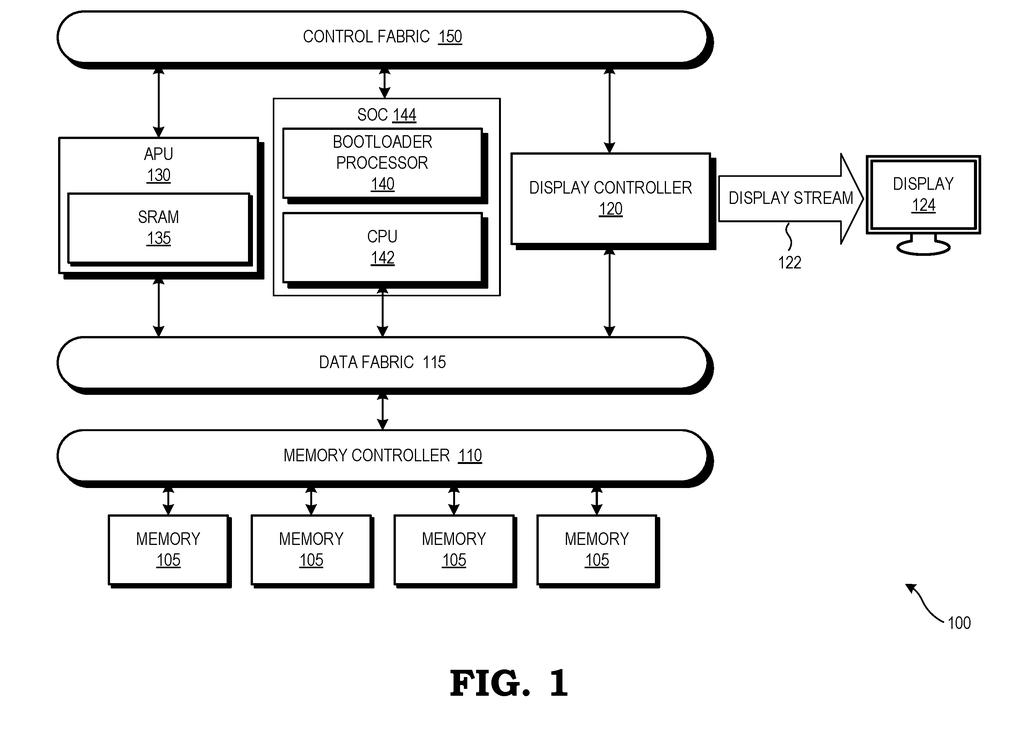
AMD's patent describes a workaround: its combined graphics-and-processor chip (an APU) has a small onboard memory buffer. The idea is to store a startup image or progress indicator in that buffer before the main memory setup begins, then pull that image out and display it right away. You get visual feedback almost immediately, even while the heavier memory work is still happening in the background.
As a bonus, the system saves notes from each memory setup session so future boots can skip or shorten the slowest parts, making the whole startup process quicker over time.
During system memory initialization, display data is stored in the memory buffer of the APU and retrieved for presentation on a coupled display device, providing real-time visual feedback while memory training is performed.
Translation: This lets you see pictures on your monitor right away while the computer gets its memory ready.
How the APU buffer feeds the screen during memory training
Modern computers use a type of memory called system RAM that needs to go through a calibration process called memory training every time the machine turns on. This process figures out the exact timing the memory chips need to run reliably, and it takes several seconds to complete. During that window, the display is effectively locked out.
AMD's patent proposes using the APU's onboard buffer (a small pocket of fast memory built directly into the chip that combines a CPU and GPU) as a temporary holding area for display data. Here's the sequence:
- The system stores a startup image or boot animation into the APU's buffer before main memory training kicks off.
- While training runs in the background, the display controller reads that image from the buffer and pushes it to the screen.
- Once system RAM is ready, normal operation takes over.
The patent also describes saving the results of each memory training session to storage. On the next boot, the system can load those saved results and skip or compress the training step, reducing the total time before the machine is fully usable.
What this means for PC startup and user experience
For everyday users, the direct payoff is simple: no more black-screen mystery during startup. Even a basic loading indicator tells you the machine is alive and working, which reduces the frustrating uncertainty of not knowing whether a boot is stalling or proceeding normally. That matters most on devices like mini PCs, embedded systems, and thin-and-light laptops where AMD APUs are common and where users expect quick, polished startup behavior.
The saved-training-data feature is the quieter half of the story. Over time it compounds, making each subsequent boot incrementally faster without the user doing anything. For anyone who has watched a firmware update reset those optimizations and felt the difference, having the system rebuild and preserve that knowledge automatically is a practical convenience.
AMD files its seventh patent in our Display coverage since June, adding to a set that includes work on blocking video over encryption failures and fixing skewed isometric game art.
This patent solves a real, everyday annoyance. A black boot screen isn't catastrophic, but it erodes confidence in a device, especially for non-technical users who can't tell the difference between a machine that's working and one that's frozen.
The clever part is that AMD doesn't need extra hardware to pull this off. The buffer already exists in an APU. Repurposing it to serve a display image during the boot dead zone is an efficient use of resources that are already there.
The saved-training approach is the longer-term play. Memory training times vary by hardware configuration, and any mechanism that learns and adapts over successive boots is a compounding user benefit. Whether AMD ships this in a near-term product or files it as protective groundwork, the problem it targets is familiar enough that it should resonate as soon as someone experiences the difference.
There are more where this came from
We read every patent application Big Tech publishes and send you the ones worth knowing. Plain English, free, every week.
The drawings
5 drawing sheets from US 2026/0288477 A1 · click any drawing to enlarge


Want this weekly breakdown for a company we don't cover? Patentlyze Pro →
Be the first to weigh in