
Sony Patents a System That Guides Photographers Away From Mirror-Like Glare
Shiny surfaces have long been the enemy of 3D cameras, bouncing light in ways that confuse depth sensors. Sony's new patent describes a system that figures out the ideal angle to polarize your light source before you even shoot.
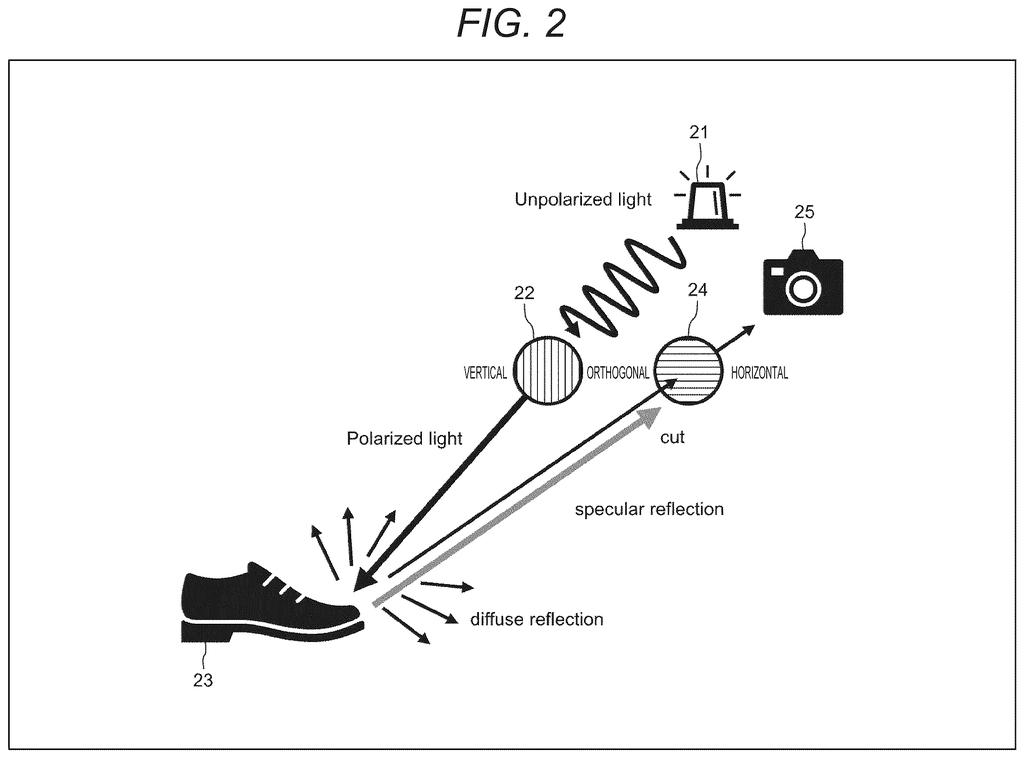
How Sony's polarized-light guide cuts glare on 3D scans
Imagine you're trying to scan a shiny metal part or a glossy product for a 3D model. Whenever the light hits a reflective surface at just the wrong angle, the camera gets flooded with a glare spike, and the scan comes out wrong. Polarizing filters can block that kind of direct glare, but only if the filter is rotated to exactly the right angle for that particular object's shape.
Sony's patent covers a system that looks at the 3D shape of the object ahead of time, then calculates which direction the light's polarization should be set to. It then guides you, or an automated mechanism, to physically rotate the light or its filter to that recommended angle.
The goal is to keep the bright, mirror-like reflections (the kind that wash out detail) below a certain average level across all of the object's surfaces at once. That's harder than it sounds when an object has many faces pointing in different directions, each bouncing light differently.
a recommended polarization direction derivation unit configured to derive a recommended polarization direction of irradiation light emitted from a light emitting unit according to a shape of an object in a three-dimensional space at a time of polarization imaging …
Translation: The system figures out the ideal flash angle based on the 3D shape of whatever you are taking a picture of.
How the device calculates the best polarization angle
The patent introduces two main components working together:
- A recommended polarization direction derivation unit, which analyzes the object's geometry in 3D space and computes the polarization angle (the orientation of the light's oscillation) that will minimize specular reflection (the mirror-like bounce) across the object's various surfaces.
- A guide unit, which then instructs the operator or the equipment itself to rotate the light source or its polarizing filter to match that calculated angle.
The imaging setup is a standard cross-polarization rig: the outgoing light is polarized in one direction, and the camera captures only light polarized at a perpendicular (or parallel) angle. Perpendicular is the classic setup for cutting glare; parallel captures it intentionally for other analytical purposes.
The key problem the patent solves is that most polarized-imaging setups assume a flat or simple object. A complex object, like a sculpted product or a human face, has many surface angles, and each one reflects polarized light differently. The system picks the single best compromise angle, defined as the angle where the total specular bounce across all surfaces is at or below the average, rather than the worst-case angle.
The claim is framed broadly enough to cover still cameras, video sensors, and depth cameras, as well as both manual and motorized polarizer adjustments.
… the recommended polarization direction is a direction in which a specular reflection component of the irradiation light, which is specularly reflected on a plurality of surfaces of the object and incident on the imaging unit, is at least equal to or less than an average …
Translation: It finds the angle that keeps mirror reflections bouncing off multiple surfaces below average.
What this means for 3D scanning and depth cameras
For 3D scanning, structured-light depth cameras, and industrial inspection systems, glare is a longstanding problem that forces operators to trial-and-error their way through polarizer adjustments. A system that derives the right angle from object geometry first could meaningfully shorten setup time and reduce failed scans, particularly for complex or curved objects.
For everyday consumers, this is less immediately visible, but the underlying technology applies anywhere Sony ships depth-sensing cameras, including future products in the gaming, robotics, or mixed-reality spaces. Better glare suppression at the capture stage means cleaner raw data for whatever comes next, whether that's a face scan, a room map, or a machine-vision check.
Sony's 71st filing in our Camera patents we cover since May follows one on two-direction depth scanning and one on learning unseen colors.
The system picks one polarization angle for the entire object, which means that angle is only optimal on average. A surface tilted at an awkward angle relative to the camera can still throw back heavy glare even when everything else looks clean.
Sony's patent openly accepts this, defining success as reducing glare to at or below average across surfaces, not eliminating it. That honesty matters, because any single fixed angle will leave some faces worse off than others when scanning objects with complex, uneven geometry.
The tradeoff reads as reasonable for building reliable scanning tools, but the filing never quantifies how much better the result actually is compared to a human making an educated guess. That gap between "geometry-driven starting point" and "measurably cleaner output" is what would determine whether this graduates from background infrastructure to something a product team would actually advertise.
There are more where this came from
We read every patent application Big Tech publishes and send you the ones worth knowing. Plain English, free, every week.
The drawings
19 drawing sheets from US 2026/0292353 A1 · click any drawing to enlarge


Want this weekly breakdown for a company we don't cover? Patentlyze Pro →
Be the first to weigh in