
IBM Patents a System That Automatically Picks the Best AI Model for Any Job
Picking the right AI model for a job is usually a manual, time-consuming process. IBM has filed a patent for a system that runs its own tests, scores every candidate, and makes that choice automatically.
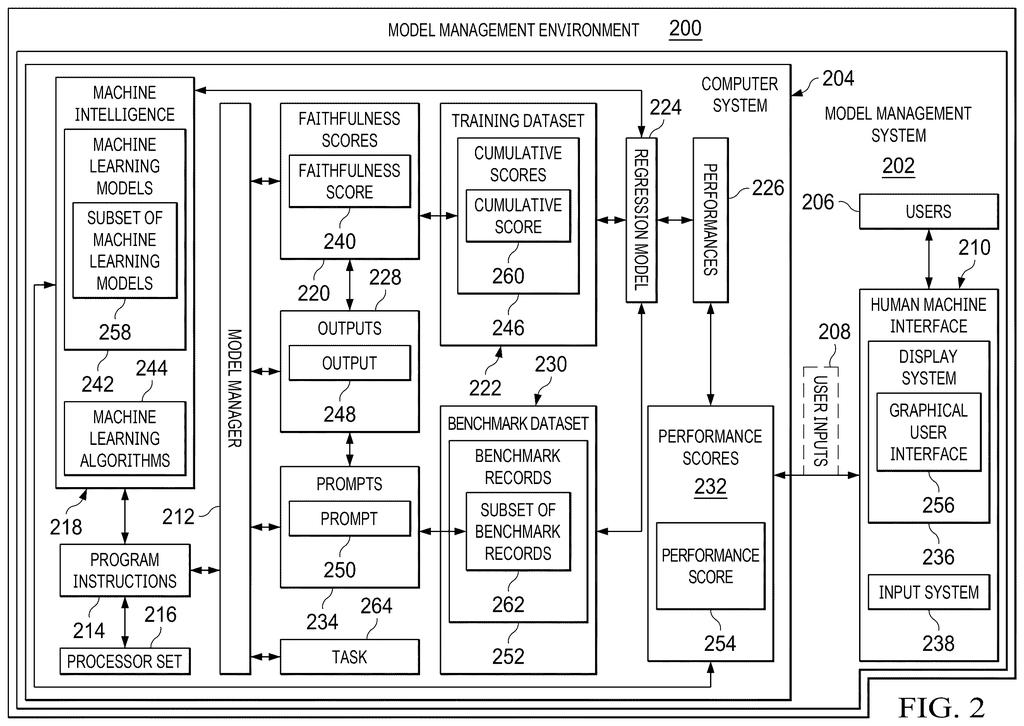
What IBM's AI model-selection system actually does
A company runs dozens of AI tools. Every time a new task comes in, someone has to figure out which tool is actually best at it. That decision usually takes guesswork, spreadsheets, or expensive trial-and-error.
IBM's patented approach handles that process automatically. The system takes a set of test questions, sends them to every AI model it has available, checks how well each one answers, and then assigns each model a numerical score. A secondary statistical tool called a regression model (think of it as a calculator that weighs multiple factors to produce one clean number) turns all that raw performance data into a reliable ranking.
Once the scores are in, the system picks the best-performing models and hands the actual task to them. No human has to compare benchmarks manually. For organizations juggling many AI tools at once, that kind of automatic routing could save a real amount of time and reduce costly mistakes.
… determining, by the processor set using a regression model, a performance score for each machine learning model from the number of machine learning models based on correctness for the number of outputs for each machine learning model from the number of machine learning models; …
Translation: It uses a mathematical model to grade how accurately each AI model answers test questions.
How the regression scoring loop ranks each AI model
The patent describes a four-step pipeline built around a benchmark dataset, which is essentially a collection of pre-written test questions with known correct answers.
- Step 1 (Prompt creation): The system pulls a sample of those test questions and formats them as prompts, the kind of instructions you type into an AI chatbot.
- Step 2 (Model testing): Every AI model in the pool receives those same prompts. Each model's responses are collected and matched back to the original question so the system knows which answer came from which model.
- Step 3 (Scoring): A regression model (a classic statistical method that finds a numerical relationship between inputs and outputs) evaluates how correct each model's answers were and converts that into a performance score. Using regression rather than a simple pass/fail count lets the system weigh partial correctness and handle different question types more gracefully.
- Step 4 (Selection): The models with the highest scores are chosen to handle the real task.
The claim covers the full loop: receiving benchmark data, generating prompts, collecting outputs, scoring with a regression model, and selecting winners. IBM does not limit the patent to any particular type of AI model, task domain, or benchmark format, which makes the scope quite broad.
The processor set selects a subset of machine learning models from the number of machine learning models to perform a task based on performance scores for the number of machine learning models.
Translation: The system picks the best-performing AI models for whatever job you need done.
What this means for companies running multiple AI tools
For any organization running more than one AI system, choosing the right one for a given job is a hidden operational cost. This patent targets that overhead directly by making model selection a mechanical, repeatable process rather than a judgment call.
The practical upside is consistency. If you are routing customer-support queries, legal document reviews, or code-generation requests through different AI tools, an automated scoring layer means you are always sending the work to whichever model is actually best at it, not whichever one someone set up first. several IBM filings on AI orchestration and model management this year suggest the company is building toward a broader platform play in enterprise AI infrastructure, where controlling how AI models are deployed matters as much as the models themselves.
That makes this IBM's 15th filing we've tracked since May in our teams of AI models watchlist, adding to earlier work like one on self-fixing errors and one on self-rated confidence.
Claim 1 is written at a high level of abstraction. It covers any system that tests AI models with prompts, scores them with a regression model, and picks the top performers. That breadth is the most important thing to notice: it does not require a specific type of regression, a specific benchmark format, or a specific task category. If granted as written, it could apply to a wide range of automated model-routing products.
The honest question is whether the core idea is novel enough to survive examination. Testing candidates, scoring them, and picking the best is a well-understood engineering pattern. The specific combination of benchmark-driven prompts plus a regression-based scoring step is the differentiating detail, and how USPTO examiners weigh that against prior art will determine whether this ends up as enforceable property or a narrowed shell.
From a reader's perspective, the underlying problem is real and the solution is practical. But this reads as infrastructure-layer IP, the kind of filing that matters in contract negotiations and standards bodies more than in any product a consumer will ever touch directly.
There are more where this came from
We read every patent application Big Tech publishes and send you the ones worth knowing. Plain English, free, every week.
The drawings
6 drawing sheets from US 2026/0278453 A1 · click any drawing to enlarge


Want this weekly breakdown for a company we don't cover? Patentlyze Pro →
Be the first to weigh in