
Sony Patent Reveals How Deliberate AI Deception Makes Game Opponents Beatable
A perfect AI opponent is no fun to play against. Sony's new patent proposes a surprisingly elegant fix: lie to the AI about the world it's operating in, and watch it make human-like mistakes.
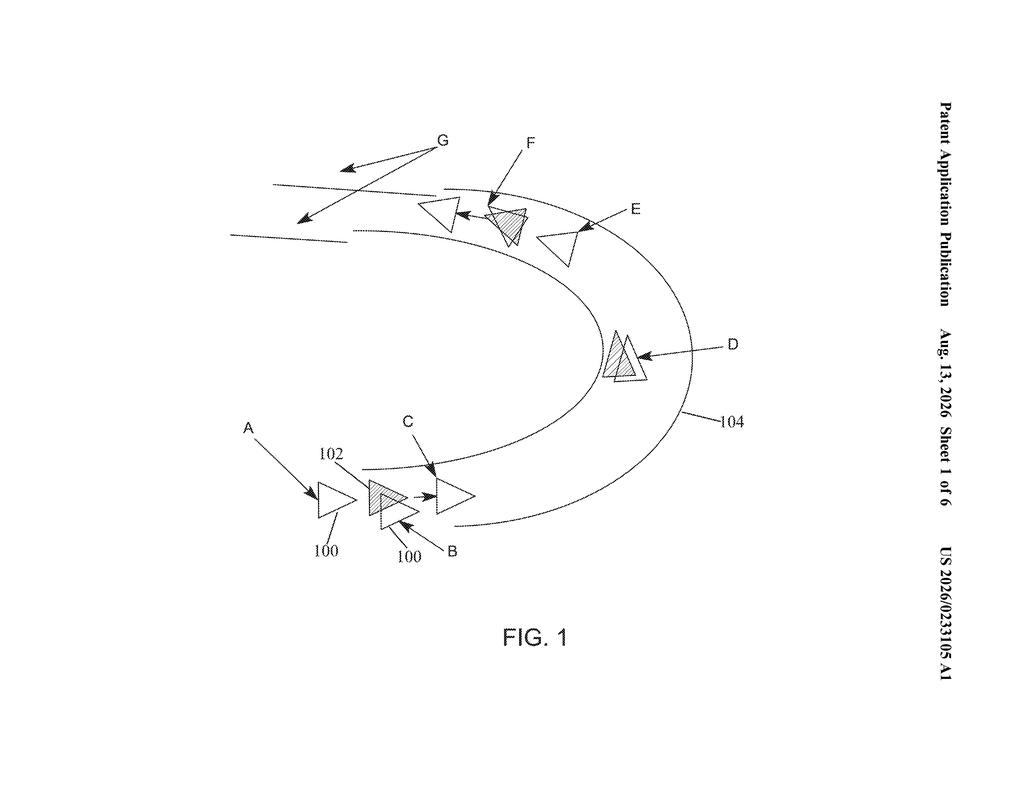
How Sony makes AI racers play worse on purpose
AI opponents in games have gotten so good they're basically unbeatable at full strength. Developers today must either hold back their AI during training or ship multiple separately trained versions at different skill levels, which costs a lot of time and computing power.
Sony wants to skip all of that by feeding a fully trained AI subtly wrong information during a match. In a racing game, for example, the AI might be told its car is moving slightly faster or slower than it actually is, or that a tire has more grip than it really does. The AI trusts that data and adjusts its behavior accordingly, making small errors that feel natural and human.
The result is one AI that can play at any skill level you want, just by turning up or down how much false data it receives. No extra training runs, no separate difficulty modes built from scratch.
feeding data to the trained agent during deployment, wherein the fed data is changed from actual data regarding one or more features of the agent; and causing the agent to alter its behavior based on the fed data, wherein the behavior of the agent is modified without retraining the agent.
Translation: Feeding altered data to the AI makes it change its behavior without needing any retraining.
How false data feeds change an AI driver's behavior
The patent describes a deployment-time technique for modifying a trained AI agent's behavior by altering the input data it receives, without touching the underlying model.
Once an AI agent is trained, it learns to map incoming sensor or game-state data to actions. The system here intercepts that data pipeline and injects noise (small, controlled distortions) into specific input channels before the agent ever sees them. The agent has no way to detect the manipulation; it simply acts on what it's told.
The patent lists several specific input types that can be corrupted in a racing context:
- Positional noise: the agent is told it's slightly ahead or behind where it actually is
- Velocity noise: reported speed is slightly off from real speed
- Tire slip data noise: the agent receives inaccurate grip feedback
- Wheel load noise: inaccurate weight distribution data
Because the agent was trained on accurate data, feeding it inaccurate data causes it to make suboptimal decisions. The more noise injected, the more the agent's performance degrades. Sony's framing is explicit: this is intentional deception of the AI, and the degradation is the desired output. The method works without retraining, which is the key engineering claim.
The behavior of a trained artificial intelligent agent can be varied by lying to the agent regarding certain features fed to the agent during deployment thereof.
Translation: You can change how a trained AI acts simply by feeding it false information while it runs.
What this means for AI difficulty in competitive games
For game developers, tuning AI difficulty is a genuine headache. Training separate AI agents for easy, medium, and hard modes is expensive, and scripted handicapping (just making the AI ignore opportunities) tends to feel fake to players. A noise-based dial that degrades performance in a physically plausible way could produce opponents that feel like they're having an off day rather than following a script.
The broader implication is that this technique could apply to any AI deployment where you want controllable underperformance without model retraining. Sony's PlayStation ecosystem and its Gran Turismo AI program (Sophy) make this filing read as practically motivated. It sits in a growing area of Big Tech patent news around AI behavior control in interactive entertainment, where the challenge is making powerful models feel fun rather than just accurate.
The bet underneath this design is that noise-corrupted inputs produce believable mistakes rather than bizarre, glitchy behavior. A model trained on clean data that suddenly receives corrupted inputs might fail in ways that look unnatural (a car that inexplicably brakes in a straight line instead of missing an apex like a human would), and the patent offers no strong argument for why degradation stays human-like. If the noise is tuned carefully, the approach is far cheaper than maintaining separately trained difficulty tiers, and that efficiency argument is what will drive adoption inside Sony's studios.
There are more where this came from
We read every patent application Big Tech publishes and send you the ones worth knowing. Plain English, free, every week.
The drawings
6 drawing sheets from US 2026/0233105 A1 · click any drawing to enlarge


Want this weekly breakdown for a company we don't cover? Patentlyze Pro →
Be the first to weigh in