
Sony Patents a Way to Make Your VR Avatar's Elbows Bend Correctly
Your VR avatar's arms have always looked a little wrong, and Sony thinks it knows exactly why: the system isn't watching your elbows closely enough.
How Sony fixes the floppy-elbow problem in VR avatars
Ever tried to wave at someone in a VR chat room and watched your avatar's arm bend in a completely unnatural direction? That awkward moment happens because most systems only track your hands and headset, leaving the software to guess where your elbows are.
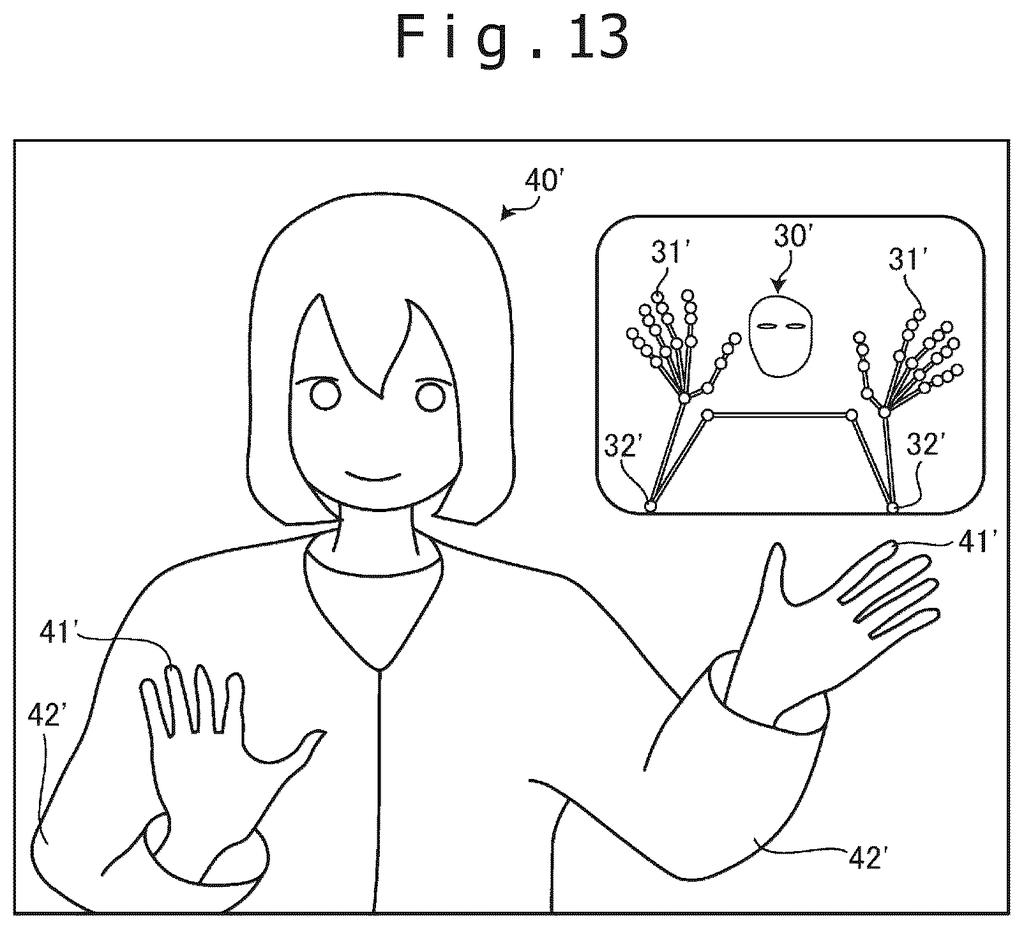
Sony's patent describes a device that tracks both your fingers and your elbows at the same time, then does the math to figure out the exact angle each elbow joint is pointing. It feeds that calculation directly into the software that poses your avatar, so when you reach across a virtual table, your digital arm actually looks like your real one.
The result is an avatar that moves with you rather than approximating you. That matters a lot in social VR spaces, video calls in mixed reality, or any experience where body language carries meaning.
… calculate elbow joint orientation information related to orientations of joints of the elbows, based on the position information on the fingers and the elbows acquired by the acquisition unit …
Translation: It figures out where the user's elbows are pointing by looking at hand and arm positions.
How finger and elbow data get turned into joint angles
The system is built around three linked components. First, an acquisition unit collects real-time position data on both the user's fingers and elbows, presumably from a headset or wearable sensor array. Second, a calculation unit takes that positional data and computes elbow joint orientation information, which is essentially the angle and direction each elbow joint is facing at any given moment. Third, a model control unit applies those computed angles directly to the avatar's skeleton to set its posture.
The key insight is that elbow orientation is not just a function of where your hand is. Your elbow can swing up, down, or out while your hand stays in the same spot. By explicitly measuring elbow position rather than inferring it, the system resolves that ambiguity.
- Finger position data anchors the end of the arm chain
- Elbow position data anchors the middle joint
- Joint orientation math (inverse kinematics-style calculation) then determines how the upper and lower arm must be rotated to connect those two real-world points
The patent covers the control device, the method it runs, and the software program that implements it, giving Sony a broad claim over this tracking-to-avatar pipeline.
To enable the posture of an avatar to be controlled with high accuracy. A control device includes an acquisition unit that acquires position information on fingers and elbows …
Translation: The system tracks the user's fingers and elbows to make the virtual avatar move more accurately.
What accurate elbows mean for VR presence and social apps
For anyone spending real time in VR social spaces, fitness apps, or remote collaboration tools, the body-language gap has always been a quiet frustration. An avatar that bends its arms wrong reads as uncanny, and in longer sessions that weirdness erodes presence. A system that accurately resolves elbow orientation from actual sensor data closes that gap in a way that purely hand-tracked systems cannot.
Sony Semiconductor Solutions sits inside the broader Sony group that makes PlayStation VR hardware, so this kind of avatar-control research connects directly to consumer headset experiences. The latest Big Tech patents in the VR and mixed-reality space show a steady push toward full-body fidelity, and Sony's elbow-tracking filing is a concrete step in that direction.
Sony's 14th filing we've tracked since July in the AR glasses race follows one on spotting workouts nearby and one on syncing AR to music.
For a VR user who spends time in social spaces, this matters in a quiet but cumulative way: your avatar's elbows and arms finally move with you rather than drifting into unnatural positions that undercut every gesture you make. The fix is most noticeable when other people are reading your body language and least noticeable in solo experiences where no one else sees how your avatar holds itself. A small correction repeated across thousands of movements adds up to an avatar that feels like a reflection of you rather than a rough approximation.
There are more where this came from
We read every patent application Big Tech publishes and send you the ones worth knowing. Plain English, free, every week.
The drawings
14 drawing sheets from US 2026/0244263 A1 · click any drawing to enlarge


Want this weekly breakdown for a company we don't cover? Patentlyze Pro →
Be the first to weigh in