
Samsung Patents a Camera That Strips Out Your Voice While You Record
Every filmmaker has muttered a note to themselves mid-shot and then spent ten minutes in editing trying to cut it out. Samsung's new patent turns that muttering into a feature.
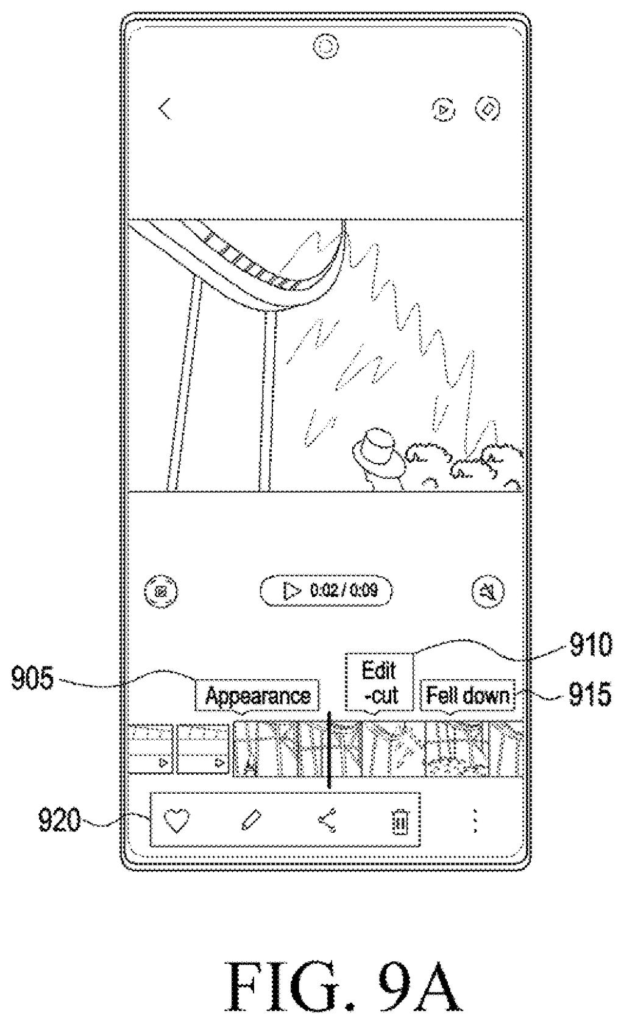
What Samsung's voice-removal recording actually does
Imagine you're filming a birthday party and you tell yourself, "Cut after the candles." Normally, that whisper is baked right into your video's audio track, and you have to scrub it out later in an editing app.
Samsung's patent describes a phone that handles this automatically. While your camera is rolling, it listens for your voice specifically. When it hears you talking, it converts what you said into a written note and then removes your voice from the recorded audio. So the final video clip has clean sound from the scene, and your note is saved separately as a text memo.
The result is that your rough filming instructions or reminders end up organized and attached to the clip, while the actual audio you want, the party sounds, the laughter, stays untouched. You get both the clean video and your notes, without editing anything.
… identify, based on the audio data, a voice associated with a user, identify, based on voice-recognized text associated with the voice, a memo associated with content editing …
Translation: The device listens to your speech while recording and turns your spoken words into an editing note.
How the device separates your voice from the scene audio
The device described in the patent combines a microphone, camera, and on-device processing to do three things at once during recording.
First, it records video and audio normally using the camera and microphone. Second, it isolates the user's voice from the overall audio mix, a process called speaker identification (figuring out which sounds belong to one specific person versus ambient noise or other people's voices). Third, it runs speech-to-text on whatever the user said, converts that transcript into a memo, and flags it as an "editing note" attached to the clip.
The stored output has three parts:
- The video footage itself
- The cleaned audio track, with the user's voice removed
- The text memo derived from what the user said
The patent doesn't spell out exactly how the voice isolation works under the hood, but the claim requires that the device can tell the difference between the recording subject's sounds and the operator's voice in real time, which is a meaningful processing challenge on a mobile device. The memo is linked to the content, suggesting it could surface as metadata inside a gallery or editing app.
… store content that includes: the video data, the audio data from which the voice has been removed, and the memo.
Translation: It saves the final package with your talking completely filtered out alongside your spoken instructions.
What this means for video creators using Samsung phones
For anyone who shoots a lot of video on a phone, including content creators, journalists, and parents documenting family moments, the cleanup step is one of the most annoying parts of editing. Removing an unwanted voice track without affecting the surrounding audio is genuinely tedious, and most people simply don't bother, meaning their off-camera comments just stay in the video.
If Samsung builds this into a future Galaxy camera app, it shifts that work from post-production to capture time, which is a real quality-of-life change for casual and semi-professional shooters. The broader video-AI patent space, which includes a lot of interesting tech patents covering on-device audio processing and AI-assisted editing, has been moving steadily toward doing more work at the moment of recording rather than after.
Samsung's 90th filing we've tracked since May in our camera sensor push work builds on fast-motion sharpness work and the bright-dark balance sensor, adding another piece to the picture.
Real-time voice separation on a mobile chip carries real costs: battery drain, thermal pressure, and the risk that imperfect speaker isolation garbles the memo or clips ambient audio in ways that are hard to notice until playback. The trade reads as worth making, though, because the alternative is manual audio scrubbing that most people never do, meaning even a flawed automatic version salvages more recordings than the status quo.
There are more where this came from
We read every patent application Big Tech publishes and send you the ones worth knowing. Plain English, free, every week.
The drawings
13 drawing sheets from US 2026/0245593 A1 · click any drawing to enlarge


Want this weekly breakdown for a company we don't cover? Patentlyze Pro →
Be the first to weigh in