
Google Patents Tech That Keeps Phone Cameras Sharp Through Their Own Lenses
Cameras that sit behind lenses, like those in AR glasses or periscope setups, can drift out of calibration as the lens shifts or warps. Google's new patent builds the calibration targets directly into the lens itself, using the lens's own light-bending quirks to tell the camera where it is.
What Google's built-in lens markers actually do for your camera
Ever noticed how a camera can look slightly off when something sits in front of it, like a filter or a protective cover? Now extend that to augmented reality glasses, where a curved optical lens sits between your eye and a tiny camera sensor. Any small movement or manufacturing variation in that lens can throw off every image the camera captures.
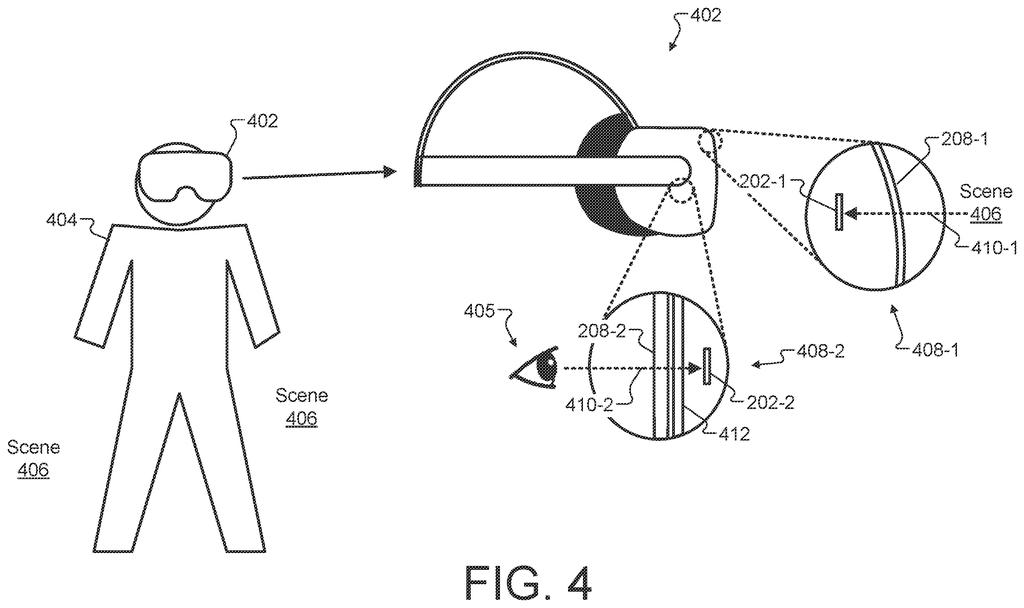
Google's idea is to bake tiny reference markers, called fiducials, directly into the lens itself. These aren't painted dots you can see with your eye. Instead, they're small structural interruptions in the lens surface that cause light to bend in a distinctive, detectable way. The camera spots those unusual light patterns in every image it takes, and a processor uses them to continuously correct for whatever distortion the lens is introducing.
The result is a system that essentially knows where its own lens is at all times and adjusts accordingly, without needing any external targets or separate calibration sessions.
… a set of fiducials integrated with the optical component in a region associated with a field of view of the image sensor, the set of fiducials implementing respective discontinuities in a refraction plane of the optical component; …
Translation: Tiny reference markers are built right into the camera lens to intentionally bend light in specific ways.
How the fiducials bend light to signal their own position
The system described in the patent has four core components working together:
- An image sensor that captures the main scene.
- An optical component (a lens, prism, or similar element) sitting between the sensor and whatever is being photographed.
- A set of fiducials built into the optical component. These are physical discontinuities (think: tiny structural interruptions, like microscopic notches or etchings) in the lens's refractive surface (the surface that bends light). Because they break the smooth bending pattern, they create anomalous light propagation, meaning light that travels through those spots arrives at the sensor in a slightly different, identifiable way.
- A processor that reads every incoming image, detects those distinctive light-bending signatures from the fiducials, figures out the current spatial arrangement of the lens, and then runs a calibration operation to mathematically undo the distortion the lens is causing.
The key insight is that the fiducials are in the camera's own field of view at all times. The processor doesn't need a separate calibration step or an external reference chart. Every frame passively carries the calibration signal embedded in the way light passes through the lens's intentional imperfections.
This is particularly useful when the optical component can shift slightly in use, or when manufacturing tolerances mean each unit is a little different from the last.
… detecting, using the image and based on anomalous light propagation through the respective discontinuities, an arrangement of the set of fiducials; and, based on the arrangement, performing a calibration operation to account for an effect of the optical component on light detected by the image sensor.
Translation: The software looks at how these markers distort the light to automatically fix and sharpen your photos.
What this means for AR glasses and embedded camera systems
For consumer products, this approach targets a real friction point in compact optical systems, especially head-worn devices like AR or mixed-reality glasses, where a waveguide (a thin piece of shaped glass or plastic that redirects light) sits right in the camera's path. Any misalignment between that waveguide and the sensor degrades depth sensing, object recognition, and overlay accuracy. Embedding the calibration signal in the lens itself means the system can stay accurate across temperature changes, physical bumps, and unit-to-unit variation, without asking users to point their glasses at a calibration target.
The design trade-off is real, though: adding structural discontinuities to an optical surface means accepting some permanent, intentional imperfections in the same glass that needs to be optically pristine for good image quality. How much that costs in image sharpness or contrast depends on implementation details the patent does not fully resolve. Google's camera and AR hardware teams have an obvious stake in solving exactly this kind of problem, and filings like this one sit alongside other new Big Tech patents pushing camera intelligence into the optics layer rather than leaving it all to software.
Google's 37th filing we've tracked since May in our smart glasses display watchlist builds on the head-tracking filter patent and the eye-tracking correction application.
Tiny reference marks built into the see-through lens steal a little optical clarity. That is a real price to pay, even though the lens already falls short of perfect.
The design wins that price back by keeping the headset constantly aware of its own distortions. But only if the headset can still spot those faint signals in bright sunlight, busy patterns, and fast movement, all of which could drown them out.
If those tough situations can be solved, the trade is worth it. If not, the lens has been permanently compromised for a calibration system that cannot do its job.
Get our take in your Top Stories
Liked this breakdown? Add Patentlyze as a preferred source on Google, and our plain-English take shows up more often in your Top Stories the next time Google patent news breaks.
There are more where this came from
We read every patent application Big Tech publishes and send you the ones worth knowing. Plain English, free, every week.
The drawings
10 drawing sheets from US 2026/0246912 A1 · click any drawing to enlarge


Want this weekly breakdown for a company we don't cover? Patentlyze Pro →
Be the first to weigh in