
Google Patents a Filter That Cleans Up Head-Tracking Data for AR Devices
Head-tracking on AR glasses can jitter or drift every time the camera misreads your position. Google has filed a patent for a mathematical filter designed to correct those errors before they reach the display.
What Google's head pose correction actually does
Head-tracking systems used in AR glasses and mixed-reality headsets frequently produce noisy or slightly wrong readings, because cameras aren't perfect and tiny head movements are hard to measure precisely. Those errors can cause on-screen content to wobble, lag, or drift in ways that feel disorienting.
Google's patent describes a system that takes those raw head-position readings and runs them through a specialized mathematical filter, called a harmonic exponential filter, to produce a cleaner, corrected version. Think of it like noise-canceling headphones, but for spatial tracking: the raw signal comes in messy, and the filter outputs something steadier.
The input is camera image data; the output is corrected head pose data, meaning a more accurate picture of where your head is pointing at any given moment. That corrected data would then drive what the device shows you, keeping virtual objects anchored where they're supposed to be.
… inputting the head pose data into a harmonic exponential filter to generate corrected head pose data.
Translation: Feeding messy motion measurements into a special math filter to clean them up.
How the harmonic exponential filter smooths pose readings
The patent describes a three-step pipeline:
- Receive image data from a camera (likely a forward-facing or eye-tracking camera on an AR device).
- Generate head pose data from that imagery, meaning estimates of the head's orientation and position in 3D space.
- Pass that pose data through a harmonic exponential filter to produce corrected output.
The key piece is the harmonic exponential filter. Standard smoothing filters (like a simple moving average) can reduce jitter but often introduce lag, making the display feel sluggish. A harmonic exponential filter applies a mathematically structured weighting that can suppress noise without adding as much delay, by blending recent readings in a way that accounts for periodic or oscillating patterns in the signal (the "harmonic" part) rather than treating all noise as random.
The patent's claim is intentionally broad: it covers any method that receives image data, derives head pose from it, and applies this class of filter. The inventor is Claude Knaus, a single-inventor filing under Google LLC.
A method including receiving image data, generating head pose data based on the image data …
Translation: The system starts by looking at pictures to figure out where your head is pointing.
What this means for Google's AR ambitions
Head-tracking accuracy is one of the hardest problems in AR hardware, because even a few milliseconds of lag or a fraction of a degree of error can make virtual objects appear to float or swim. A better filter at this stage of the pipeline is a software-level fix that could improve any camera-based head-tracking system without changing the underlying sensors.
For Google, which has been investing in AR through projects like Android XR and its partnerships with Samsung, stable head pose data is a prerequisite for everything else: text overlays, navigation cues, video call windows. This filing sits alongside the broader stream of interesting tech patents covering AR spatial computing, where the competition to nail the fundamentals is accelerating. The patent itself is narrow in scope, covering one specific filtering approach, so its value depends entirely on whether that approach outperforms existing methods in practice.
That makes this Google's 36th filing we've tracked since May in our smart glasses display watchlist, building on work like head movements fixing eye tracking and correcting bent-frame distortion.
As a shippable feature, this is pure software applied to an existing sensor pipeline, which puts it closer to a firmware update than a hardware program. The shortest route to a product is dropping this filter into an Android XR or Google Pixel device software stack, which means no new chips, no new factories, and no regulatory approvals needed. The catch is that a single broad claim with almost no implementation detail in the abstract makes it hard to assess whether the harmonic exponential approach actually beats competing filters on latency or accuracy. Google would need to validate that in hardware testing before this becomes a real differentiator.
There are more where this came from
We read every patent application Big Tech publishes and send you the ones worth knowing. Plain English, free, every week.
The drawings
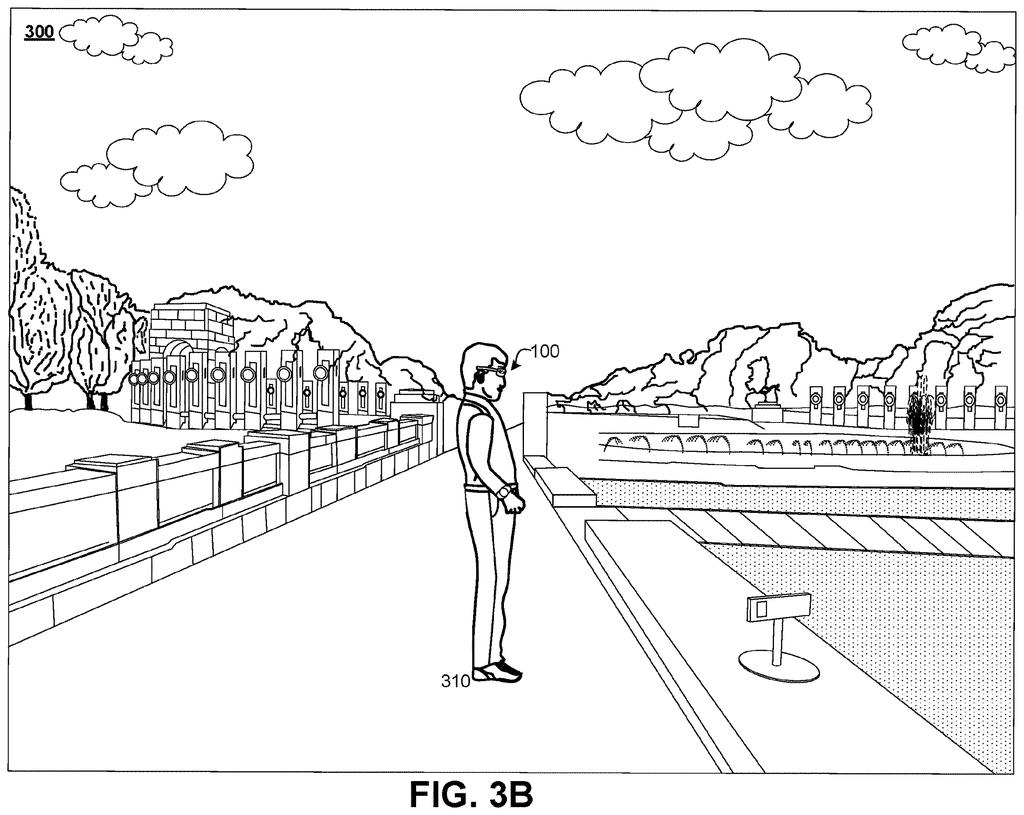
11 drawing sheets from US 2026/0237093 A1 · click any drawing to enlarge


Want this weekly breakdown for a company we don't cover? Patentlyze Pro →
Be the first to weigh in