
Google's New Patent Uses Head Movements to Correct Smart-Glasses Eye Tracking
Eye-tracking on AR glasses tends to drift over time, turning a precise tool into a frustrating guessing game. Google's new patent describes a way for headsets to correct that drift by watching how you move your head, no extra setup required.
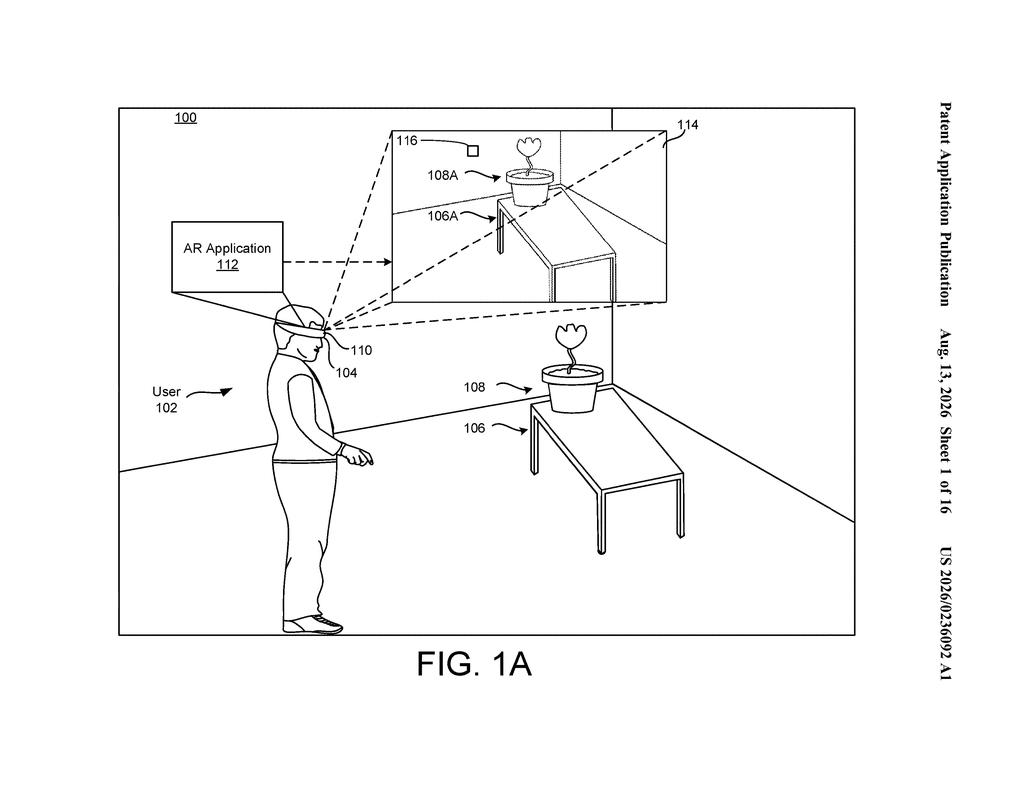
How Google's gaze re-calibration actually works
Imagine you're wearing AR glasses that let you select things just by looking at them. It works great at first, but after a while the cursor keeps landing slightly to the left of what you're actually staring at. That tiny error gets annoying fast.
Google's patent describes a fix baked right into the device. When the headset notices that your eyes and your head aren't quite in agreement about where you're looking, it uses a moment when you confirm a selection to do the math and figure out the correction. It compares where your eyes were pointing, where your head moved to, and what you actually chose, then adjusts its model of your gaze going forward.
The result is that eye-tracking accuracy can improve during normal use, without you sitting through a calibration routine or even noticing a recalibration happened.
… generating a calibration adjustment based on the first direction, the second location, and the selection; and identifying a third location based on: a second direction of the gaze of the at least one eye of the user; and the calibration adjustment.
Translation: The device uses your head movement and a manual selection to fix errors in how it tracks where your eyes are looking.
How the device computes a calibration adjustment
The patent covers a continuous gaze calibration method for head-mounted devices like AR glasses or VR headsets. The basic problem: the camera-based system that tracks where your eyes are pointing can develop small errors over time due to headset shifts, fatigue, or just the natural way your eyes and head cooperate differently from one moment to the next.
Here's the sequence the patent lays out:
- The device identifies a first location based on where your eyes are pointing (the raw gaze direction).
- You then move your head, and the device identifies a second location based on that head movement.
- You confirm a selection at that second location, providing an explicit signal of where you actually intended to point.
- The device computes a calibration adjustment by comparing the original gaze direction, the head-moved location, and your confirmed selection.
- All future gaze readings are corrected using that adjustment.
The clever part is that the correction data comes from something you were going to do anyway: selecting something. The headset uses the gap between where your eyes said you were looking and where your head and hand confirmed you meant to look as a natural calibration signal. No staring at dots on a screen, no pausing the experience.
A head-mounted device may identify a first location based on a first direction of a gaze of at least one eye of a user, the head-mounted computing device being mounted on a head of the user. The head-mounted device may identify a second location in response to a movement of the head of the user.
Translation: The glasses track your eye position first, then update that data when you move your head to look at something else.
What this means for AR glasses you control with your eyes
If you've ever used a laptop with eye-tracking, or watched someone try to control a screen with their gaze, you'll know how quickly small inaccuracies become infuriating. An AR headset you control primarily with your eyes lives or dies on that accuracy staying consistent throughout the day. A system that corrects itself in the background means fewer frustrating misses and less need to run a formal re-calibration every time the glasses shift on your nose.
This kind of under-the-hood reliability work is exactly what separates a fun demo from a device people wear for hours. Google's investment in gaze-tracking patents fits into a broader picture of AR hardware development, and the latest Big Tech patents in the AR and wearables space show Google is systematically solving the small physical annoyances that break immersion.
You'd notice this patent's effect every time you don't have to stop, pull up a settings menu, and redo an eye-tracking calibration because your glasses slid down. That failure mode is one of the most common complaints about consumer gaze-control systems, and fixing it through passive, in-session correction is the right approach. For anyone using an eye-controlled AR device all day, quiet fixes like this decide whether the product stays on your face or goes back in the drawer.
There are more where this came from
We read every patent application Big Tech publishes and send you the ones worth knowing. Plain English, free, every week.
The drawings
16 drawing sheets from US 2026/0236092 A1 · click any drawing to enlarge


Want this weekly breakdown for a company we don't cover? Patentlyze Pro →
Be the first to weigh in