
Adobe Patents an AI System That Compresses 3D Scenes for Faster Editing
Adobe is patenting a way to take a full three-dimensional scene, squeeze it into a compact internal form using AI, and then rebuild it on demand. It's a foundational move that could change how 3D content gets edited, generated, or manipulated inside future Adobe tools.
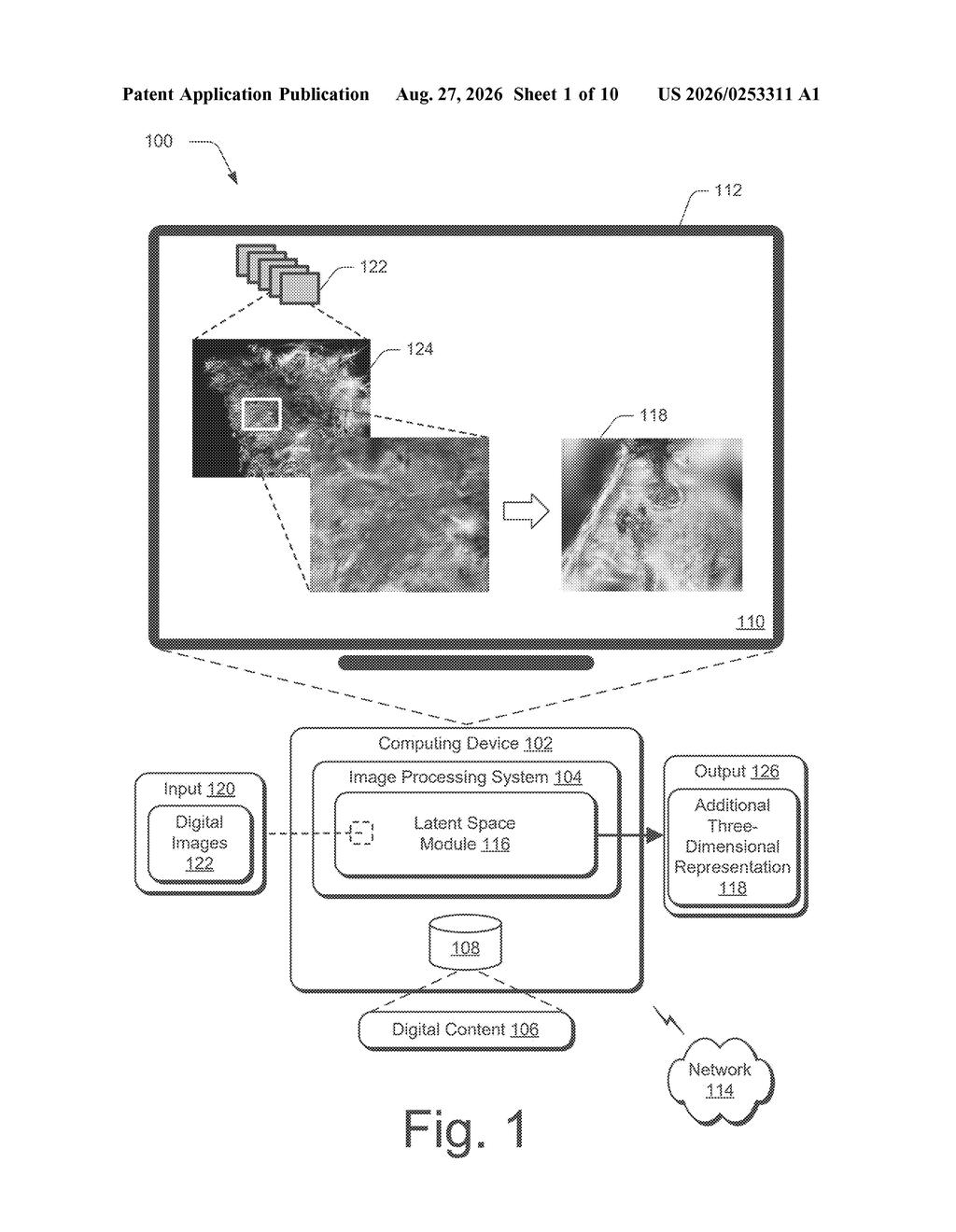
What Adobe's 3D scene compression actually does
Working with 3D scenes today is slow and memory-hungry because your computer has to keep track of every surface, depth layer, and spatial relationship all at once. Adobe wants to change that by teaching an AI to create a kind of shorthand for a 3D scene.
The idea is to feed a 3D representation of a scene into a machine learning model. The model encodes it into something called a latent space, which you can think of as a compressed sketch that captures the scene's essential information in far fewer numbers. When you need the actual 3D data back, the same model decodes it from that sketch.
This encode-then-decode approach is the same general strategy that powers modern AI image generators, just applied to full 3D environments instead of flat pictures. For Adobe's customers, the practical goal is making it easier for software to understand, edit, or generate 3D content without needing to wrangle raw geometry every step of the way.
… encoding, by the processing device, a tokenized three-dimensional representation based on the three-dimensional representation of the scene into a latent space using a machine learning model …
Translation: The system turns complex 3D scene data into a compact digital format that an AI can easily process and store.
How the model encodes and rebuilds a 3D scene
The patent describes a system that takes a three-dimensional representation of a scene (think geometry, depth, spatial structure) and first converts it into a tokenized form. Tokenization here means breaking the scene down into discrete chunks, similar to how a language model breaks a sentence into individual words before processing it.
Those tokens are then fed through a machine learning model that compresses them into a latent space (a lower-dimensional mathematical representation that retains the scene's meaningful structure without carrying every raw data point). The model learns which aspects of the scene matter most and encodes them efficiently.
The same model then runs in reverse, decoding three-dimensional information back out of that latent space. The output can be 3D geometry, depth maps, or other spatial data depending on what the system needs.
Key components the patent outlines:
- A pipeline that accepts a 3D scene as input
- A tokenization step that converts spatial data into model-digestible chunks
- A shared machine learning model handling both encoding and decoding
- A latent space as the intermediate compressed form
This architecture mirrors how variational autoencoders work in 2D image AI, extended to three-dimensional data.
In implementation of techniques for generating a latent space for a three-dimensional scene, a computing device implements a latent space system to receive a three-dimensional representation of a scene.
Translation: Adobe is building a specialized system designed to ingest and manage detailed 3D environments.
What this means for AI-powered 3D creative tools
For anyone making 3D content, whether for games, film, or product visualization, the bottleneck has always been raw data volume. A latent space approach means AI tools could analyze, edit, or generate 3D scenes by operating on the compressed form rather than the full geometry, which is faster and opens the door to the same kind of prompt-based generation that already works for flat images.
Adobe's broader strategy has been to fold generative AI into every creative product it owns, and a solid 3D latent-space system is the kind of infrastructure that would sit underneath many future features rather than becoming one itself. This filing sits alongside the latest Big Tech patents in the 3D AI space, where companies are racing to build the encoding foundations that make generative 3D tools possible.
This is the 27th Adobe filing we've tracked in our AI photo editing race since May, following one-click material selection and filling 3D holes with text.
The encoding-decoding approach Adobe is patenting is a real engineering trade. When you compress a 3D scene into a latent space, you are by definition throwing away information. The model decides what to keep, and if it decides wrong, the decoded output drifts from the original. That fidelity gap is acceptable for generating plausible new scenes, but it could be a serious problem if Adobe wants to use this for precision editing of existing assets.
The patent does not resolve that tension. It describes the architecture but does not specify how the model is trained to minimize reconstruction error, which is where the real difficulty lives. A system that produces impressionistic-but-plausible 3D scenes is useful for concept generation; one that loses fine geometry details mid-workflow is a liability for professional production pipelines.
The trade may still be worth it: most of Adobe's growth in AI has come from tools aimed at speed and ideation, not surgical precision. If the latent space approach lands in something like a 3D version of Firefly, good-enough fidelity at high speed is probably the right call. The risk is that Adobe tries to stretch the same architecture into professional 3D workflows where the tolerance for reconstruction error is much lower.
Get our take in your Top Stories
Liked this breakdown? Add Patentlyze as a preferred source on Google, and our plain-English take shows up more often in your Top Stories the next time Adobe patent news breaks.
There are more where this came from
We read every patent application Big Tech publishes and send you the ones worth knowing. Plain English, free, every week.
The drawings
10 drawing sheets from US 2026/0253311 A1 · click any drawing to enlarge


Want this weekly breakdown for a company we don't cover? Patentlyze Pro →
Be the first to weigh in