
Google Patent: Correcting Quantum Computing Errors During Active Mid-Cycle Operations
Quantum computers make mistakes constantly, and catching those mistakes early enough to fix them is one of the hardest unsolved problems in the field. Google just filed a patent for a technique that checks for errors in the middle of a calculation, not just at the end.
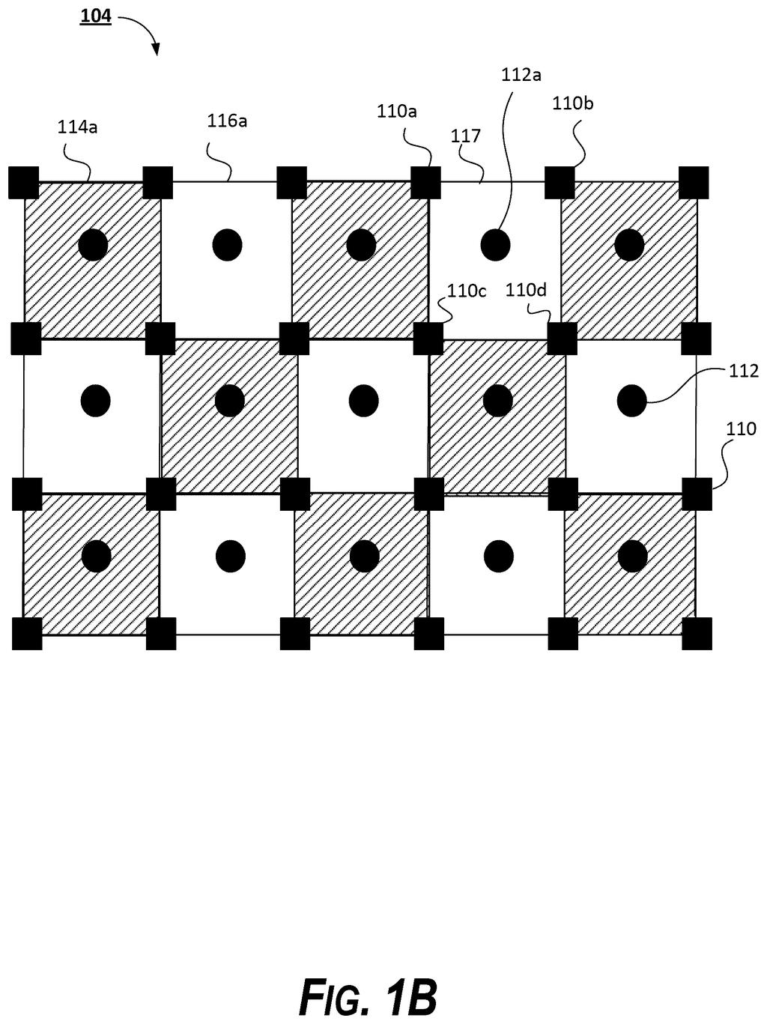
What Google's mid-cycle qubit error checks actually do
What happens when a calculator starts getting the wrong answers halfway through a math problem? With regular computers, that almost never happens. With quantum computers, it happens all the time, and the errors can silently corrupt a result before you ever see the output.
Google's approach here is to insert error checks in the middle of a calculation, not just at the end. Think of it like a teacher grading a student's work line-by-line instead of only marking the final answer. The system performs quick, targeted measurements on individual qubits (the quantum equivalent of a regular computer's bits) while the computation is still running, then uses those measurements to decide whether a correction is needed before the error spreads.
The specific tool Google is patenting is called a single-qubit mid-cycle gauge operator, which is a very technical way of saying: a check that looks at just one qubit at a time, timed to happen at a precise moment mid-calculation. It's a more targeted approach than checking everything at once, and in quantum computing, precision about when and what you measure matters enormously.
measuring, at one or more mid-cycle states of a quantum error correction code executing on a quantum computing system, one or more mid-cycle gauge operators and one or more mid-cycle stabilizers …
Translation: Checking specific states while the quantum computer runs to catch errors early.
How single-qubit gauge operators catch errors mid-cycle
Quantum computers rely on qubits, which unlike regular computer bits can exist in multiple states at once. That property makes them powerful, but it also makes them fragile. A stray electromagnetic field, a tiny temperature fluctuation, or even a poorly timed operation can flip a qubit into the wrong state, introducing an error.
Quantum error correction (QEC) is the discipline of detecting and fixing those errors without directly observing the qubits in a way that destroys their quantum state (a measurement in quantum mechanics is destructive by nature, so you have to be clever about what you measure and when). Most QEC schemes define a full correction cycle: measure a set of special checks called stabilizers, infer where errors occurred, then apply corrections.
Google's patent introduces mid-cycle gauge operators, specifically single-qubit ones, into that process. A gauge operator is a measurement that gives you partial information about the system's error state without fully collapsing it. By running these lightweight, single-qubit checks at mid-cycle states (defined points inside a correction cycle, before it completes), the method can catch errors earlier and feed that information into the correction logic.
- Mid-cycle stabilizers are also measured at the same intermediate points, giving a richer snapshot of the error landscape at that moment.
- The correction operation is then performed based on the combined results of both the gauge measurements and the stabilizer measurements.
- Restricting gauge operators to single-qubit measurements keeps the check itself simple and less likely to introduce new errors in the process of looking for old ones.
… performing, based at least in part on a result of the measuring, a quantum error correction operation …
Translation: Fixing the quantum errors right away using the data gathered during those checks.
What this means for making quantum computers reliable
Quantum computers are not useful at scale until they can run reliably, and error correction is the main bottleneck standing between today's lab demonstrations and practical machines. Every technique that catches errors earlier, or more cheaply in terms of the hardware operations required, moves the timeline forward. Google has been one of the leaders in this space, and this patent adds a specific structural tool to the error correction toolkit: timed, single-qubit checks that slot into existing correction cycles.
The gap between a patent like this and a shippable product is still wide. Quantum error correction schemes require specific hardware architectures, and the qubits themselves have to be good enough that the error-checking overhead does not outpace the errors being corrected. But the filing does reflect where serious engineering effort is being directed, and those following new Big Tech patents in quantum hardware will find Google's error-correction filings form a consistent and detailed body of work in this area.
This is the seventh quantum computing filing from Google we've tracked since May, adding to work like one on gate accuracy and one on cheaper simulations.
The method described here is software, but it assumes hardware that does not yet exist reliably at scale. Before this technique gets called in any real product, quantum processors need to run many rounds of error checking without the checking process itself making things worse. The clever constraint in the patent is limiting mid-cycle checks to single qubits.
Checking a qubit for errors can introduce new errors, so narrowing those checks is a practical admission that the underlying machines are still fragile. That is engineering thinking, not just theory. The shortest path to a product runs through years of hardware progress first.
What the document signals is that Google is working out how error correction will actually operate in practice, which is a more useful kind of planning than simply proving it is possible.
Get our take in your Top Stories
Liked this breakdown? Add Patentlyze as a preferred source on Google, and our plain-English take shows up more often in your Top Stories the next time Google patent news breaks.
There are more where this came from
We read every patent application Big Tech publishes and send you the ones worth knowing. Plain English, free, every week.
The drawings
36 drawing sheets from US 2026/0252941 A1 · click any drawing to enlarge


Show the other 28 sheets


Want this weekly breakdown for a company we don't cover? Patentlyze Pro →
Be the first to weigh in