
Amazon Patents a System for Splitting Work Between Quantum and Regular Computers
Running a quantum algorithm today means stitching together two completely different kinds of computers by hand. Amazon wants to make that handoff automatic, managed inside AWS the same way it already manages ordinary server jobs.
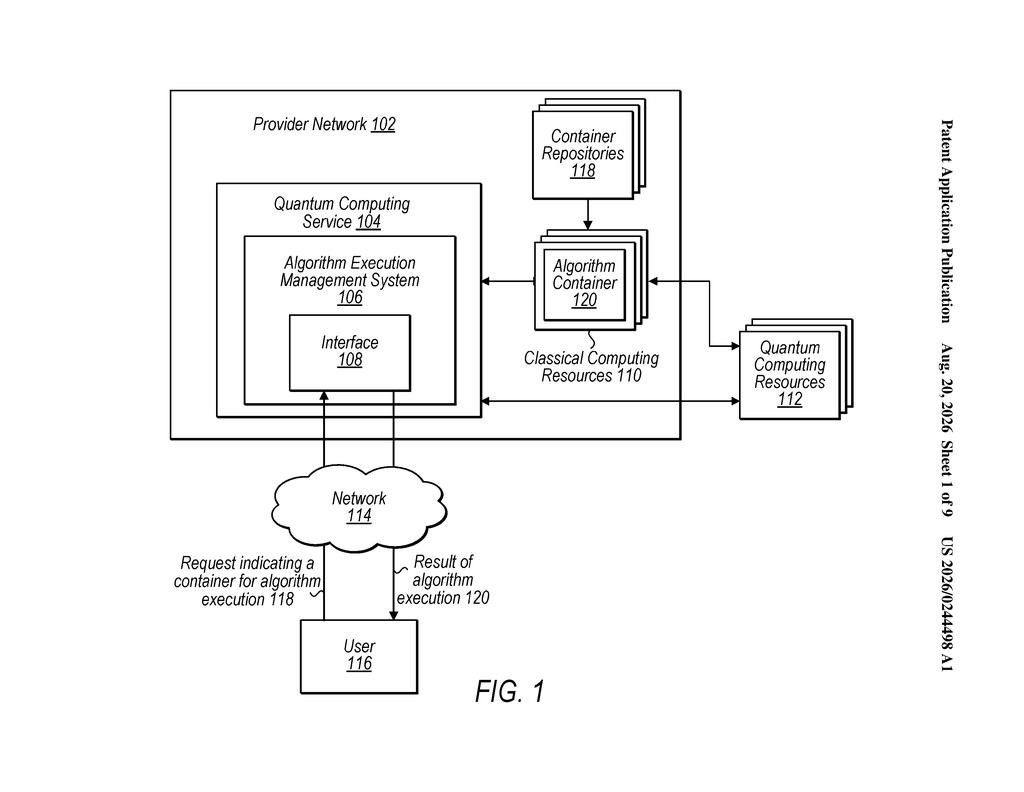
How Amazon's quantum-classical job scheduler would work
Ever tried to get two very different apps to share a single file? The coordination alone eats up half your time. Now scale that up to quantum computers, which solve certain math problems in ways ordinary chips simply cannot, and you have a real headache for anyone trying to use both in the same program.
Amazon's patent describes a management layer that handles the coordination for you. You package your code and its dependencies into a container (think of it as a self-contained lunchbox your software travels in), submit it to Amazon's cloud, and the system figures out which parts of your algorithm should run on a regular server and which parts need quantum hardware. You get a single result back without ever wiring the two machines together yourself.
The system also checks that quantum resources are actually available before it even bothers spinning up the classical servers, which means you are not paying for ordinary compute time while you wait in a quantum queue. That is a small detail that could save real money at scale.
… receive, from the user, another request for executing the algorithm using different types of computing resources including a classical computing resource and a quantum computing resource …
Translation: The system lets users ask to run tasks using both regular and quantum computers at the same time.
How the system splits, prioritizes, and routes each task
The patent describes an algorithm execution management system sitting inside a provider network (Amazon Web Services, in practice). Its job is to accept a user request that bundles code and software libraries into a container, a standard cloud packaging format, and then intelligently route portions of that code to two different hardware targets.
- Availability check first: Before provisioning any classical servers, the system confirms quantum computing resources are free. This prevents the user from being billed for ordinary compute time during a quantum backlog.
- Container-based classical execution: The parts of the algorithm that do not need quantum hardware run inside the user-supplied container on regular servers, exactly as a normal cloud workload would.
- Quantum task prioritization: The quantum portion of the algorithm is given a priority level during execution, meaning it moves to the front of the quantum hardware queue rather than competing with unrelated jobs.
- Unified result delivery: Output from both compute paths is collected and returned as a single result, hiding the complexity of the split from the end user.
The patent frames this as a managed service problem, not a hardware problem. The underlying quantum processor can be any variety; what the system standardizes is the orchestration layer that decides when and how each piece of work travels between the two computing paradigms.
The quantum task of the algorithm may be provided a priority during execution of the algorithm for using the quantum computing resources.
Translation: Quantum parts of the work get priority access to specialized quantum hardware.
What this means for businesses buying cloud compute time
For businesses that want to experiment with quantum computing, the biggest obstacle right now is not the quantum hardware itself but the plumbing required to connect it to classical software. Every practical quantum algorithm still needs ordinary code running alongside it to prepare data, interpret results, and handle everything the quantum chip cannot do. Building that bridge from scratch requires specialized expertise most teams do not have.
Amazon's filing points toward a future where that plumbing is just another managed AWS service, as invisible as load balancing or auto-scaling. If it works as described, a data science team could submit a single job and let the cloud decide how to split it, which would open quantum computing to a much wider pool of developers who follow Big Tech patent news on quantum cloud infrastructure closely because it signals which direction AWS is betting its enterprise compute roadmap.
Amazon's eighth filing we've tracked in the AI chip wars since May builds on earlier work like one that pauses jobs mid-run and stripping zeros from weights.
This patent is about software only. No new machines needed. It just adds a smarter scheduling layer on top of quantum computers that already exist and plug into cloud services.
Amazon already runs quantum computers through its cloud. What was missing was automatic job splitting, support for standard software containers (think of them as self-contained boxes of code), and a check that quantum resources are actually free before booking regular computing time. This patent claims to fill exactly that gap. A team could build a working version today, using hardware that already exists, with no waiting for some future invention. That makes this one of the more realistic quantum patents out there.
There are more where this came from
We read every patent application Big Tech publishes and send you the ones worth knowing. Plain English, free, every week.
The drawings
9 drawing sheets from US 2026/0244498 A1 · click any drawing to enlarge


Want this weekly breakdown for a company we don't cover? Patentlyze Pro →
Be the first to weigh in