
Qualcomm Patents Technology That Keeps Rotating Graphics Sharp During On-Screen Animations
Every frame on your phone screen is really a stack of overlapping layers, and Qualcomm thinks the chip doing the rendering can be a lot more precise about which hardware handles each one.
How Qualcomm sorts spinning vs. Still screen layers
You're scrolling through an app and a loading spinner is turning in one corner while a video thumbnail sits perfectly still in another. Your phone's graphics chip is treating both of those elements with the same approach, even though they need very different things.
Qualcomm's patent describes a system that looks at each layer on screen, figures out which ones are spinning (rotation animations) and which ones are holding still, then routes each type to the right processor in the most efficient way. Spinning layers go to a dedicated processor. Still layers get the screen area carved into smaller zones called regions of interest, each handled by its own mini-processor.
The goal is to reduce the visual quality trade-offs that happen when a single chip tries to handle too many different kinds of work at once. In short: your animations could look cleaner without the rest of your screen taking a quality hit.
… detect whether each of the plurality of layers is a rotation animation layer or a non-rotation animation layer based on the mapping for each of the plurality of layers; divide a frame buffer into a set of regions of interest (ROIs) for each non-rotation animation layer …
Translation: The system identifies which parts of the screen are spinning and which are static to process them differently.
How the DPU assigns processors per layer type
The patent describes logic that runs on a device's CPU and coordinates between two specialized chips: a GPU (graphics processing unit, which handles complex rendering) and a DPU (display processing unit, a dedicated chip that composites the final image you see on screen).
When a frame arrives, the system inspects each of its layers and maps them for processing. It then classifies every layer as either a rotation animation layer (something actively spinning or rotating) or a non-rotation animation layer (everything else, including static images or non-rotating transitions). This distinction drives everything that follows.
- Rotation animation layers each get a dedicated per-layer processor at the DPU, keeping their motion smooth and consistent.
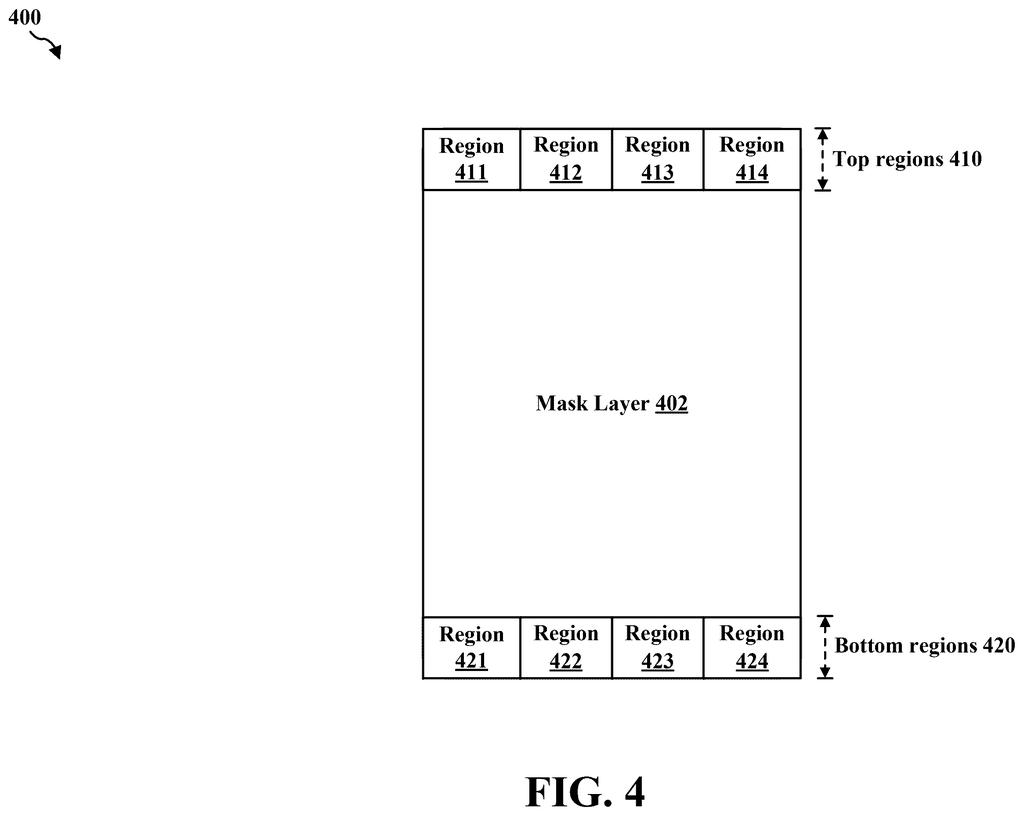
- Non-rotation animation layers trigger a different path: the frame buffer (the memory area holding the image ready to be displayed) is divided into a set of regions of interest (ROIs), smaller rectangles each assigned its own per-layer processor at the DPU.
- This finer subdivision means the DPU can apply different processing parameters to different parts of the same still or slow-moving layer, preserving detail where it matters most.
The practical effect is that the DPU stops treating the entire screen as one problem and instead handles each zone or animated element on its own terms.
… assign a first per-layer processor at the DPU to each rotation animation layer or at least one second per-layer processor at the DPU to each of the set of ROIs in the frame buffer for each non-rotation animation layer.
Translation: The device assigns dedicated hardware resources to handle rotating graphics separately from the rest of the screen.
What this means for animations on Snapdragon phones
For people using Snapdragon-powered Android phones, this kind of optimization operates entirely in the background, but its effects show up in moments you'd notice without knowing why: a loading icon that doesn't look slightly blurred, or a UI transition that stays sharp even when several things are moving at once. The patent is specifically targeting a quality gap that appears when the GPU and DPU have to collaborate on a complex screen, and neither is given clear direction about which parts of the frame it owns.
Qualcomm builds the chips inside a huge share of Android flagship phones, so display processing improvements in its patent filings tend to have a wide footprint. The display pipeline is one of the quieter battlegrounds in mobile chip design, and this filing sits alongside the Big Tech patent news on display and chip architecture that shows how much engineering attention is going into the rendering stack that most users never think about.
This is the eighth Qualcomm filing we've tracked since July in the GPU rendering race, building on one splitting work across frames and one skipping pixel work.
Most people will never notice this fix, and that's exactly the point. When your phone is doing several visual things at once, like spinning an icon while a video plays in the background, the screen can compromise on quality in ways that are hard to name but easy to feel as a vague sense of cheapness. What this patent describes is a system that looks at each visual element on screen separately and decides, moment to moment, how to render it cleanly.
A rotating animation gets handled one way, a static layer gets handled another, and nothing has to share resources in ways that degrade the result. The person who benefits is anyone who cares that their phone looks polished under pressure, not just in calm moments.
It's a small, careful fix for a problem that mostly hides, and it matters because the best display quality is the kind you never have to think about.
Get our take in your Top Stories
Liked this breakdown? Add Patentlyze as a preferred source on Google, and our plain-English take shows up more often in your Top Stories the next time Qualcomm patent news breaks.
There are more where this came from
We read every patent application Big Tech publishes and send you the ones worth knowing. Plain English, free, every week.
The drawings
12 drawing sheets from US 2026/0253161 A1 · click any drawing to enlarge


Want this weekly breakdown for a company we don't cover? Patentlyze Pro →
Be the first to weigh in