
Qualcomm Patents a Graphics Chip Trick That Skips Pixel Work When Unnecessary
Every frame your phone renders is a mountain of tiny color calculations. Qualcomm's new patent describes a way for the graphics chip to spot when chunks of that work are redundant and skip them entirely.
What Qualcomm's pixel-grouping shortcut actually does
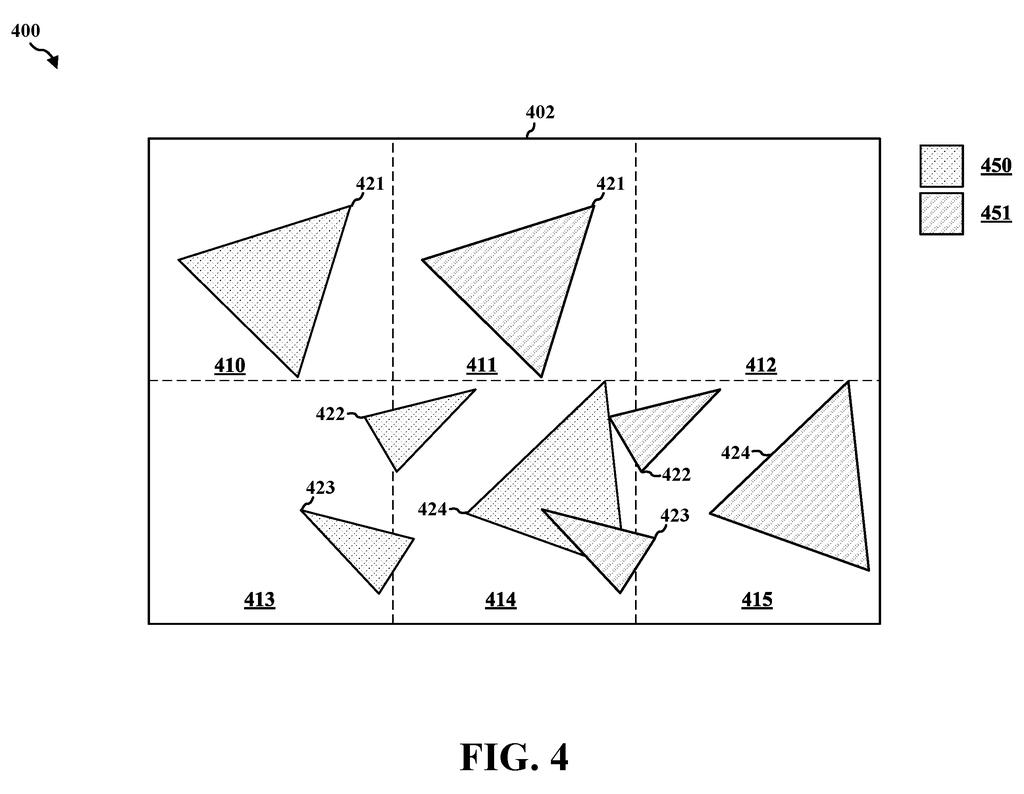
Every time you scroll through a game or a slick app animation, your phone's graphics chip is coloring in millions of tiny dots. It does this in small clusters called quads, and the chip has to run through every single one, even if many of them end up looking identical or invisible.
Qualcomm's patent describes a system where the chip checks whether a group of these pixel clusters can be compressed together before doing the full coloring work. If the clusters meet certain conditions, the chip bundles them, does less work, and moves on faster. If they don't qualify, it colors them normally. Either way, it keeps a record of what it decided.
The goal is fewer wasted calculation steps per frame, which can mean smoother graphics or a longer battery charge on your phone, or both.
… compress at least two quadrants in the set of quadrants based on a set of conditions associated with the set of quadrants, or refrain from compressing the at least two quadrants in the set of quadrants based on the set of conditions associated with the set of quadrants …
Translation: The chip decides whether to shrink image data or skip the work entirely depending on the specific needs of the scene.
How the chip decides which pixel blocks to compress
The patent centers on a graphics processor that handles quads, small 2x2 blocks of pixels that GPUs typically process as a unit during shading (the step where the chip figures out each pixel's final color).
Instead of always shading every quad independently, the processor evaluates a set of conditions across at least two quads in a group (what the patent calls a "set of quadrants"). If those conditions are met, it compresses the quads together, essentially letting one calculation stand in for several similar ones. If the conditions aren't met, it skips compression and proceeds with normal rendering. Critically, the outcome, whether compression happened or not, is recorded as an output indication that downstream parts of the pipeline can use.
The conditions the chip evaluates aren't spelled out in exhaustive detail in the claim itself, but the structure implies they could include things like:
- Whether adjacent quads share similar color or depth values
- Whether the quads are part of a draw call likely to produce uniform output
- Whether the cost of compression is actually worth the savings
This kind of conditional, per-group decision-making is distinct from a blanket compression pass. The chip is making a local judgment call for each batch of pixels rather than applying a one-size-fits-all rule.
The apparatus may obtain an indication of a set of quadrants for at least one draw call in a set of draw calls associated with a frame, where each of the set of quadrants includes a plurality of pixels in the frame.
Translation: The processor breaks each image frame into smaller square sections to determine how to process the pixels inside them.
What this means for mobile graphics performance
Mobile GPUs are already highly optimized chips, but shading is one of the biggest power and time consumers in rendering. Any system that can detect and eliminate redundant shading work at the pixel-block level has a direct path to either better frame rates or lower power draw, which matters especially on phones where thermal limits kick in fast.
Qualcomm's Snapdragon chips power a huge share of Android flagship phones, so efficiency improvements at the GPU level tend to have wide reach. The latest Big Tech patents in mobile graphics processing show a consistent push toward conditional, context-aware rendering rather than brute-force throughput, and this filing fits squarely in that direction.
Qualcomm's sixth filing we've tracked in the GPU rendering race since July builds on one checking active sections and one speeding small shapes.
Getting this feature into a real product would not require building new chips from scratch. Qualcomm just needs to update the software that tells the graphics processor how to do its job. That is a much shorter road than most graphics patents travel.
The real question is whether the extra step of deciding what to compress costs more time than it saves. That is a tuning problem for engineers, not a wall that blocks the whole idea.
There are more where this came from
We read every patent application Big Tech publishes and send you the ones worth knowing. Plain English, free, every week.
The drawings
17 drawing sheets from US 2026/0245282 A1 · click any drawing to enlarge


Want this weekly breakdown for a company we don't cover? Patentlyze Pro →
Be the first to weigh in