
Qualcomm Patents a Fix for Out-of-Sync Video When Using Wireless Earbuds
Every wireless earbud adds its own tiny processing delay before you hear a sound, and that gap is exactly why lips on your phone screen often move a split second before the words arrive. Qualcomm's latest patent application describes a way for a phone to measure that delay once, remember it, and automatically correct the video timing every time you plug those earbuds back in.
Why your earbuds make video go out of sync
Every time you press play on a video with wireless earbuds in, your phone sends sound and picture at almost the same moment but the earbuds need a fraction of a second to decode and play the audio. The result is that actors' lips move before (or after) you hear the words, and there is nothing you can do about it short of digging through audio settings.
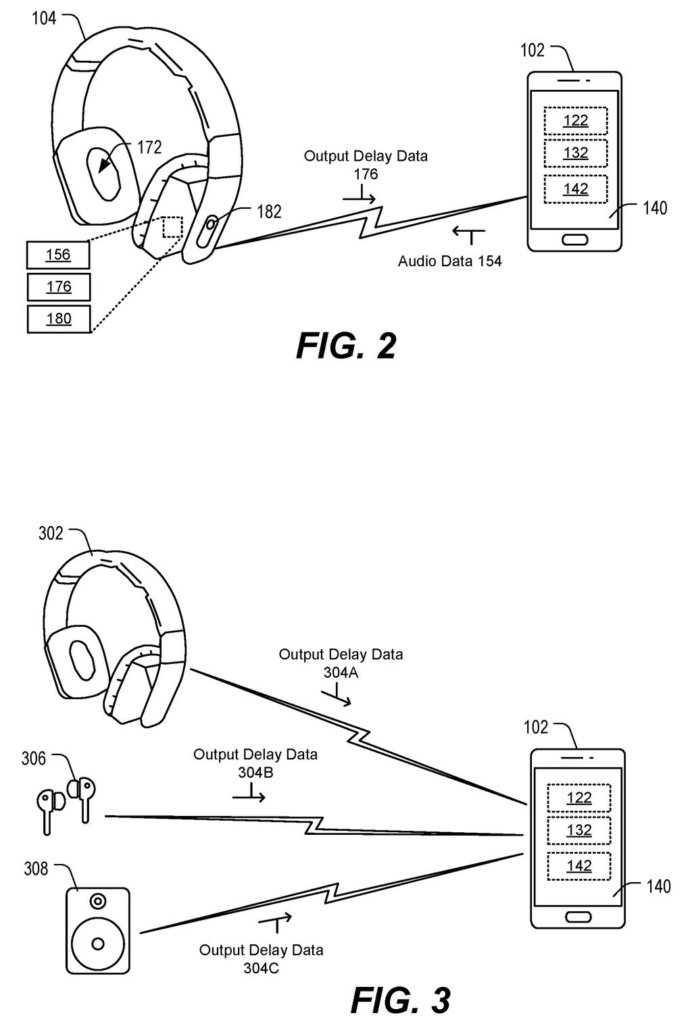
Qualcomm's patent describes a fix where the phone asks your earbuds, during the initial connection handshake, exactly how long that audio delay is. It stores that number alongside the earbuds' identifier in memory, so it does not have to ask again next time. When you hit play, the phone deliberately holds back the video by that same amount, keeping picture and sound locked together.
The key detail is that the measurement happens per device. Your cheap earbuds and your premium ones can have very different delays, and the phone keeps a separate correction value for each pair.
… during configuration of the wireless audio connection, receive the output delay data from the wireless earbuds device, the output delay data indicating a playback delay associated with audio output by the wireless earbuds device; …
Translation: When connecting the earbuds, the phone learns how much time they need to process sound.
How Qualcomm's delay buffer holds back the video frame
The patent centers on a synchronization delay calculation that lives on the phone itself. During the setup phase of a wireless audio connection (specifically the configuration handshake), the earbuds transmit output delay data, a number representing how long it takes audio to travel through their processing pipeline and reach your ears.
The phone stores that figure in memory tied to the earbuds' unique identifier. On every subsequent playback session, it retrieves the stored value without needing to re-query the device.
At playback time, the phone separates the multimedia stream into audio and video tracks. Audio goes out to the earbuds right away. Video is fed into a delay buffer (essentially a short waiting room for video frames) configured to the synchronization delay, so the first video frame appears on screen only when the corresponding audio should be reaching your ears.
The claim language also references host delay data, meaning the phone accounts not just for the earbuds' lag but also for any processing delay on the phone's own side, making the math a two-variable correction rather than a simple offset.
The video data is delayed, based on the synchronization delay, relative to the sending of the audio data.
Translation: The phone holds back the picture just long enough to match the audio delay of the earbuds.
What this means for phone-based wireless audio playback
Audio-video sync problems with Bluetooth and other wireless audio are well documented and have historically been handled inconsistently, pushed onto streaming apps, media players, or the user. A patent that plants this correction at the phone hardware and OS layer would mean any app playing video benefits automatically, without each developer writing their own workaround.
For Qualcomm, which supplies the chips inside most Android phones on the market, building this logic into the platform gives device makers a straightforward way to differentiate audio quality, and it fits a pattern of new Big Tech patents targeting wireless audio reliability at the silicon and firmware level, where fixes can reach the widest possible device base rather than only premium-tier products.
Qualcomm's 312th filing among the patents we've tracked since May includes memory chips doing multiple jobs and skipping unneeded pixel work as earlier entries in our Qualcomm coverage.
Claim 1 is narrower than it first appears: it covers a mobile device that receives the delay value from the earbuds themselves during the connection handshake and stores it by device identifier. That specific data-flow, earbud-reports-its-own-delay-to-phone, is the heart of what would be protected. A competing implementation that measures delay through a different method, or that calculates it on the earbud side without reporting back, would likely fall outside this claim. The practical effect, if granted, is that phone manufacturers wanting to let earbuds self-report their delay for per-device memory storage would need to license or design around this particular handshake approach. For most users, that is a narrow but genuinely useful slice of the sync problem.
There are more where this came from
We read every patent application Big Tech publishes and send you the ones worth knowing. Plain English, free, every week.
The drawings
13 drawing sheets from US 2026/0246993 A1 · click any drawing to enlarge


Want this weekly breakdown for a company we don't cover? Patentlyze Pro →
Be the first to weigh in