
Samsung Patents a Way to Steer Reflected Speaker Sound Away From You
Samsung has filed a patent that lets a speaker deliberately cancel its own sound at your listening position, so that audio bouncing off walls and ceilings reaches you purely, without the direct-speaker version muddying it.
How Samsung's reflected-audio speaker trick actually works
Ever wondered why surround-sound speakers that fire audio sideways or upward sometimes sound muddy rather than immersive? The problem is that the speaker aimed at your ceiling or wall also sends some sound directly toward you, mixing with the reflected version and smearing the effect.
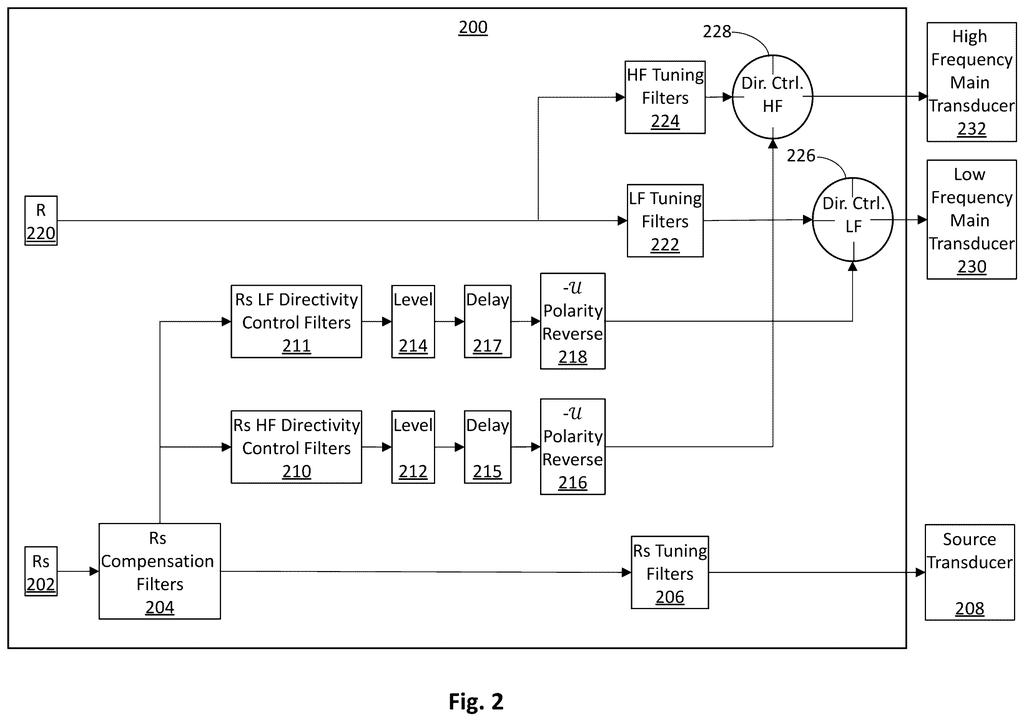
Samsung's patent describes a fix built right into the speaker's signal processing. A second driver on the enclosure plays a specially shaped, phase-flipped version of the same audio. Because the two signals cancel each other out in one specific direction, straight toward you, the direct path goes quiet, and what you actually hear is the cleaner, bounced version the speaker was always meant to deliver.
The result is more precise placement of reflected sound, which is exactly what height channels in formats like Dolby Atmos depend on. The speaker doesn't need to be aimed differently or physically redesigned; the electronics handle the steering.
… adjusting a phase of the shaped control audio signal of the control channel relative to the source channel so that audio in the range of frequencies played at the same time by the source transducer and the main transducer creates a cardioid radiation pattern having a null at the listening position …
Translation: The speaker adjusts sound waves to cancel each other out, creating a silent zone exactly where the listener is sitting.
How the phase-cancellation signal creates a cardioid null
The patent describes a signal-processing method for speaker enclosures that include two types of drivers: a source transducer (aimed at a reflective surface like a ceiling or side wall) and a main transducer (the primary forward-facing driver).
Here is the step-by-step process the patent covers:
- Access the source audio, grab the audio signal already destined for the upward- or sideways-firing driver.
- Shape the control signal, filter a copy of that signal so its frequency response, when played through the main driver, matches what the source driver would produce. This accounts for the fact that the two drivers sound different.
- Flip the phase, shift the timing of the shaped copy so that when both drivers play simultaneously, their combined output at the listening position cancels to near-silence. In acoustic terms this creates a cardioid radiation pattern (a heart-shaped zone of sound coverage where one side is a quiet "null").
- Mix and play, add that control signal into the main channel and emit both signals in sync.
The listening position sits inside the null, meaning the direct-path contribution from the reflected-sound driver is suppressed. Only the version of the audio that has bounced off the surface arrives, arriving from the intended direction and without the comb-filtering (hollow, phasey coloration) that happens when a direct and reflected copy mix at the ear.
… a speaker enclosure designed to reflect audio from the source transducer off of a surface to a listening position …
Translation: The device is built to bounce sound off walls or ceilings before it reaches the person listening.
What this means for immersive home audio hardware
Immersive audio formats like Dolby Atmos and DTS:X rely on height and surround channels to place sounds above and around you. Most consumer speaker designs that attempt this use upward-firing drivers that bounce audio off the ceiling, but the effect frequently sounds vague because the direct output from those drivers bleeds toward the listener. This patent's phase-cancellation approach targets that exact problem at the signal level, which means manufacturers could improve performance without adding more physical hardware or requiring room calibration microphones.
For Samsung, which sells soundbars and home theater systems that already include upward-firing drivers, a processing patent like this slots neatly into existing product lines. Audio engineers working on speaker design will recognize the core idea from professional directivity control, and the new Big Tech patents covering immersive audio signal processing show this space is drawing serious engineering attention from consumer electronics firms.
That makes this Samsung's 22nd filing in Audio patents we've tracked since May, a run that includes dual Bluetooth stream audio and filtering commands from casual speech.
Claim 1 covers a precise four-step chain: copy the signal going to the ceiling-bouncing speaker, reshape it to match the main speaker's sound across a specific frequency range, flip its phase so the two cancel each other out exactly at the listener's seat, then fold that adjusted signal into the main speaker's feed. All four steps must be present together for the claim to apply.
That specificity makes this narrow but meaningful. A competitor who skips the frequency-matching step, or aims the cancellation somewhere other than the listening position, likely stays outside the claim entirely.
What it actually protects is Samsung's particular method of using the main speaker as a kind of acoustic eraser, scrubbing unwanted ceiling reflections before they reach your ears through careful signal math rather than physical redesign of the cabinet.
Get our take in your Top Stories
Liked this breakdown? Add Patentlyze as a preferred source on Google, and our plain-English take shows up more often in your Top Stories the next time Samsung patent news breaks.
There are more where this came from
We read every patent application Big Tech publishes and send you the ones worth knowing. Plain English, free, every week.
The drawings
3 drawing sheets from US 2026/0255121 A1 · click any drawing to enlarge


Want this weekly breakdown for a company we don't cover? Patentlyze Pro →
Be the first to weigh in