
Sony Patents Audio Tech That Sends Different Sound Layers to Each Ear
Sony has filed a patent for a technique that chops audio into frequency bands, flips the phase of some of them, and recombines everything into a two-channel signal with fine-tuned volume levels. The goal appears to be shaping how sound is perceived across separate audio channels.
What Sony's phase-splitting audio patent actually does
Imagine putting on headphones and noticing that some frequencies feel "inside your head" while others feel like they're coming from in front of you. That spatial effect doesn't happen automatically. Engineers have to carefully craft how sound is distributed and timed between your left and right ears.
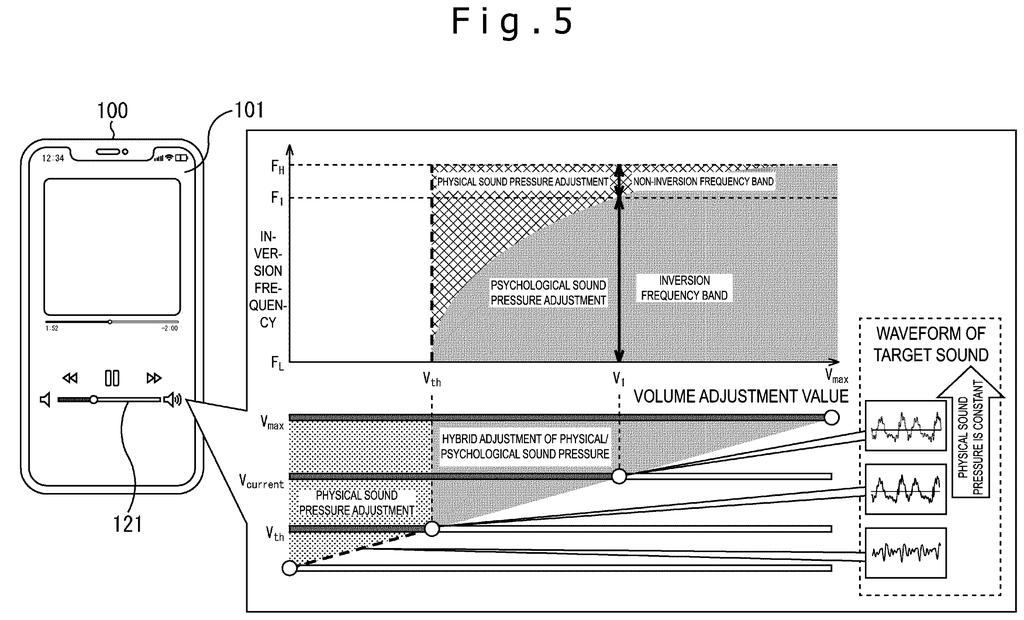
Sony's patent describes a way to do that by splitting an audio signal into two frequency regions. Certain frequency ranges get their phase flipped, meaning the audio waveform is inverted like a mirror image, while the rest stays as-is. Both pieces are then blended together into the signal sent to one channel. The other channel gets the original audio.
On top of that, the system adjusts the volume, or "gain," on one or both channels. Together, those steps let the device tune exactly how sound arrives at each ear, which can affect how wide, deep, or natural the audio feels.
… sets a part of a band of the audio signal as an inversion frequency band and another part of the band of the audio signal as a non-inversion frequency band …
Translation: The system splits the sound spectrum into two separate parts for different processing.
How Sony splits, inverts, and recombines audio bands
The patent describes a processing unit that handles audio with at least two channels, like the left and right feeds to a pair of headphones or stereo speakers.
The core idea works in three steps:
- Frequency band splitting: The processor divides the audio spectrum into an "inversion band" (a selected range of frequencies) and a "non-inversion band" (everything else).
- Phase inversion: The audio in the inversion band is phase-inverted, meaning the waveform is flipped 180 degrees. When this inverted signal is mixed with the non-inverted portion, the two interact in ways that can reinforce or cancel specific sonic characteristics, affecting how the sound is perceived spatially.
- Gain adjustment: The volume of the signal going to at least one channel is then trimmed or boosted to balance the result.
The first channel receives this blended, phase-modified signal. The implication is that the second channel carries a more conventional version of the audio, while the first carries the engineered mix. The exact choice of which frequencies to invert, and by how much to adjust gain, would determine the spatial and tonal effect on the listener.
… generates, as the audio signal to be supplied to a first channel, a first added signal by adding an inverted signal obtained by phase-inverting a first audio signal corresponding to the inversion frequency band and a second audio signal corresponding to the non-inversion frequency band …
Translation: It flips the audio phase for one frequency band and combines it with the other band to make a new sound channel.
What this means for Sony's headphone and speaker lineup
Sony builds some of the most widely used consumer audio hardware in the world, from the WH-1000XM series headphones to PlayStation game controllers to home theater systems. A processing technique like this one could be baked into firmware or a DSP (a dedicated audio chip) to improve perceived soundstage, the sense that audio is coming from around you rather than just from two points on your head. That matters a lot for music, movies, and gaming.
Claim 1 of this patent is written at a fairly broad level. It doesn't restrict the technique to a specific device type, a specific frequency range, or a specific number of inversion bands. That breadth means, if granted, it could cover a wide range of audio products and processing pipelines. Sony's audio processing patents sit alongside a steady flow of new Big Tech patents in the spatial audio space, where companies are racing to make two-channel sound feel three-dimensional.
This is the 12th Sony filing in our Audio patents we cover since May, including one on fixing muffled controller speakers and one on hearing aid profiles for any device.
Claim 1 covers a surprisingly open territory. It requires only that a processor split audio into two frequency regions, phase-invert one of them, combine the result into one channel's signal, and adjust gain on at least one channel. There is no limitation to headphones, no specific frequency cutoff, and no requirement for a particular gain algorithm. That's a broad claim.
In practice, that breadth is a double-edged situation. A wide claim is harder to get granted because patent examiners will look hard for prior art in audio processing, a field with decades of published techniques. Phase inversion tricks have appeared in speaker design, vinyl records, and surround-sound processing for years. Sony's lawyers will need to argue that this specific combination of splitting, inverting, recombining, and gain-adjusting is distinct from existing methods.
If it does survive examination, the claim could give Sony leverage over a meaningful slice of how two-channel spatial audio is processed, not just in its own products but potentially in anyone else's DSP pipeline that follows the same pattern. That's the part worth watching in the examination record.
Get our take in your Top Stories
Liked this breakdown? Add Patentlyze as a preferred source on Google, and our plain-English take shows up more often in your Top Stories the next time Sony patent news breaks.
There are more where this came from
We read every patent application Big Tech publishes and send you the ones worth knowing. Plain English, free, every week.
The drawings
20 drawing sheets from US 2026/0255127 A1 · click any drawing to enlarge


Want this weekly breakdown for a company we don't cover? Patentlyze Pro →
Be the first to weigh in