
Qualcomm Patents a Way to Measure Real Objects Using Two Camera Angles
Knowing how big something actually is, in real-world inches or centimeters, has always been a weak spot for smartphone cameras. Qualcomm's latest patent filing describes a method to figure that out using nothing more than two photos taken from different angles.
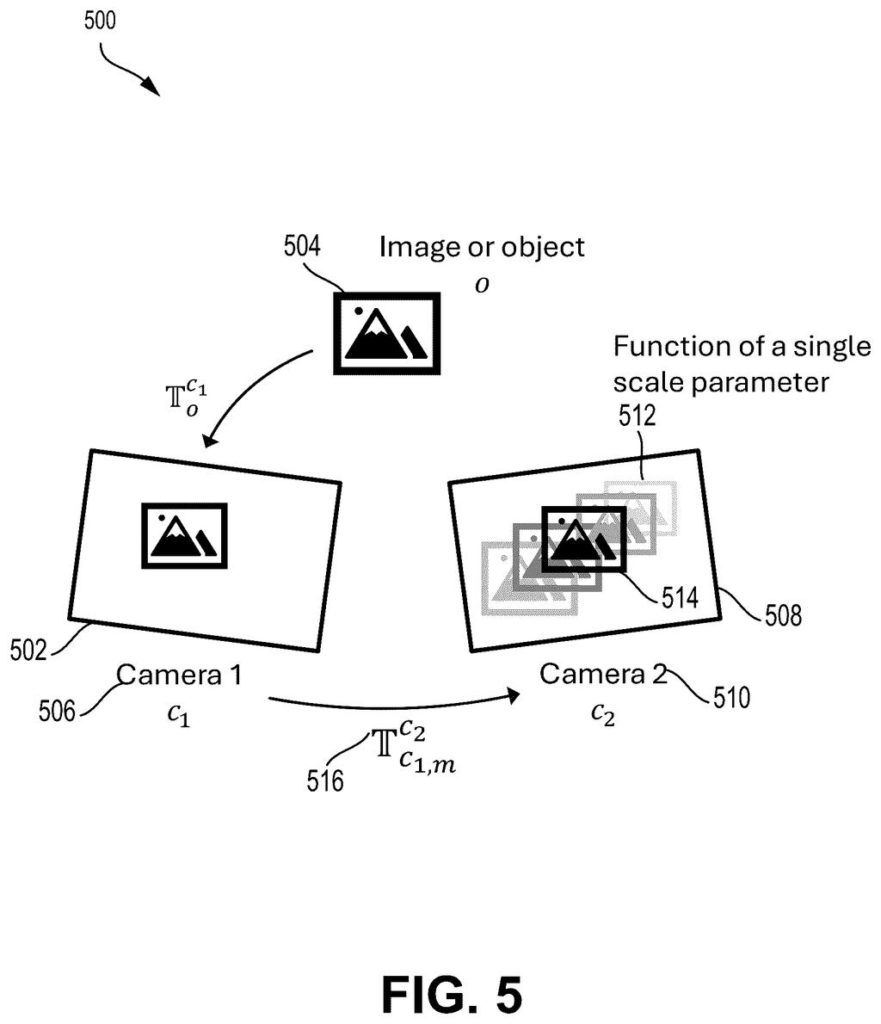
What Qualcomm's two-view size detection actually does
Ever tried to use your phone's camera to measure something and gotten a wildly wrong answer? That's because most cameras can see what an object looks like but have no reliable way to know how large it is in the real world.
Qualcomm's patent describes a fix that uses two photos of the same object taken from different positions. The system starts with a guess about the object's size, then simulates what the object should look like from the second angle if that guess were correct. It compares that simulated image to the actual second photo, adjusts the size estimate, and keeps refining until the two match up.
The result is a scale estimate, a reliable answer to "how big is this thing, really?" without needing a ruler, a depth sensor, or any special hardware beyond a regular camera.
… generate a predicted image of the object for a second viewpoint by applying a transformation to the first image captured from a first viewpoint using a hypothetical scale value …
Translation: The system guesses the object's size to predict what it would look like from another camera angle.
How the viewpoint comparison pins down real-world scale
The patent describes a pipeline built around what engineers call scale estimation, figuring out the true physical size of an object from camera images alone.
Here's how the process works step by step:
- Detect the object in a first image captured from one camera position.
- Apply a transformation to that image using a hypothetical scale value (essentially a starting guess at the object's real size). This transformation predicts what the object should look like from a second camera position, a kind of synthetic preview.
- Compare that predicted image to an actual second photo taken from the second position. The difference between prediction and reality tells the system how wrong the initial size guess was.
- Iterate until the predicted and actual images align, at which point the scale estimate is treated as accurate.
The system is designed to run on a device's processor and memory, meaning it is intended as an on-device computation rather than a cloud-based service. The patent does not require a depth sensor or lidar, only two images of the same object from different viewpoints.
… comparing the predicted image of the object with a second image of the object captured from the second viewpoint to determine an actual scale value based on the hypothetical scale value …
Translation: It checks that guess against a real second photo to calculate the actual size of the object.
What this means for AR apps and on-device cameras
For augmented reality to feel convincing, virtual objects have to match the scale of the real world around them. If your phone doesn't know a coffee table is 18 inches tall, a virtual lamp placed on it will look obviously wrong. Qualcomm's push into on-device AR and spatial computing makes a reliable scale-estimation method a useful building block for that whole category of apps.
For everyday users, this kind of technology could make measuring furniture, packages, or rooms far more practical using just a phone camera. Because the patent targets on-device processing, it also fits neatly into Qualcomm's chipset business, where tighter camera-to-chip integration is a selling point for phone manufacturers.
This is the 373rd Qualcomm application in our Qualcomm coverage since May, connected to earlier work on a gaze-based AR system and a real-world lighting blend.
The technique described here is pure software, which means phones that already exist could run it without any new parts. The one thing it needs, two cameras catching the same object from slightly different angles, ships standard on most phones sold today.
The fastest route to a product is probably a background service that apps like furniture preview or augmented reality call on silently, so users get accurate size information without lifting a finger.
Dim lighting, plain surfaces, and moving objects are real obstacles the document does not fully address, which suggests this is one building block in a larger measurement system rather than a feature ready to ship on its own.
There are more where this came from
We read every patent application Big Tech publishes and send you the ones worth knowing. Plain English, free, every week.
The drawings
8 drawing sheets from US 2026/0260315 A1 · click any drawing to enlarge


Want this weekly breakdown for a company we don't cover? Patentlyze Pro →
Be the first to weigh in