
Qualcomm Patents a System That Shuts Off Autopilot Before a Route Gets Too Complicated
Self-driving systems have invisible boundaries, and crossing them mid-trip can catch drivers off guard. Qualcomm's new patent describes a chip-level system that maps those boundaries before you leave the driveway.
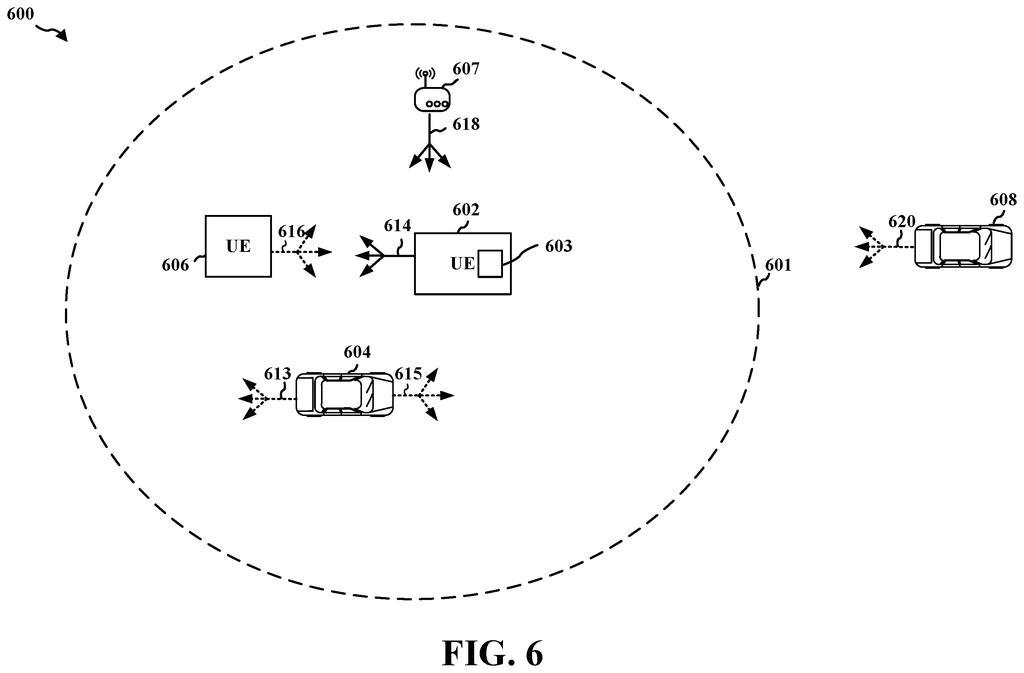
How Qualcomm's autopilot cutoff system would work for drivers
Today, a car's self-driving mode can switch itself off without much warning when it hits a stretch of road it wasn't designed to handle, like a construction zone, a poorly marked rural highway, or a complex intersection. That sudden handoff puts the driver in an uncomfortable spot.
Qualcomm's patent describes a system that looks at your whole route before the trip starts and counts how many times the self-driving system is likely to reach its limits. If that number is too high, the car either warns you or turns off autopilot right from the start, rather than toggling it on and off while you're driving.
The idea is to give you a clearer, more predictable experience. Instead of a car that keeps handing control back to you unexpectedly, the system makes one honest call: this route is too complicated for autopilot, so you're driving.
… calculate a predicted number of operational design domain (ODD) switches along the route based on the set of attributes; and deactivate an autonomous driving (AD) system or an advanced driver assistance system (ADAS) of a vehicle associated with the UE based on the calculated predicted number of ODD switches being greater than or equal to a threshold value.
Translation: The system counts how many times self-driving conditions will change and shuts off autopilot if it gets too complex.
How the route scan triggers the autopilot shutdown
The patent centers on what's called an Operational Design Domain (ODD), which is the set of conditions a self-driving or driver-assistance system is certified to operate in. Think of it as the car's comfort zone: certain speeds, road types, weather conditions, and traffic scenarios. When the car is outside that zone, the automated system has to hand control back to the human driver. Each of those handoffs is called an ODD switch.
The system described in the patent works by collecting a set of route attributes, things like road type, traffic density, intersection complexity, and known construction zones, and feeding them into a calculation that predicts how many ODD switches would occur along that route.
- If the predicted number of switches is below a threshold, autopilot stays on as normal.
- If the number meets or exceeds the threshold, the system either notifies the driver of the upcoming challenge or deactivates the autonomous driving mode entirely before the trip begins.
- The threshold itself appears to be configurable, meaning different vehicles or regulatory frameworks could set different limits.
Qualcomm frames this as a function running on the vehicle's wireless communication hardware, meaning it could pull in real-time network data (like live traffic or map updates) to refine the prediction on the fly.
What this means for self-driving cars and driver trust
For everyday drivers, the problem with current self-driving systems isn't just safety, it's unpredictability. A car that keeps toggling autopilot on and off trains you to distrust it, and a surprised, inattentive driver taking sudden control is a real hazard. A system that makes one clear decision at the start of a trip is easier to understand and plan around.
For automakers and regulators, Qualcomm's interest in vehicle-to-network communication ties directly into this: if the ODD prediction can draw on live road data over a cellular connection, it becomes more accurate over time. The bigger question is who sets the threshold that decides when autopilot gets blocked, and whether that becomes a point of regulatory friction between chipmakers, car brands, and safety agencies.
Qualcomm's 40th filing we've tracked in self-driving sensing since July builds on work including aligning camera and depth data and simultaneous object and depth detection.
The system makes a deliberate bet: better to warn a driver or shut off autopilot before a complicated stretch of road than to surprise them mid-trip with an unexpected handoff. That bet costs something real. Set the cutoff too cautiously and the autopilot barely runs; set it too loosely and the problem you were trying to solve just moves downstream.
The prediction also depends entirely on the quality of the map and road data feeding it. A rural gap, a recent road change, or an unexpected event can corrupt the count before the car leaves the driveway, and the driver has no way to know the math was wrong.
Still, the underlying logic holds up. Managing driver expectations around when autopilot will and won't work has been a genuine weak point in how these systems reach real people, and doing the calculation before the trip starts is a more honest approach than hoping handoffs go smoothly in the moment.
There are more where this came from
We read every patent application Big Tech publishes and send you the ones worth knowing. Plain English, free, every week.
The drawings
16 drawing sheets from US 2026/0276407 A1 · click any drawing to enlarge


Want this weekly breakdown for a company we don't cover? Patentlyze Pro →
Be the first to weigh in