
Google's New Patent Lets Two Phones Find Each Other's Location Without Connecting First
Bluetooth can already tell your phone a device is nearby, but knowing exactly how far away it is normally requires a full connection first. Google is working on a way to skip that handshake entirely.
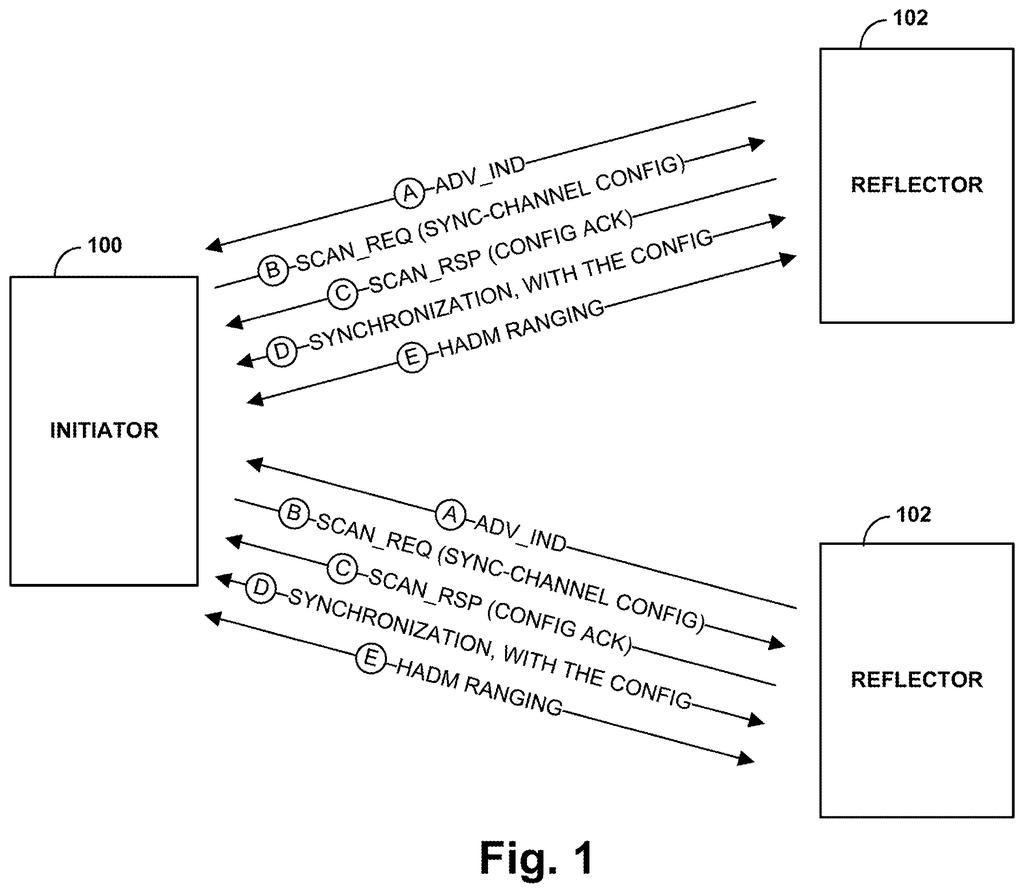
What Google's connection-free Bluetooth distance trick does
You're walking through a store and your phone pings a display to find out how far away it is. Normally, your phone would need to fully "connect" to that display, the way headphones connect to a phone, before any precise distance measurement could happen. Google's patent skips that step.
The idea uses a much lighter exchange that Bluetooth devices already do all the time: the quick "I'm here, tell me more" scan that happens before any real connection forms. Google's system tucks the setup information for a precise distance measurement inside those pre-connection messages, so two devices can get what they need without ever formally pairing.
The precise measurement technique involved, called Multi-Carrier-Phase Difference ranging, works by comparing radio signals at multiple frequencies to calculate distance very accurately. The patent's contribution is letting two devices agree on how to run that process without the overhead of a full Bluetooth connection.
engaging, by a first device, in an exchange of Bluetooth Low Energy (BLE) advertisement messaging with a second device, wherein engaging in the exchange of BLE advertisement messaging includes the first device transmitting to the second device a BLE scan request message and receiving in response from the second device a BLE scan response message …
Translation: The two phones talk to each other using quick Bluetooth messages instead of a full connection.
How the scan-request exchange carries ranging setup data
Bluetooth Low Energy (BLE) devices constantly broadcast short "advertisement" messages to announce their presence. Other devices can reply with a scan request, and the broadcaster sends back a scan response. This back-and-forth takes milliseconds and requires no formal connection.
Normally, if two devices want to do precise distance measurement using Multi-Carrier-Phase Difference (MCPD) ranging (a method that compares how radio waves at different frequencies arrive, giving centimeter-level accuracy), they first have to establish a full BLE connection. That takes extra time and radio resources.
Google's patent inserts a sync-channel configuration (essentially a shared instruction sheet telling both devices which radio frequencies to use and how to stay in step with each other) directly into the advertisement scan-request or scan-response messages. Because both devices exchange those messages before any connection exists, they receive all the coordination data they need to run the MCPD ranging process together.
- Device A sends a BLE scan request with the sync-channel configuration embedded.
- Device B replies with a scan response, also carrying relevant configuration data.
- Both devices use that configuration to begin a synchronization process, then perform precise distance ranging.
The result is that two devices can measure precise distances between each other using only the lightest possible Bluetooth exchange.
… facilitating communication of the set of data between the first device and the second device without a need for the first device and second device to establish a BLE connection with each other through which to communicate the set of data …
Translation: The devices share necessary information without having to officially pair or connect first.
What this means for Bluetooth tracking and location tools
For everyday users, the practical payoff is faster and less battery-draining location features. Things like indoor navigation, precise item-finding tags, or proximity-aware device handoffs could work without the phone spending time and energy on a full Bluetooth connection to every nearby gadget.
Google's steady investment in Bluetooth ranging signals a longer push into the precise indoor positioning space, where GPS doesn't reach. If this approach makes it into production devices, developers building location-aware apps could reach more devices more quickly, since they wouldn't need users to manually pair or approve a connection just to get a distance reading.
That makes this Google's 659th filing in our Google coverage since May, adding to work like the Bluetooth audio fix and the hidden-object radar.
Two devices can agree on how to measure the distance between them by slipping a small configuration note into the broadcast signals Bluetooth gadgets already send out constantly, skipping the usual digital handshake. That cuts setup time in a real and useful way.
The catch is that the distance-measuring hardware this system is designed to coordinate does not yet live inside most consumer devices. The software changes described here are easy to ship, but they do nothing useful until the right radio hardware already exists on both devices.
This reads as groundwork laid ahead of a hardware rollout, locking in a preferred setup method before the pieces are widely in place. The shortest route to a product runs through getting that hardware into phones and accessories first, and this document does not shorten that road.
There are more where this came from
We read every patent application Big Tech publishes and send you the ones worth knowing. Plain English, free, every week.
The drawings
4 drawing sheets from US 2026/0270670 A1 · click any drawing to enlarge


Want this weekly breakdown for a company we don't cover? Patentlyze Pro →
Be the first to weigh in