
Qualcomm Patents a System That Mixes Wireless Location Technologies to Find Devices More Accurately
Your phone's ability to pinpoint nearby devices depends on whichever wireless signal happens to be available, and that signal might be terrible for the job. Qualcomm's new patent describes a system that sizes up multiple location-finding technologies at once and picks the best combination for the moment.
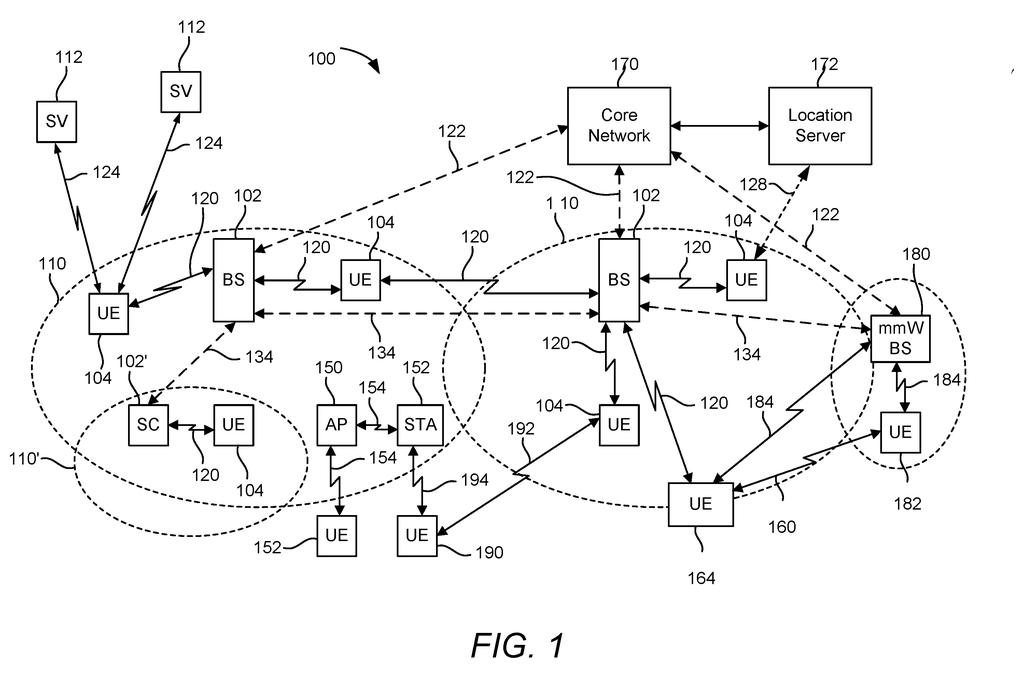
What Qualcomm's multi-radio location system actually does
Every time your phone tries to figure out how far away another device is, it relies on some form of wireless signal measuring, whether that's Wi-Fi, Bluetooth, or a newer ultra-wideband radio. Each of those technologies has blind spots: walls block some signals, crowds mess up others, and distance limits vary widely.
Qualcomm's patent describes a device that checks all the location-finding tools it has available, estimates how well each would work given the current conditions, and then picks the best one or even combines several. It's a bit like your GPS switching between cell towers, Wi-Fi, and satellite depending on where you are, except this system does it deliberately and intelligently rather than as a fallback.
The idea is that your device and the device it's trying to locate share information about what they each support, then together they settle on the approach most likely to give an accurate distance reading. You'd get more reliable location results without needing to buy hardware designed for just one kind of signal.
determine a plurality of candidate ranging parameter configurations associated with a ranging session with a second wireless node, wherein the plurality of candidate ranging parameter configurations is associated with a respective plurality of ranging-related technologies supported by the first wireless node; …
Translation: The device looks at all the different location methods it can use to measure distance.
How the node picks and combines ranging technologies
The patent describes a first wireless node (think: your phone, a router, or a tag) that manages a ranging session with a second node. Ranging means measuring the distance or position between two devices by timing how long a wireless signal takes to travel between them.
The system works in three steps:
- Enumerate candidates: The first device identifies all the ranging-related technologies it supports, such as Ultra-Wideband (UWB), 5G NR positioning, or Wi-Fi sensing, and builds a set of candidate parameter configurations for each one.
- Select the best option: Using information about itself and the other device, including what the second device supports and current conditions, it picks one or more technologies to use. It can combine them to compensate for individual weaknesses.
- Execute the session: The ranging exchange proceeds using the chosen technology or combination, producing a distance or location estimate.
The selection logic draws on information from both nodes, meaning capability negotiation happens before any measurement begins. The patent explicitly notes this supports dynamic switching mid-session, so if conditions change, the system can adapt rather than fail. The approach is intended to work across whatever mix of radio technologies a given device generation ships with.
Such aspects may provide various technical advantages, such as dynamically selecting and combining proper ranging technologies and switching seamlessly among different ranging options to overcome limitations of individual ranging techniques while providing superior ranging accuracy.
Translation: Mixing different tracking technologies helps the device figure out where it is much more accurately.
What this means for finding devices and tracking location
Location accuracy between devices matters far more than most people realize. It underpins Apple AirTags, phone-to-phone sharing features, indoor navigation in airports and hospitals, and emerging automotive safety applications where vehicles need to know exactly how far they are from each other or from pedestrians.
A system that automatically blends the strengths of different wireless location methods could make those use cases more reliable across a wider range of devices, without requiring every device to ship with the most capable (and expensive) radio chipset. For consumers, that could mean device-finding features that work better in tricky environments like parking garages or dense buildings, and Qualcomm keeps filing on wireless positioning suggests this is a sustained engineering priority, not a one-off idea.
That makes this Qualcomm's 407th filing in our Qualcomm coverage since May, adding to work like the audio-pause application and the signal-routing application.
The problem this patent attacks is real and persistent. Every wireless location technology carries trade-offs: UWB is precise but short-range and power-hungry, Wi-Fi is everywhere but imprecise, and 5G positioning is improving but still uneven. Devices today mostly pick one approach and live with its limits. That's a meaningful gap, especially as device-tracking and indoor navigation move from niche to mainstream.
The approach here, automatically negotiating and blending technologies based on what both devices support, is a reasonable match for the problem. It's the kind of coordination layer that could lift the floor on location accuracy across a whole ecosystem of devices rather than just premium hardware.
That said, the hard engineering is in the selection logic itself, and the patent describes the architecture more than the decision algorithm. Whether the smarts behind which technology wins in any given situation are genuinely good will determine whether this becomes a practical advantage or just a flexible plumbing design.
There are more where this came from
We read every patent application Big Tech publishes and send you the ones worth knowing. Plain English, free, every week.
The drawings
15 drawing sheets from US 2026/0279112 A1 · click any drawing to enlarge


Want this weekly breakdown for a company we don't cover? Patentlyze Pro →