
IBM Patents an AI System That Predicts Flight Diversions Before They Happen
Getting rerouted to an unplanned airport is one of aviation's most disruptive surprises. IBM has patented a system that tries to see those diversions coming before the crew announces them.
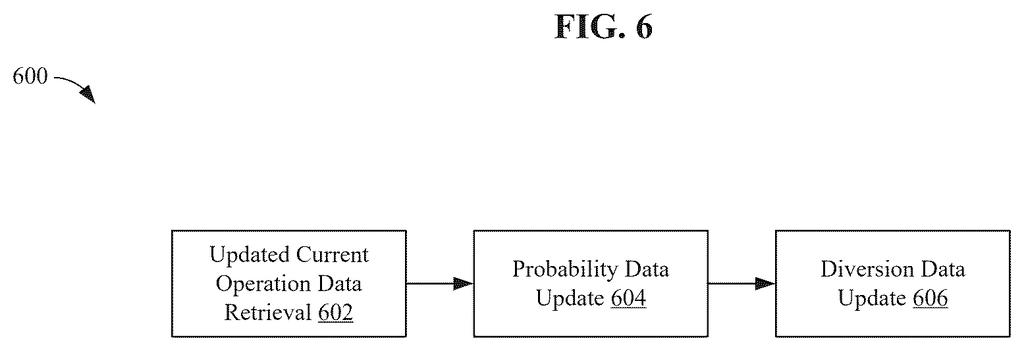
What IBM's flight-diversion prediction actually does
Imagine you're on a flight to Chicago, and behind the scenes a computer is comparing everything happening on your plane right now against thousands of previous flights to the same destination. It notices a combination of factors that, historically, have often ended in a diversion to a different city.
That's the basic idea behind this IBM patent. The system pulls together two kinds of data: a long record of past flights on the same route, and a live feed of what's happening on the current flight. It uses the historical data to figure out which warning signs actually matter, then builds a separate probability estimate for each one using the current flight's data.
The result is a prediction that tells the airline how likely a diversion is and which specific factor is driving that risk. Whether a gate agent, dispatcher, or passenger app ever sees that alert is a separate question, but the prediction engine itself is what IBM is protecting here.
… generating, by the computer, a deviance score for each diversion parameter of a set of diversion parameters based on the application of the first model …
Translation: The system calculates risk scores for various reasons a flight might get diverted.
How the two-model system scores and ranks diversion risks
The patent describes a two-stage machine learning pipeline for flight diversion risk.
Stage one: filtering the noise. The system takes historical operation data for a given destination and runs it through a first model. That model generates a "deviance score" (essentially a signal-to-noise measure) for each of a large set of "diversion parameters," which are conditions that could cause a flight to be redirected. Low-scoring parameters get dropped; only the ones with meaningful historical patterns survive into a smaller subset.
Stage two: real-time probability. For each surviving parameter in that subset, the system trains a second model using current operational data from the flight in progress. That model then outputs a probability score: how likely is this specific factor to cause a diversion on this specific flight right now?
The system combines those probability scores into diversion data that gets output downstream. The patent doesn't prescribe exactly who receives that output, but the architecture is designed to produce an actionable signal, not just a flag.
The design is notable for its modularity: each diversion parameter gets its own dedicated model, which means the system can isolate whether the risk comes from, say, weather at the destination, a mechanical condition, or a fuel situation, rather than collapsing everything into a single opaque score.
Probability data is determined for each diversion parameter of the subset of diversion parameters based on the second model for each diversion parameter.
Translation: The computer calculates the exact chance of a diversion happening based on live flight data.
What this means for passengers and airline operations
For passengers, an earlier and more accurate diversion prediction means airlines could make better real-time decisions: rerouting aircraft sooner, alerting ground crews at alternative airports further in advance, and potentially avoiding the chaos of an unplanned landing at a small regional airport with no gate capacity.
IBM's steady investment in aviation AI filings suggests this isn't a one-off experiment. That said, the technology sits entirely on the airline-operations side of the equation. Whether a carrier actually surfaces any of this to passengers, or uses it only to coordinate logistics is entirely up to them. The patent protects the prediction engine, not the experience built around it.
This is the 28th IBM filing we've tracked in our AI assistant & agent topic since May, following one on self-fixing software packaging and one on blocking answers from restricted users.
Flight diversions cost airlines real money and strand passengers for hours, but the damage often comes from reacting blind. This system gives dispatchers a ranked, probability-weighted list of what is likely causing a diversion before the plane even lands, drawn from years of past flight records and live data from the current flight.
The concrete payoff is speed and confidence at the exact moment both are hardest to find. Instead of a blinking alert and a flurry of phone calls, a dispatcher sees something closer to "fuel issue, 74%" and can move immediately: the right gate, the right crew, the right resources already in place.
Passengers mostly experience this as a bad afternoon that somehow resolved in an hour instead of four. That quiet, efficient absorption of a crisis is precisely what the system is built to deliver, and for the airline, it is the difference between a disruption and a disaster.
There are more where this came from
We read every patent application Big Tech publishes and send you the ones worth knowing. Plain English, free, every week.
The drawings
9 drawing sheets from US 2026/0268780 A1 · click any drawing to enlarge


Want this weekly breakdown for a company we don't cover? Patentlyze Pro →