
Microsoft Patents Software That Attends Meetings and Reports Key Details Back to You
Microsoft has filed a patent for AI agents that can sit in on meetings you're not attending and pull out only the parts that matter to you, so you get a targeted briefing instead of a full replay.
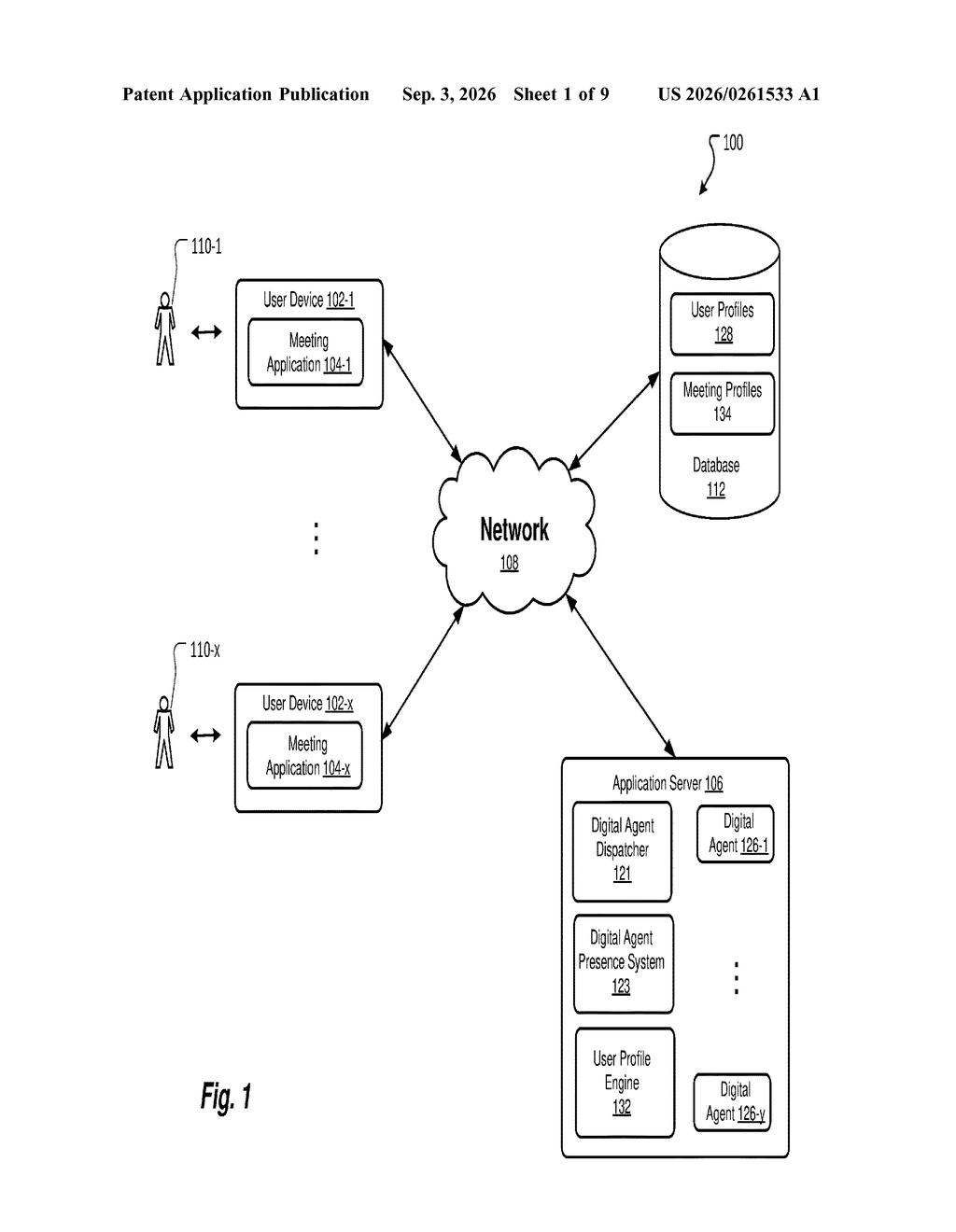
What Microsoft's meeting-monitoring AI agents actually do
Imagine you have six meetings scheduled today but can only be in three of them. The other three still contain decisions, action items, or mentions of projects you own.
Microsoft's patent describes a system where software agents act as your stand-ins. Each agent drops into a communication session, such as a video call or chat thread, and watches the whole thing on your behalf. When something comes up that's specifically relevant to you, the agent flags it and sets it aside.
When you're free, you get a filtered summary of just those moments, not a transcript of everything said, but the slice that actually concerned you. The idea is to keep you informed across more conversations than any one person could realistically attend, without drowning you in recordings or notes you'd have to skim yourself.
One or more digital agents are instantiated to monitor to monitor one or more communication sessions on behalf of a user. Respective digital agents are configured to identify, in the information shared during respective communication sessions, respective one or more subsets of information including one or more items of information relevant to the user.
Translation: AI bots attend your meetings to find the specific details you care about.
How the digital agents filter and surface the right information
The patent describes a framework where one or more digital agents (software processes acting on a user's behalf) are each assigned to a specific communication session. A session could be a video call, a chat thread, or any other real-time information exchange.
Each agent monitors the full stream of information shared during that session. It's configured to identify a subset of information relevant to a particular user, meaning it knows enough about that person's context, role, or interests to recognize when something applies to them versus when it doesn't.
Once the session ends (or possibly in real time), the system collects the flagged subsets from all active agents and presents them to the user. The patent emphasizes that multiple agents can run in parallel, each watching a different session simultaneously.
- Agents are instantiated (spun up) per session, not shared across sessions
- Each agent independently identifies relevant content for the same user
- The gathered subsets are then presented together, giving the user a consolidated view
The patent doesn't specify exactly how relevance is determined, whether by keyword matching, user profile, topic modeling, or something else, leaving that as an open implementation detail.
What this means for people buried in back-to-back calls
For anyone who works in an organization where meetings multiply faster than hours in the day, the appeal here is obvious. Instead of choosing between attending a call and doing actual work, you could theoretically get a personalized digest of what was said about your projects, without sitting through 45 minutes of content aimed at other people.
Microsoft's run of AI-in-productivity filings fits squarely inside its Teams and Copilot product lines, where similar meeting-summary features already exist in early forms. What this patent adds is the idea of parallel agents attending multiple sessions at once on your behalf, which is a step beyond summarizing a single call after the fact.
Microsoft's tenth filing we've tracked since July in our AI agents that act for you list follows earlier applications like one that presents your slides and one for indoor navigation.
Everything described here runs on software alone. No new device, chip, or hardware is required, which means the distance between this patent and a working product is shorter than usual.
The main building blocks already exist in everyday meeting tools: recordings, transcripts, and automated summaries are common. What this adds is a layer that sends a stand-in to meetings you skipped, figures out which parts matter to you specifically, and brings those pieces back in one place.
The hardest remaining problem is not technical. People would need to trust that a silent attendee is acting on their behalf, and everyone else on the call would need to know it is there. Solve that consent and transparency question, and the rest looks close enough to current features that it could ship as an update rather than a distant new product.
Get our take in your Top Stories
Liked this breakdown? Add Patentlyze as a preferred source on Google, and our plain-English take shows up more often in your Top Stories the next time Microsoft patent news breaks.
There are more where this came from
We read every patent application Big Tech publishes and send you the ones worth knowing. Plain English, free, every week.
The drawings
9 drawing sheets from US 2026/0261533 A1 · click any drawing to enlarge


Show the other 1 sheets

Want this weekly breakdown for a company we don't cover? Patentlyze Pro →
Be the first to weigh in