
IBM Patents Technology That Sorts Millions of Records Using a Text-Prediction Engine
IBM has filed a patent that feeds a classic data-sorting algorithm into the same kind of neural network architecture that powers modern AI chatbots, letting the two systems work together in a single pass instead of running separately.
What IBM's transformer clustering system actually does
Computers constantly need to sort data into groups: customers by behavior, images by content, sensor readings by pattern. Today that sorting often relies on a decades-old algorithm called k-means, which requires many slow, repetitive back-and-forth passes before it settles on good groups.
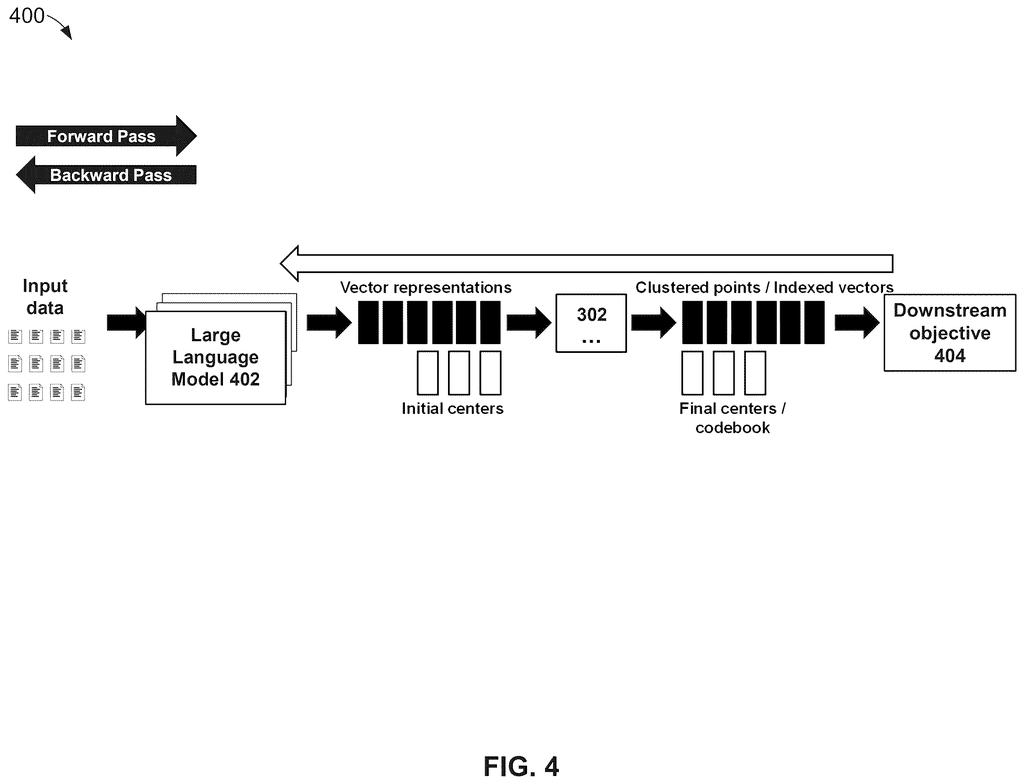
IBM's patent wants to run that whole grouping process inside a transformer, the same kind of AI architecture that powers tools like ChatGPT. Instead of many separate rounds, the transformer looks at all the data at once, weighs which points belong together, and spits out updated group assignments in a single forward pass.
For you as a user, this would mostly be invisible, but it could mean faster search results, quicker product recommendations, or speedier medical data analysis, anywhere that a computer needs to sort a large pile of information into meaningful buckets.
inputting data points and cluster centers as token embeddings into a transformer architecture configured with k-means clustering for an encoder and a decoder …
Translation: The system treats data points and group centers as words in a language model to organize them more efficiently.
How the encoder and decoder reassign data points
The patent describes feeding two kinds of information into a transformer neural network: the data points you want to sort, and the current cluster centers (the representative midpoints of each group). Both are converted into token embeddings (numerical vectors that the network can read, the same way a language model reads words).
The network then runs a forward pass, meaning data flows through the system once from input to output. Inside, it uses two attention mechanisms:
- Self-attention: data points compare themselves to each other to figure out which ones are similar.
- Cross-attention: data points compare themselves to the cluster centers to decide which group they belong in.
The encoder half of the transformer updates the cluster assignments (which point belongs to which group), while the decoder updates the cluster centers themselves (moving each group's midpoint to better reflect its members). Both updates happen in one pass rather than the iterative loop that traditional k-means requires.
The claim is that framing this as a machine-learning inference problem rather than a purely mathematical one could let the system learn better grouping strategies from data, rather than just following a fixed formula.
… perform a forward pass through the transformer architecture that uses a self-attention mechanism and a cross-attention mechanism to update cluster assignments for the data points and to update the cluster centers.
Translation: The software uses internal attention tools to constantly refine how it sorts data into specific groups.
What this means for AI-driven data analysis at scale
K-means clustering is everywhere in enterprise software: fraud detection, customer segmentation, search indexing, image compression. At large scale, the repeated iterations it requires eat up significant compute time and cost. Running the same task through a transformer that can potentially do it in fewer passes is a real engineering target, not a theoretical curiosity.
IBM's research division has a long track record of publishing foundational machine-learning work that shows up in enterprise products years later, and this sits in that tradition. Those interested in how AI is reshaping the math underneath data tools will find this among the more technically specific interesting tech patents filed in the data-infrastructure space this year.
This is the 24th IBM filing we've tracked in our AI assistant & agent work since May, a topic that also covers a memory compression idea and a self-error-fixing system.
The problem this patent addresses is real. K-means clustering is one of the most widely used algorithms in data science, and its iterative nature is a known bottleneck when datasets get large. Any credible shortcut has practical value across a lot of industries. The approach, wrapping the algorithm inside a transformer architecture, is intellectually coherent. Transformers are already good at weighing relationships between many items at once, which is exactly what clustering requires.
The question is whether the overhead of running a full transformer (which is itself computationally expensive) actually beats the overhead of traditional k-means iterations in practice. The patent describes the architecture but does not make strong empirical claims about speed or accuracy gains. That gap between a clever design and proven real-world performance is where most research patents live.
This one is interesting to researchers and worth watching in IBM's product pipeline, but it is not yet evidence of a deployed solution.
Get our take in your Top Stories
Liked this breakdown? Add Patentlyze as a preferred source on Google, and our plain-English take shows up more often in your Top Stories the next time IBM patent news breaks.
There are more where this came from
We read every patent application Big Tech publishes and send you the ones worth knowing. Plain English, free, every week.
The drawings
12 drawing sheets from US 2026/0252850 A1 · click any drawing to enlarge


Want this weekly breakdown for a company we don't cover? Patentlyze Pro →
Be the first to weigh in