
Adobe Patents a Way to Skip Redundant AI Work When Searching Documents
Every time an AI assistant searches through documents to answer your question, it re-does enormous amounts of calculation it has already done before. Adobe has filed a patent for a system that figures out when it's safe to skip that repeated work.
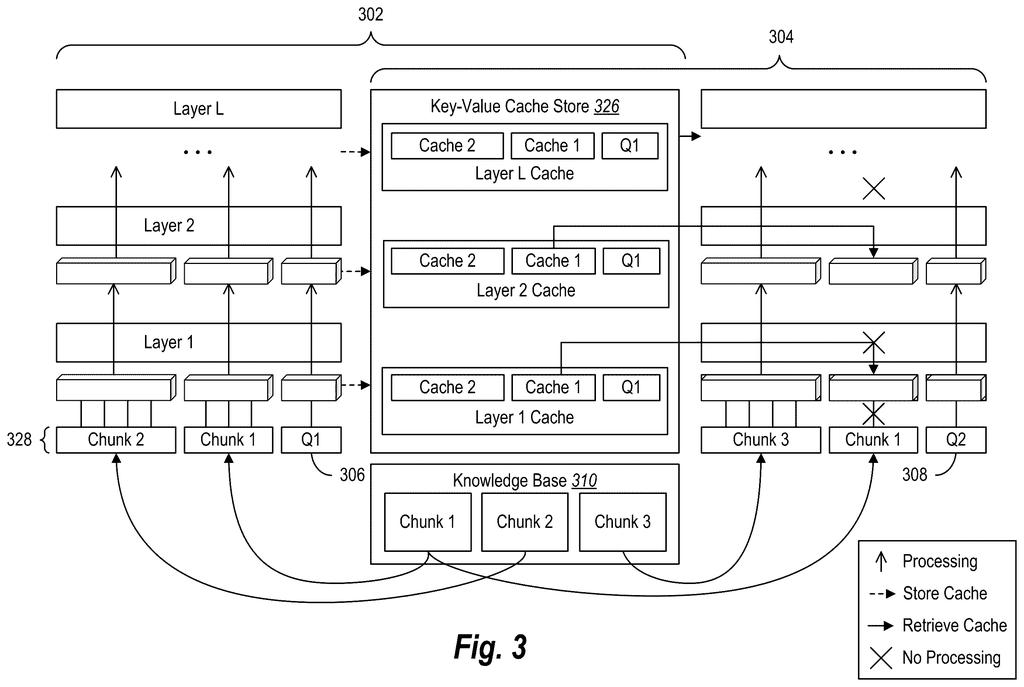
What Adobe's chunk-cache reuse actually does for you
Every time you ask an AI assistant to answer a question using your company's documents, the AI processes hundreds of text excerpts from scratch, even ones it has seen before in earlier questions. That repeated computation is slow and expensive, even when the answer probably hasn't changed.
Adobe's patent describes a system that keeps track of those pre-processed text excerpts and asks a specific question before reusing them: do the words surrounding this excerpt now look different enough that the old computation no longer applies? If the context is close enough, the AI skips the heavy lifting and pulls in the saved result instead.
The payoff is faster answers without sacrificing accuracy. For anyone using an AI tool that searches through contracts, research papers, or internal wikis, this kind of behind-the-scenes efficiency could mean noticeably quicker responses, especially on follow-up questions where a lot of the same documents keep coming up.
… determining a cache reusability score for the text chunk according to dependency metrics of tokens within the text chunk and tokens within the second plurality of text chunks …
Translation: The system calculates how safe it is to reuse cached data by checking how words relate to each other.
How Adobe scores a cached chunk for safe reuse
The patent addresses a bottleneck inside a technique called retrieval-augmented generation (RAG), where an AI first pulls relevant text passages from a database and then uses a large language model to write an answer based on those passages. The expensive part is processing each passage through the model's internal layers.
Large language models use a structure called a key-value cache (essentially a saved snapshot of how the model understood a piece of text) to avoid re-reading the same words twice in one session. Adobe's invention extends that idea across sessions: it asks whether a cached snapshot from a previous query is still valid for a new query.
To answer that, the system computes a cache reusability score. The score measures dependency metrics, meaning how strongly the words inside a given text chunk are influenced by the surrounding chunks. The model looks at which tokens (roughly, words or word fragments) inside the passage were paying the most attention to tokens in the surrounding context, and how much that surrounding context has shifted since the cache was built.
- If the surrounding passages are mostly the same as before, the score is high and the cached snapshot is reused.
- If the context has shifted significantly, the score is low and the system recomputes the passage from scratch.
- The first sequence (chunks for the new query) and the second sequence (chunks used when the cache was built) are compared at the token level to make this call.
… reuse, within the large language model generating a response to the input query, the precomputed key-value cache associated with the text chunk based on the cache reusability score …
Translation: The AI skips redundant work by reusing saved processing data when answering the user's question.
What this means for AI tools built on document search
For product teams building AI assistants on top of large document libraries, compute cost and response time are two of the biggest practical problems. Adobe's steady investment in RAG-system efficiency suggests the company is treating this as infrastructure, not a one-off optimization. If the reusability scoring works well in practice, it could reduce the number of expensive model passes needed per query, which translates directly into lower cloud bills and faster user-facing responses.
For everyday users, the impact shows up as an AI assistant that feels more responsive on follow-up questions, especially in workflows where you're asking a series of related questions about the same set of documents, like reviewing a contract or researching a topic across multiple reports.
That makes this Adobe's seventh filing in our AI assistant and agent work we've tracked since May, alongside one routing image questions and one spotting customer behavior patterns.
The reusability score is the load-bearing piece of this design, and it is also where things can go wrong. If the scoring is too lenient, the AI answers using outdated context and produces results that are subtly but consequentially wrong. If it is too strict, the system recomputes everything anyway and the efficiency gains disappear.
The design holds up well when queries share a lot of common ground, which is probably the typical case. But in fast-moving domains where the relevant documents shift constantly, the overhead of checking and scoring cached passages could eat into the very savings the system is chasing.
The underlying bet is reasonable: judge reuse eligibility based on how context-sensitive a passage actually is, rather than applying a one-size-fits-all rule. That is a smarter approach than the alternative, and the cost it pays in scoring complexity feels proportionate to what it saves in computation.
There are more where this came from
We read every patent application Big Tech publishes and send you the ones worth knowing. Plain English, free, every week.
The drawings
18 drawing sheets from US 2026/0268083 A1 · click any drawing to enlarge


Want this weekly breakdown for a company we don't cover? Patentlyze Pro →