
Adobe Patents a Virtual Assistant That Explains Its Own Database Queries
Adobe is patenting a way for an AI assistant to not just run database queries on your behalf, but explain what it just did in plain English, so you don't have to trust a black box.
What Adobe's query-explainer assistant actually does
Every time a marketing analyst asks their company's data tool 'which customers haven't bought anything in six months?', someone behind the scenes has to translate that into a formal database command. Most people can't write those commands themselves, so they wait on a developer or data analyst to do it for them.
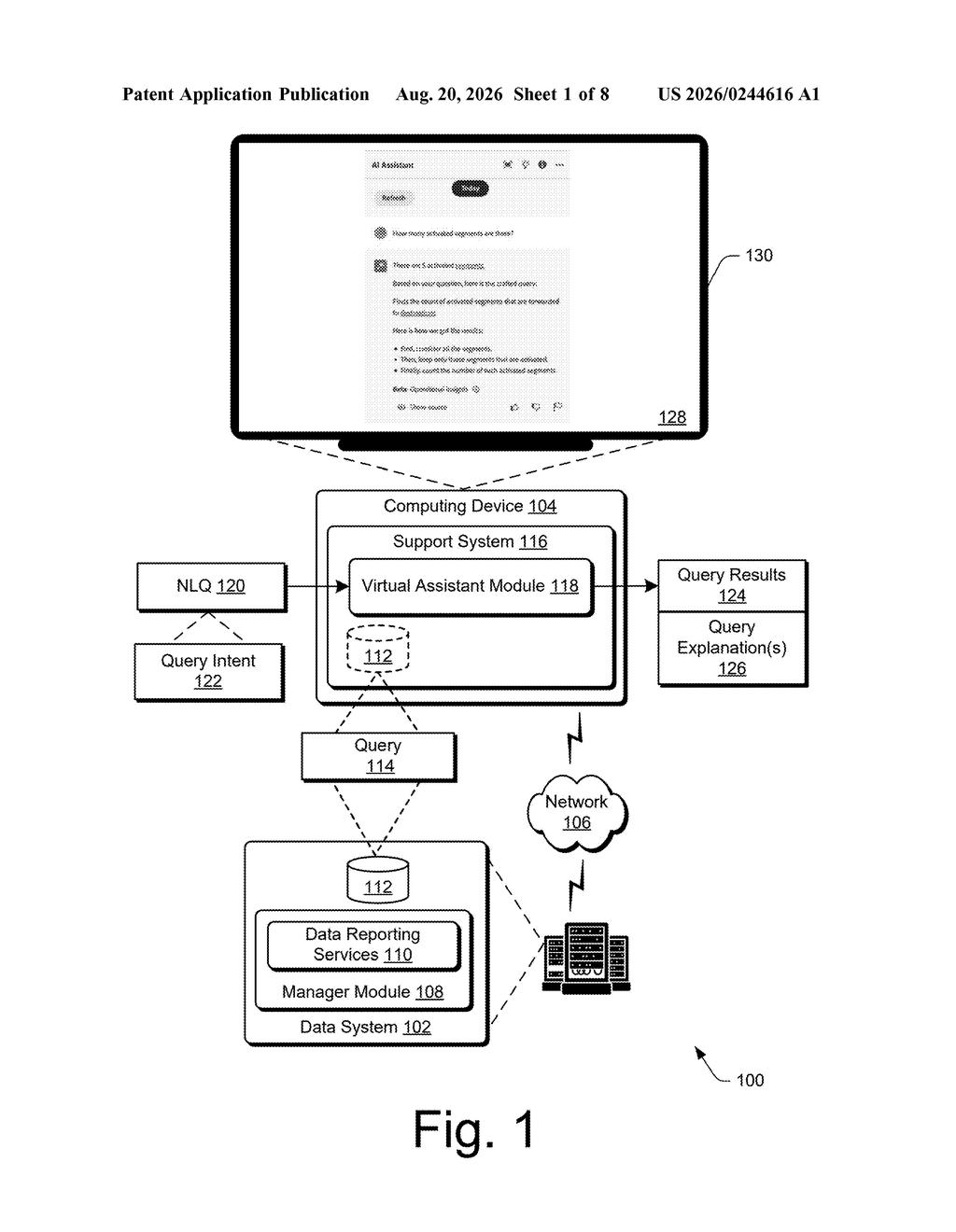
Adobe's patent describes an AI assistant that handles both sides of that exchange. You ask a question in plain English, the system figures out the right database command, runs it, and then, this is the key part, tells you in plain English what it actually did and why the results look the way they do.
The practical difference is that you get an explanation alongside the answer, not just a table of numbers you have to take on faith. If the AI misunderstood your question, that explanation gives you a fighting chance to catch the mistake before you act on bad data.
receiving, by a processing device, an input including a request in a natural language format related to a database, the request including an instruction to create, alter, retrieve, delete, manage, or manipulate the database or data in the database …
Translation: The system takes a normal typing command about what to do with the database.
How two AI models split the querying and explaining work
The system described in the patent uses two separate machine-learning models working in sequence. The first model, described as a large language model (LLM), takes a plain-English request and converts it into a formal database query (a structured command, like SQL, that tells the database exactly what to fetch or change).
The database runs that query and returns a result. Then the second machine-learning model kicks in: its job is to generate a query explanation, a plain-English description of what the query actually did. Both the result and the explanation are displayed together in the user interface.
The patent covers a broad range of database operations:
- Retrieving data (asking questions, running reports)
- Creating or deleting records
- Altering or managing existing data
The dual-model approach matters because generating a syntactically correct database command and explaining that command in natural language are two different tasks. Splitting them means each model can be optimized for what it's good at, rather than asking one model to do everything.
A first machine-learning model (e.g., a large language model (LLM)) generates a database query based on the request. The processing device queries the database using the database query to obtain a query result. A second machine-learning model generates a query explanation …
Translation: AI translates the request into code, runs it, and then writes out an explanation of how it worked.
What this means for non-technical database users
For anyone who works with business data but isn't a developer, the explainability piece is the real value here. A query result on its own tells you what the answer is; the explanation tells you what question the AI actually answered. Those two things are not always the same. When an AI misinterprets an ambiguous request, an explanation gives users a visible, readable audit trail to catch that drift.
This fits into a broader Adobe push to make its data and analytics tools accessible to people who don't write code. The latest Big Tech patents in the AI-assisted data space increasingly focus on this explainability layer, and Adobe's filing signals it wants that layer baked into the assistant experience, not bolted on after the fact.
Adobe's second filing we've tracked on our watchlist for AI agents that act for you since August follows one on building designs by voice.
When an AI assistant misreads your question and returns plausible-looking wrong data, you currently have almost no way to catch it without reading the raw query yourself. An explanation layer that surfaces what the AI actually did turns a trust problem into a verification step, letting you confirm at a glance whether the system answered what you actually asked. The practical value to everyday users depends entirely on how good those explanations are, but the architecture at least makes accountability possible in a moment when most people would never think to look for it.
There are more where this came from
We read every patent application Big Tech publishes and send you the ones worth knowing. Plain English, free, every week.
The drawings
8 drawing sheets from US 2026/0244616 A1 · click any drawing to enlarge


Want this weekly breakdown for a company we don't cover? Patentlyze Pro →
Be the first to weigh in