
IBM Patents a System That Keeps Its Own AI Guardrails Sharp Using Live Data
Keeping an AI's content filters accurate over time is one of the quieter headaches in enterprise software. IBM has filed a patent for a system that watches real-world data flowing through a deployed AI, spots gaps in its own safety training, and updates itself without a team of engineers stepping in every time.
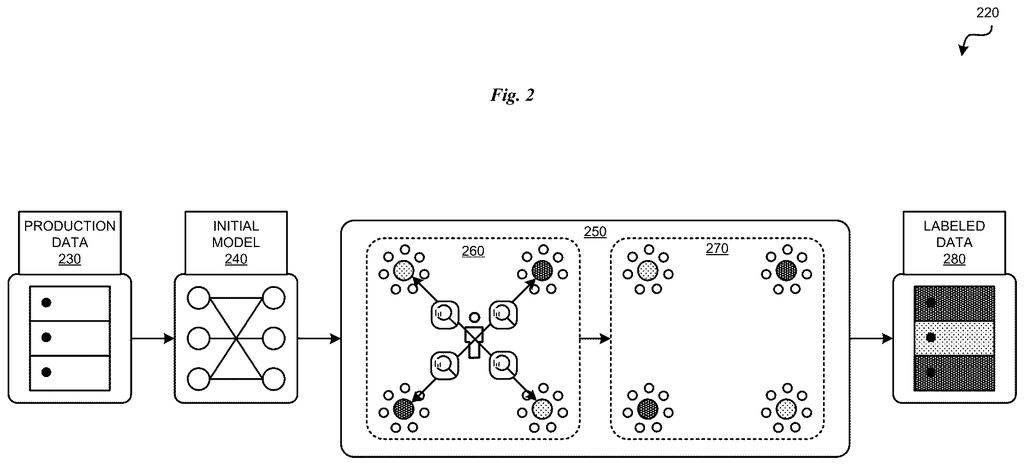
How IBM's self-updating AI guardrail actually works
AI safety filters, the systems companies use to stop an AI from saying something harmful or off-topic, are trained once and then tend to drift. The world keeps changing, users keep finding new ways to phrase things, and the filter slowly stops catching what it should.
What IBM describes here is a classifier (a small, specialized model that decides whether a piece of text belongs in a certain category) that keeps learning from the real traffic hitting it. It groups incoming examples that look similar together, uses those groupings to label new training data automatically, and then asks itself whether the new version is actually better before committing to the change.
If the updated version performs better than the original baseline, the system saves a checkpoint and carries on. If not, it holds back. Think of it like a spell-checker that watches what words you correct, figures out your patterns, and improves its suggestions without you having to go into settings.
… issuing an instruction via a fine-tuning interface of the classification model, the instruction executing to modify a configuration parameter of the classification model based on the annotation to cause the classification model to determine a second benchmark metric …
Translation: The system automatically tweaks the ai settings using newly grouped production data to see how performance changes.
Inside IBM's iterative fine-tuning and checkpoint loop
The patent describes a pipeline with several connected steps:
- Seed training: The classifier starts life trained on a small, hand-labeled dataset. A benchmark score records how well it performs at this starting point.
- Production scanning: The model then runs continuously on live data, pulling out examples it predicts match a target classification (for instance, "this text is toxic" or "this query is off-topic").
- Automatic annotation via clustering: Instead of sending those flagged examples to a human labeler, the system groups them by similarity using clustering (an unsupervised technique that arranges data points by how alike they are, the way a playlist algorithm groups songs by sound). Those group labels become the training signal.
- Fine-tuning and checkpointing: The system issues an instruction to adjust the classifier's internal settings based on those auto-generated labels, then measures a new benchmark score. Each iteration gets a checkpoint marker so the system can track which version is which.
- Distillation decision: Finally, the system compares old and new benchmark scores. Distillation here means compressing the improved model's knowledge back into a deployable form. The update only gets committed if the numbers actually got better.
The feedback loop is designed to run without constant human supervision, though the architecture leaves room for human review at the distillation step.
… executing an instruction whether to distill an update of the classification model.
Translation: It ultimately decides whether to bake the newly learned improvements into the core model.
What automatic AI guardrail retraining means for enterprise tools
For any company running an AI assistant or content-moderation system at scale, keeping guardrails accurate is a recurring cost. Human reviewers have to label new examples, engineers retrain models on a schedule, and accuracy still slips between update cycles. IBM's steady investment in enterprise AI governance addresses a real pain point: most organizations don't have ML teams large enough to babysit every classifier they deploy.
This patent describes a way to shrink that maintenance burden. If it works as described, a company could deploy a safety classifier and have it stay reasonably current with shifting language patterns without a full retraining project every quarter. The practical limit is that the automatic labeling is only as good as the clustering step, and clustering can group things wrongly if the incoming data is noisy.
That makes this IBM's 48th filing we've tracked in the AI guardrails race since May, following one locking AI in secure environments and one scanning calls for scams.
The problem this patent targets is real and genuinely underappreciated. Most public conversation about AI safety focuses on initial training, but the harder, costlier challenge is keeping classifiers accurate after they ship. Language evolves, users adapt, and a filter that scored well on a benchmark six months ago can be failing today.
The approach IBM describes is reasonable for that problem. Using production traffic to generate new training data automatically is a known technique, and tying updates to a benchmark comparison before committing is a sensible safeguard. The clustering-as-labeler idea is the part worth watching: it removes the human bottleneck, but clustering quality depends heavily on how the incoming data is represented, which the patent does not go deep on.
This is a solid, workmanlike filing aimed at an operational problem that costs real money. It is not a conceptual leap, but the companies that figure out automated classifier maintenance will have a meaningful cost and reliability advantage over those still doing it by hand.
There are more where this came from
We read every patent application Big Tech publishes and send you the ones worth knowing. Plain English, free, every week.
The drawings
6 drawing sheets from US 2026/0268157 A1 · click any drawing to enlarge


Want this weekly breakdown for a company we don't cover? Patentlyze Pro →